Kategori
The most common mistake in sleeping bag procurement is comparing two bags by a single temperature number. Two bags both rated "-10°C" can feel very different — one keeps a user warm through the night, the other leaves them cold by 3 AM. The difference is not in the number. It is in the construction, filling, size, shape, and test conditions behind that number. This guide explains what temperature ratings actually mean and how to compare them properly.
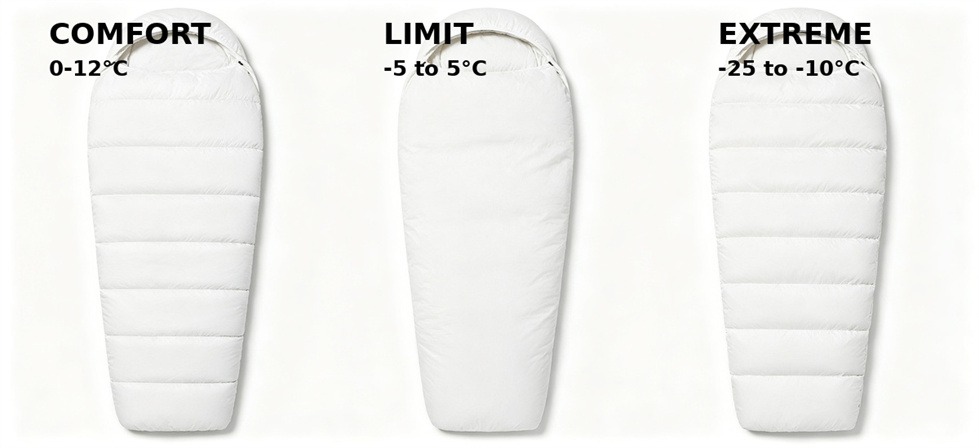
Most sleeping bag temperature ratings follow the EN 13537 standard (or the newer ISO 23537). This standard uses a heated manikin to test the bag under controlled conditions. The result is not one number — it is three ranges:
| Rating | What it means | Test condition |
|---|---|---|
| Comfort | A standard woman (age 25, height 160 cm, weight 60 kg) can sleep comfortably all night without shivering. | Wearing long underwear and socks, on a 1 cm insulated mat, in a tent with no wind. |
| Limit | A standard man (age 25, height 173 cm, weight 73 kg) can sleep for 8 hours without waking from cold. | Same clothing and mat as comfort test. This is the minimum for a normal male user. |
| Extreme | A standard woman can survive for 6 hours without death from hypothermia. This is NOT a comfortable sleeping temperature. | Survival only. User may shiver violently and risk frostbite. Never use this as your target rating. |
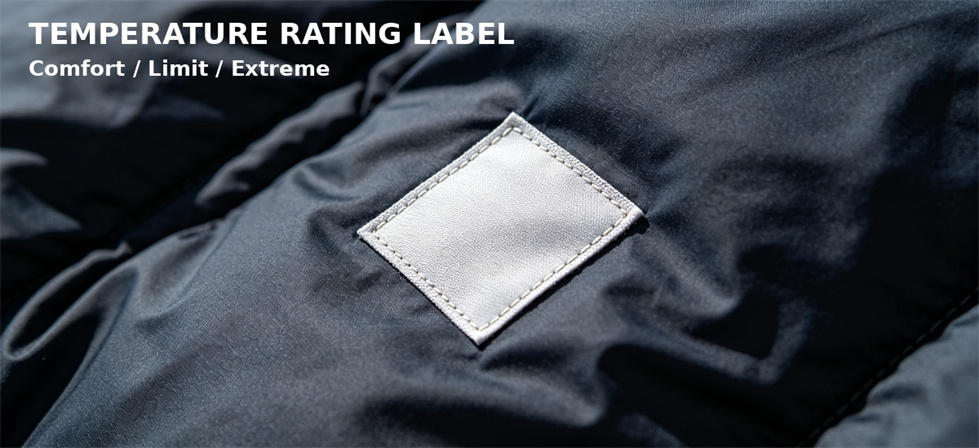
The key point: a "-10°C limit" bag is designed for a standard man at -10°C. A woman, a child, an elderly person, or someone in poorer health will feel colder at the same temperature. For relief procurement where user groups are mixed, the comfort rating is the safer reference — not the limit or extreme.
Practical rule: For general relief distribution, use the comfort rating as your selection benchmark. The limit rating is acceptable for healthy adult users only. The extreme rating is never a procurement target.
Sleeping bags are usually grouped into four temperature bands. Each band corresponds to a different construction. A bag from a warmer band cannot simply be "used colder" — it does not have the insulation.
| Temperature Band | Typical Use | Typical Weight | Typical Filling | Common Features |
|---|---|---|---|---|
| 0°C to 12°C (Comfort) | Indoor shelters, mild climate, summer emergency | 0.7 – 0.95 kg | 100 – 200 g/㎡ | Envelope shape, single zipper, no hood |
| -5°C to 5°C (Limit) | Unheated tents, spring/autumn, general relief | 1.3 – 1.8 kg | 300 – 400 g/㎡ | Envelope or mummy shape, hood, draft collar |
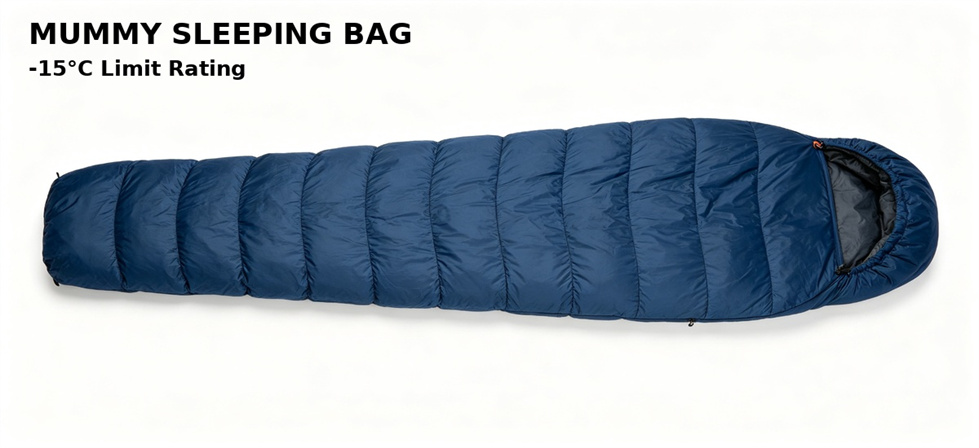
| -15°C to 0°C (Limit) | Cold climate relief, winter shelters, mountain areas | 1.8 – 2.4 kg | 500 – 600 g/㎡ | Mummy shape, insulated hood, full draft tube, water-repellent shell |
| -25°C to -10°C (Extreme) | Arctic/extreme cold, specialized rescue only | 2.4 – 3.0 kg+ | 600 – 700 g/㎡+ | Mummy shape, heavy insulation, face gasket, reinforced shell |
These are industry averages. Your supplier's exact configuration may differ. Always ask for the filling amount in g/㎡ and the finished weight together — a bag that claims a cold rating but weighs only 1 kg is using the number without the construction.
The single biggest factor in a sleeping bag's warmth is the filling amount, measured in grams per square metre (g/㎡). More filling means more trapped air, which means more insulation. But the filling material also matters.
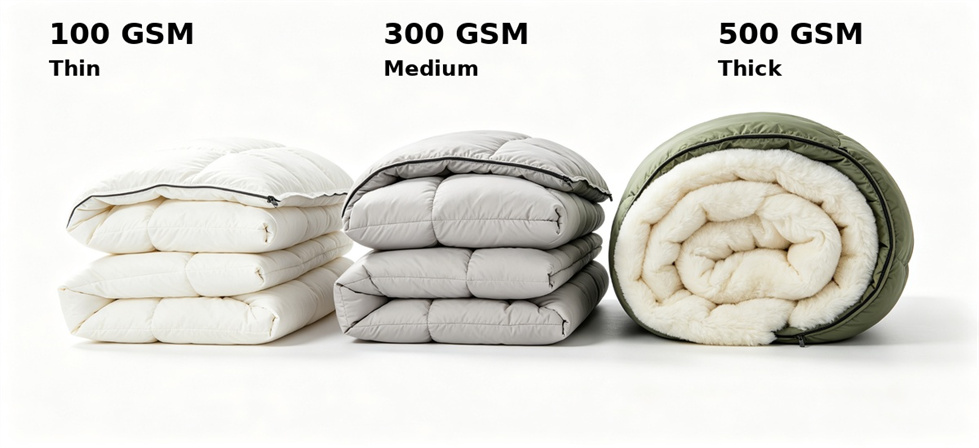
Hollow polyester fibre is the most common filling for relief sleeping bags. It is affordable, durable, washable, and retains loft reasonably well. Hollow fibres trap air inside the fibre itself, adding insulation without adding much weight.
Silk-like cotton (imitation silk) is softer and more compressible but usually less durable for institutional use. It is more common in retail or gift sleeping bags than in heavy-duty relief programs.
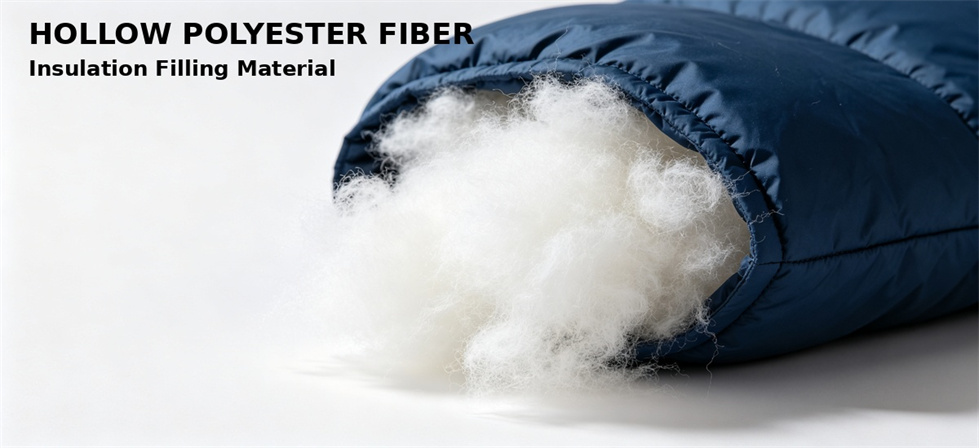
How filling amount translates to warmth (rough guide):
Always request both the filling material and the filling amount. A supplier who says "warm filling" without giving the g/㎡ number is not giving you enough information to compare.
Two sleeping bags with the same filling amount can have different warmth if their sizes or shapes differ.
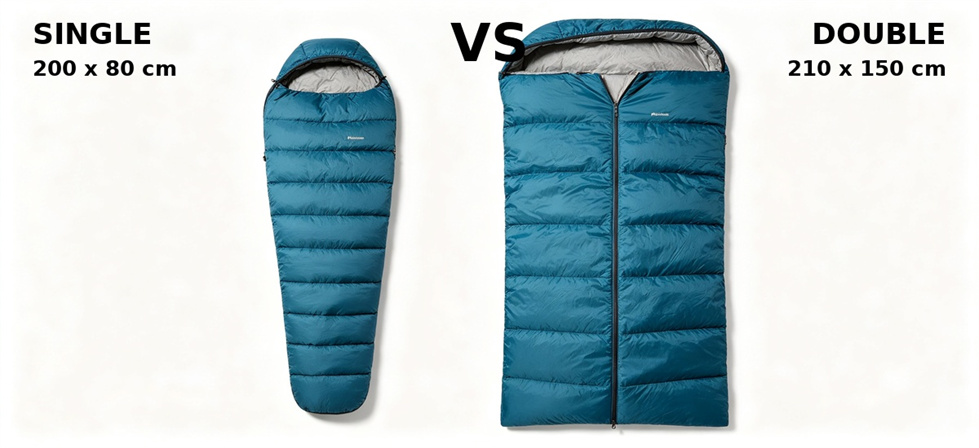
Size matters because a larger bag distributes the same filling over more area. A 210×150 cm double bag with 300 g/㎡ filling has more total filling than a 180×75 cm single bag at 300 g/㎡, but each square metre has the same insulation. The larger bag may feel colder per unit area because there is more space to heat with body warmth.
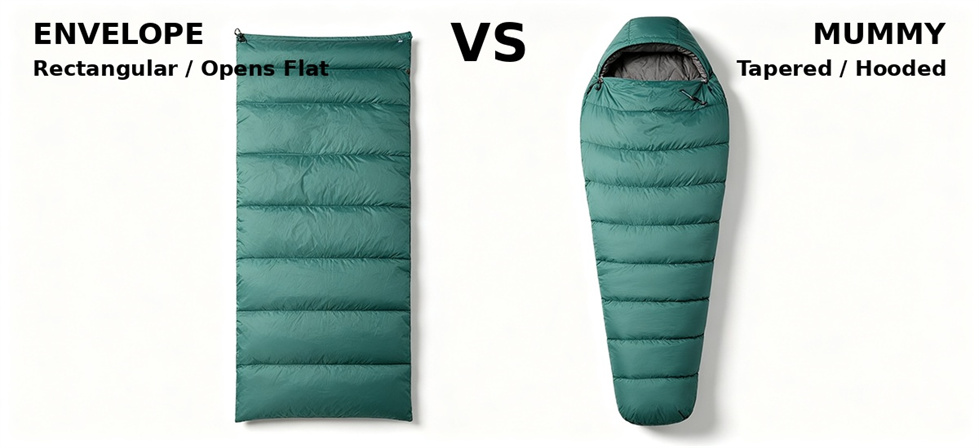
Shape matters because a mummy-shaped bag wraps tightly around the body, reducing dead air space that needs to be warmed. An envelope-shaped bag has more room but also more air to heat. At the same filling amount, a mummy bag will feel warmer than an envelope bag — but it is less comfortable for users who dislike tight spaces or who need to use the bag open as a blanket.
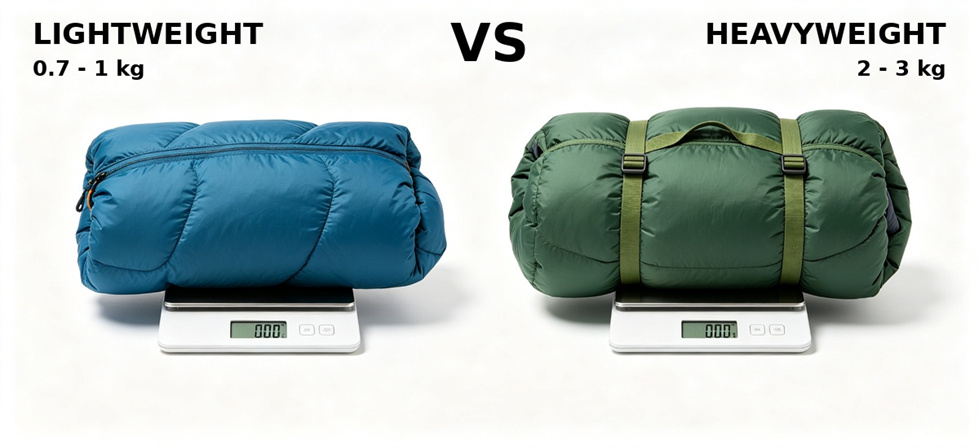
Weight is not a shortcut for warmth. A heavier bag may simply use a heavier shell fabric, more zippers, or a thicker storage bag — not more insulation. Always separate the finished product weight from the filling amount.
Buyer action: Request size, shape, filling material, filling amount (g/㎡), and finished net weight on the same quotation line. Do not infer warmth from weight alone.
A sleeping bag's temperature rating is tested under specific conditions: a standard user, specific clothing, a 1 cm insulated mat, inside a windless tent. Your actual use environment is almost certainly different.
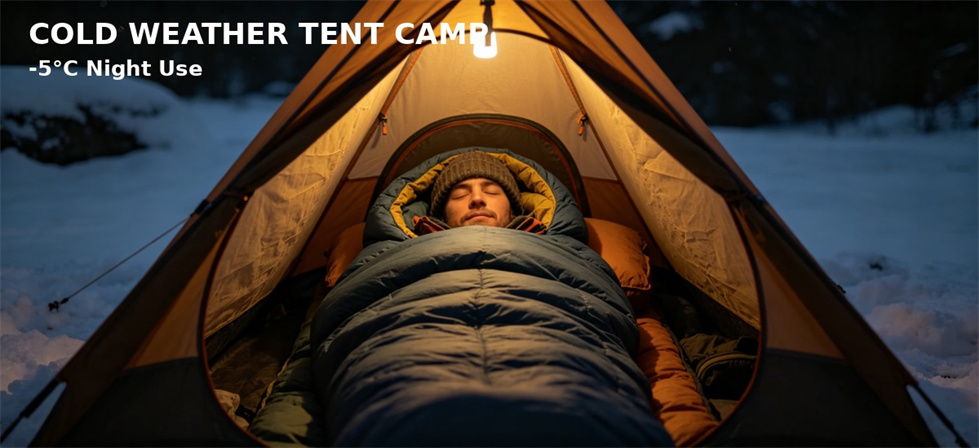
Factors that make users feel colder than the rating suggests:
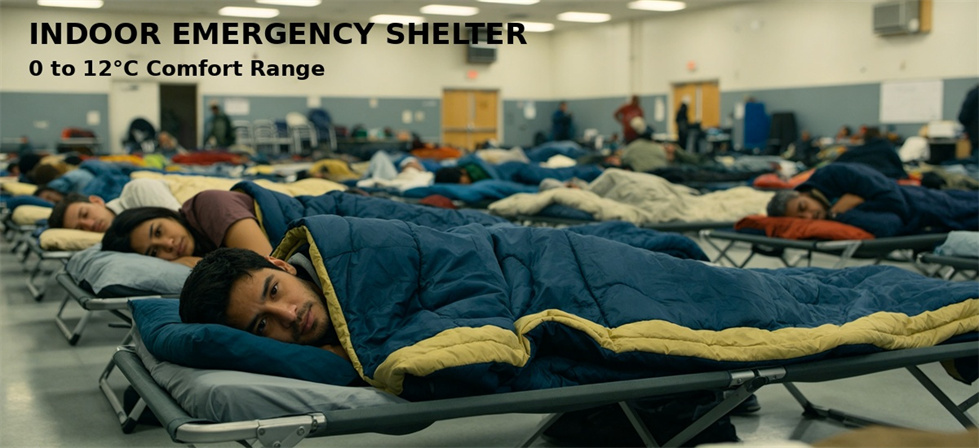
Factors that make users feel warmer:
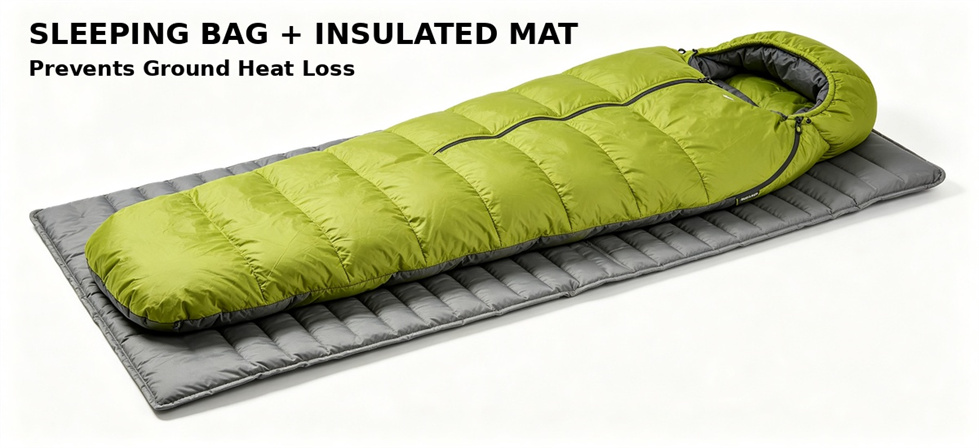
For relief procurement, describe your actual shelter conditions in the RFQ. If users will sleep on the floor of a community hall without mats, a bag rated for 0°C comfort may feel like -5°C in practice. Add a safety margin of 5°C when the sleeping surface or shelter is uncertain.
The biggest reason supplier quotes are hard to compare is that each supplier interprets "winter sleeping bag" differently. Write your RFQ so every supplier answers the same questions.
Include these items in every sleeping bag RFQ:
Ask suppliers to return a quotation table with all these items filled in. If a supplier cannot provide the filling amount or the rating basis, treat that quote as incomplete — do not compare it with suppliers who provided full information.
Here is how to apply the comparison method to a real scenario.
Scenario: A relief program for 500 adults in an unheated tent camp. Expected night temperature 0°C to 5°C. Users sleep on thin foam mats on the ground. Mixed age group including some elderly users.
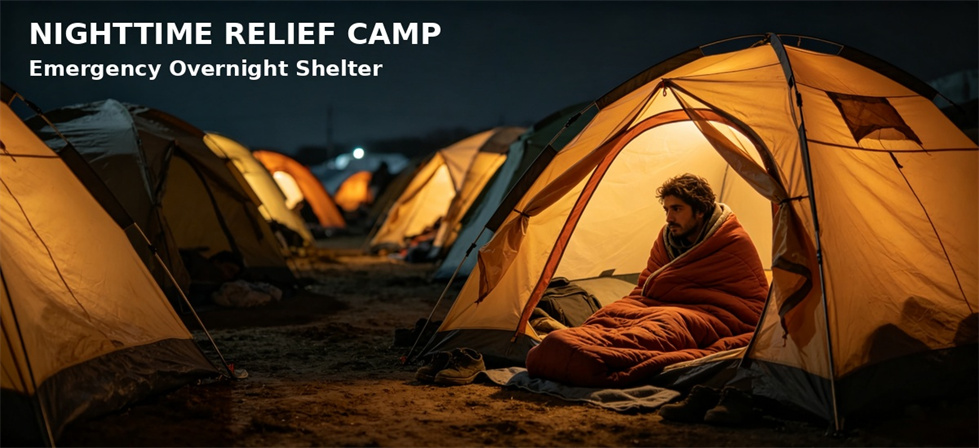
Step 1 — Set the target rating. Because users include elderly people and sleep on ground mats, use the comfort rating as the benchmark, not limit. Target comfort rating of 0°C or warmer.
Step 2 — Select the configuration. A 0°C comfort rating typically requires 300–400 g/㎡ filling in a mummy or envelope shape with a hood. Finished weight around 1.3–1.8 kg. Size 200×80 cm for adults.
Step 3 — Add a safety margin. Because the sleeping surface is a thin mat on the ground, add 5°C margin. Look for a bag with comfort rating of -5°C, which corresponds to roughly 400 g/㎡ filling and 1.5–1.8 kg weight.
Step 4 — Compare supplier quotes. Request the same configuration from each supplier: 200×80 cm, envelope or mummy, 400 g/㎡ hollow polyester filling, hood, water-repellent shell, comfort rating -5°C per EN 13537. Reject any quote that cannot state the filling amount or rating basis.
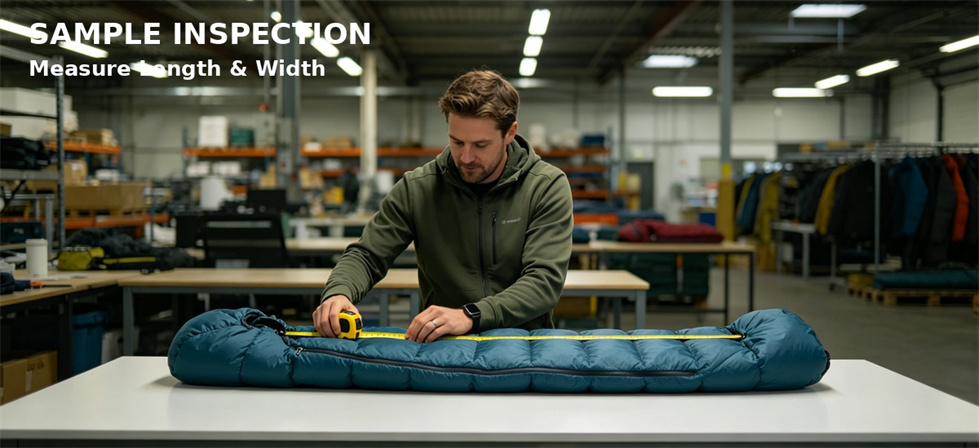
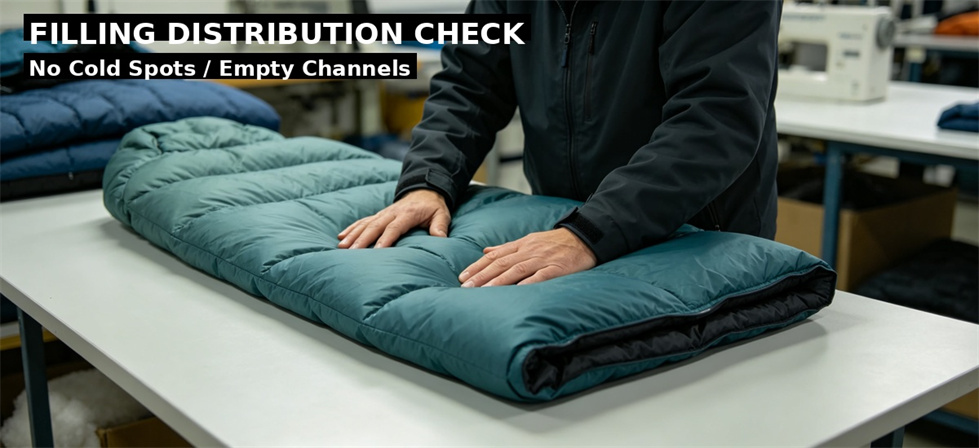
Step 5 — Verify with a sample. Order a sample, weigh it, measure the size, check the filling distribution by feel, and confirm the label matches the quotation. A sample that weighs 1.2 kg but claims 400 g/㎡ filling is inconsistent — ask for clarification.
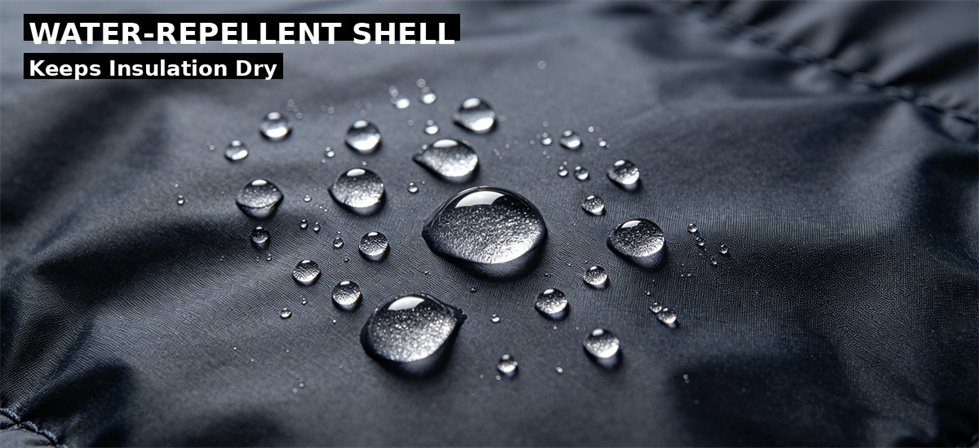
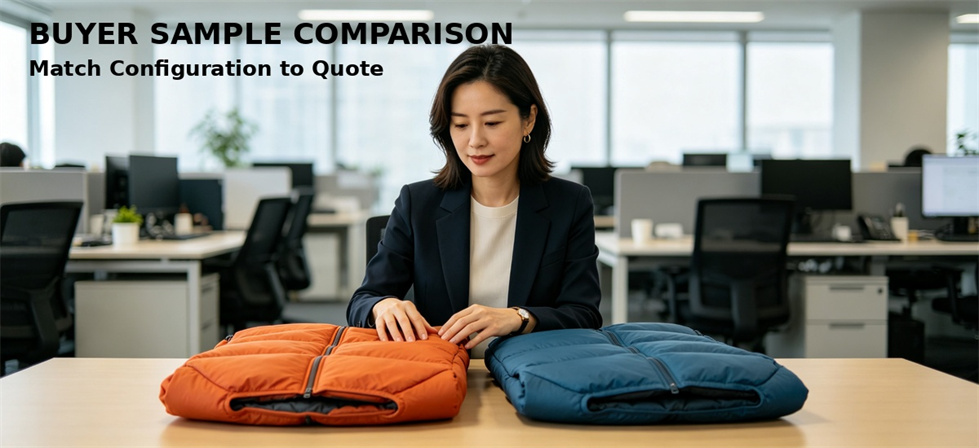
A sample cannot prove a temperature rating in an office inspection, but it can verify whether the construction matches what was quoted.
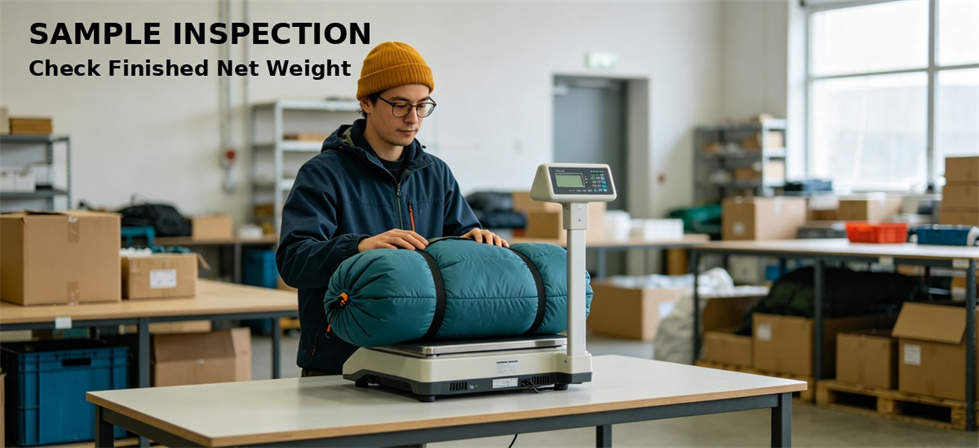
Check these on every sleeping bag sample:
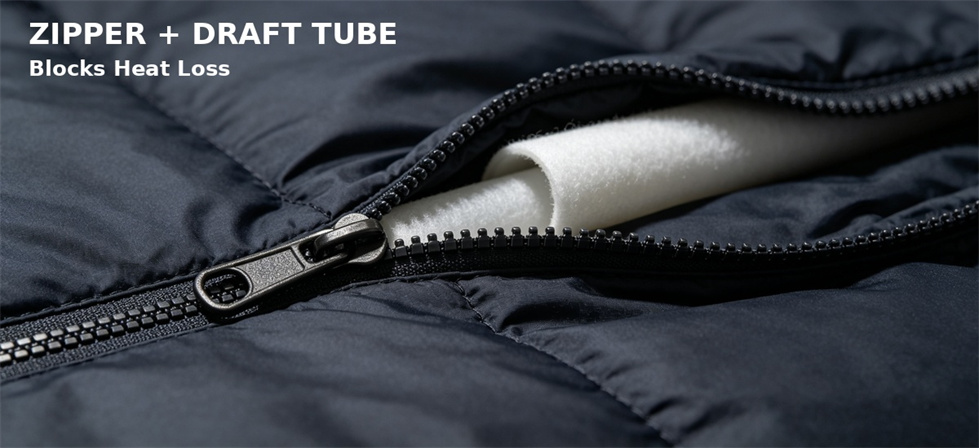
If the sample does not match the quotation (wrong size, lighter weight, missing hood), resolve the discrepancy before comparing temperature ratings. You may be comparing two different products.
When you reorder or modify a sleeping bag, some changes affect the temperature rating and some do not.
Changes that require a new temperature assessment:
Changes that usually do NOT affect temperature:
When in doubt, ask the supplier whether the change affects the tested configuration. A colour change on the same shell fabric is fine. A "similar but lighter" shell fabric is not — it may change wind resistance and the rating.
No. The lowest number (extreme rating) is a survival limit, not a comfortable sleeping temperature. For relief procurement, use the comfort rating as your benchmark. The comfort rating assumes a standard woman can sleep through the night without shivering — which is a safer target for mixed user groups.
No. Weight includes shell fabric, zippers, hood, and storage bag — not just insulation. Two bags at the same weight can have very different filling amounts. Always ask for the filling amount in g/㎡ separately from the finished weight.
Comfort = a standard woman sleeps comfortably all night. Limit = a standard man sleeps 8 hours without waking from cold. Extreme = a standard woman survives 6 hours without hypothermia death. For general relief use, target the comfort rating. The extreme rating is never a procurement target.
Only if the report explicitly covers those sizes and constructions. A test on a single 200×80 cm mummy bag does not automatically apply to a 210×150 cm double envelope bag. Always check the tested item description in the report against the product you are ordering.
Not directly. A water-repellent shell helps keep the filling dry in light moisture, and dry insulation works better than wet insulation. But it does not change the temperature rating by itself. Warmth comes from the filling amount and construction, not the shell treatment.
Typically 300–400 g/㎡ of hollow polyester fibre in a mummy or hooded envelope shape, with a finished weight of 1.3–1.8 kg. If users sleep on the ground without good mats, add a margin and look for 400 g/㎡ or higher.
At the same filling amount, a mummy shape is warmer because it wraps tighter and has less dead air to heat. But envelope shapes are more comfortable for users who dislike tight spaces, and they can open flat for use as a blanket. For general relief, envelope with a hood is a common compromise.
Very important. Up to half of body heat can be lost to the ground through conduction. A sleeping bag rated for 0°C on a 1 cm insulated mat may feel like -5°C on bare ground. Always include the sleeping surface in your temperature planning — a bag cannot compensate for a cold floor.
Send: expected night temperature, shelter type, sleeping surface, user group, required size and shape, filling material and minimum g/㎡, finished weight range, closure and hood requirements, rating standard requested, quantity, and packing needs. The more specific you are, the more comparable the quotes will be.
You can, but it may not be optimal. Indoor heated shelters need less insulation (100–200 g/㎡ is often enough). Outdoor unheated tents need 300–400 g/㎡ or more. If your program covers both, either order two configurations or choose a middle-ground 300 g/㎡ bag that works acceptably in both.
EN 13537 (now updated to ISO 23537) is the European standard for sleeping bag temperature ratings. It uses a heated manikin to test the bag under controlled conditions and produces comfort, limit, and extreme ratings. Not all suppliers test to this standard — ask whether the rating is based on EN/ISO testing or supplier estimation.
Hollow polyester fibre is more durable, washable, and affordable — the standard choice for relief programs. Silk-like cotton (imitation silk) is softer and more compressible but less durable for repeated institutional washing. For emergency and relief use, hollow polyester is the practical choice.
Record: size, shape, shell material, lining material, filling material, filling amount (g/㎡), finished net weight, closure type, hood/collar details, colour, storage bag, and the temperature rating with its basis. Keep this record with the sample reference for repeat orders and receiving inspection.
When your user groups have clearly different conditions — for example, some users in heated indoor shelters and others in outdoor tents. Each configuration should have a defined quantity and purpose. Do not order multiple configurations just because the supplier offers many options — every extra configuration adds sampling, labelling, receiving, and storage complexity.
✅ Factory video link (YouTube): https://x.c1ns.cn/zVNIU
✅ Facebook homepage: https://a.c1ns.cn/SjJla
Pautan Mesra :
hak cipta © Custom Disaster - Relief Bedding: Tents, Sleeping Bags, Blankets Hak cipta terpelihara
pasukan profesional untuk perkhidmatan !