The Ultimate Emergency Portable Washbasin: Your Essential Survival Tool
The Emergency Portable Washbasin is a crucial survival tool, designed for use in emergency situations, such as natural disasters, military operations, and medical emergencies. This washbasin is sturdy, yet lightweight, making it easy to transport and store. With multiple sizes available, it can meet the needs of any situation, ensuring everyone has access to clean water. The Emergency Portable Washbasin is a must-have for any emergency kit.
Sejumlah 1 muka surat
Temporary settlements, emergency duty points, field camps, worksite camps, outdoor events, and field medical points need a workable hand wash station when fixed sinks are unavailable. The first decision is not simply which basin to buy. Buyers need to establish how the mobile sink will be placed, how clean water reaches it, which components are supplied, and where used water goes.
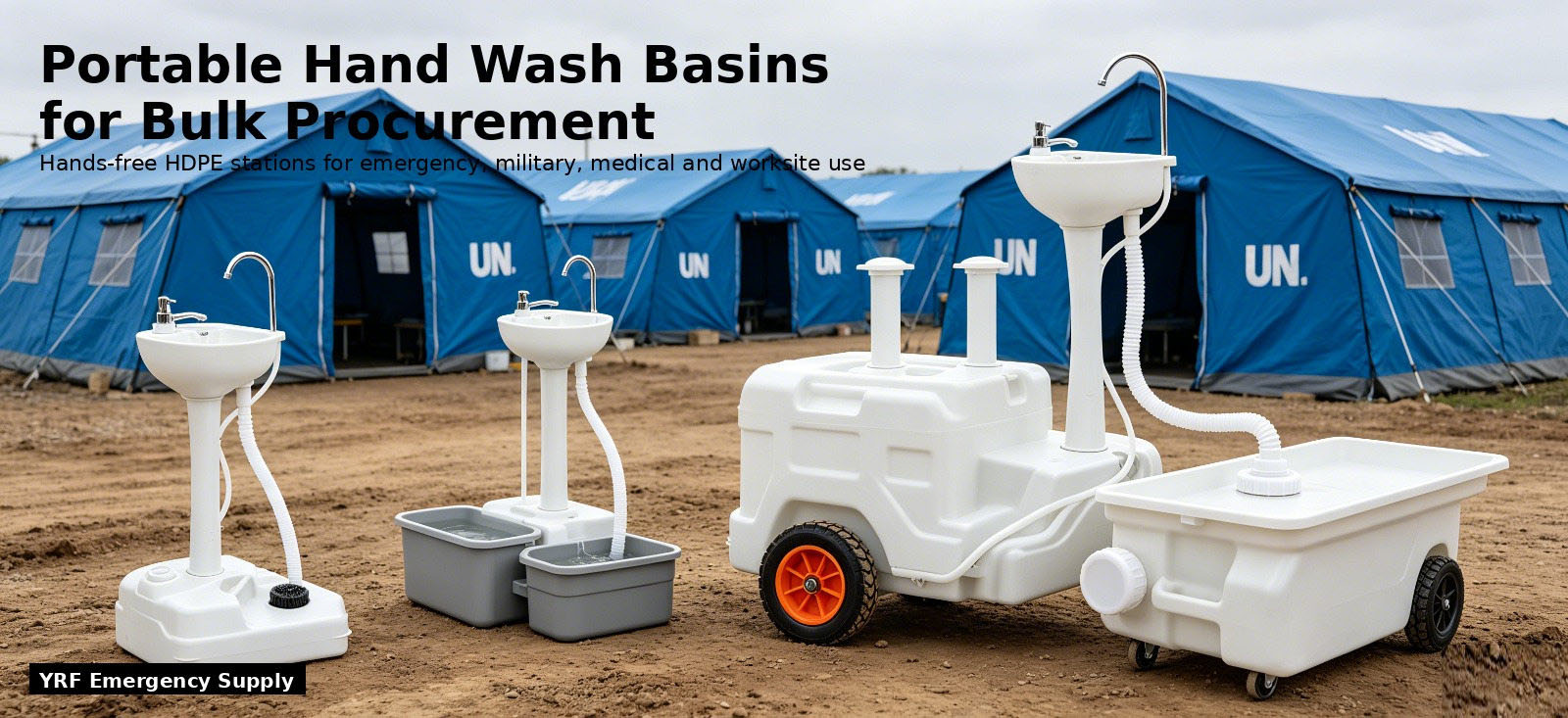
These hands-free units are blow-moulded from HDPE (high-density polyethylene), require no electricity and no fixed plumbing, and deliver water on demand through a foot pump so users never touch the tap with soiled hands. A foot-operated portable sink supports infection control at disaster relief camps, military field camps, temporary medical screening points, construction-site camps, large outdoor events, and fire-service field training. The current YRF website presents portable, quick-assembly, temporary-settlement, soap-dispenser, flood-relief, and eyewash directions. Use this page to narrow the category first. Material, dimensions, tank capacity, components, and packing remain model-specific and are confirmed through the current product record, approved sample, and written order.
Product directions · Model quick specs · Decision fields · Build a wash point · Plan by site · Current models · Sample cycle · Inspection · Avoid mismatches · RFQ info · FAQs
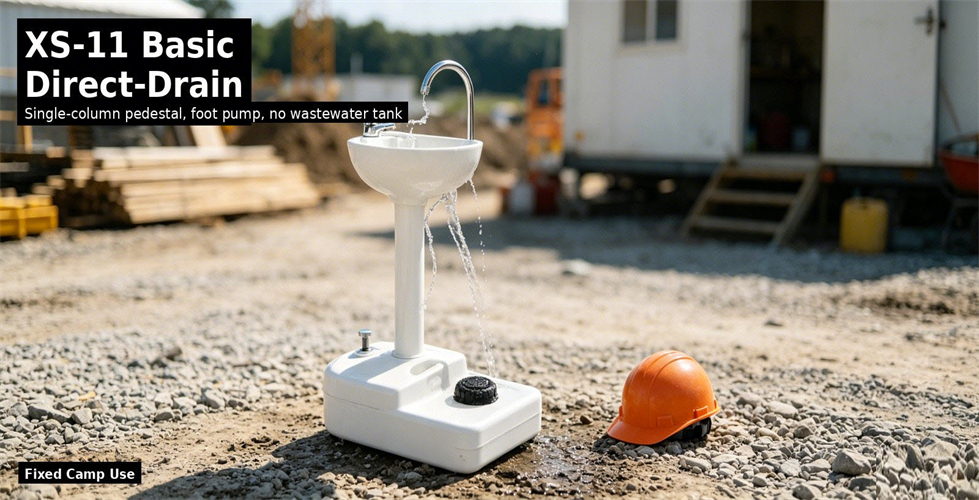
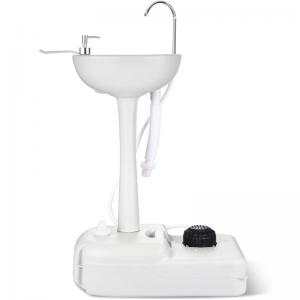
This route fits a project that already has a placement plan, clean-water source, and wastewater route and mainly needs a portable washing container. Representative model XS-11-2 uses an integrated base with direct drain discharge. Confirm basin format, dimensions, movement, and packing without assuming that a support, tap, tank, or wastewater container is included.
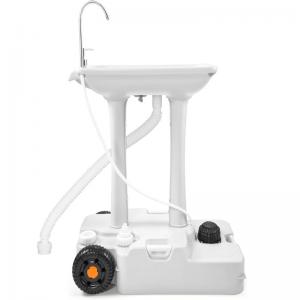
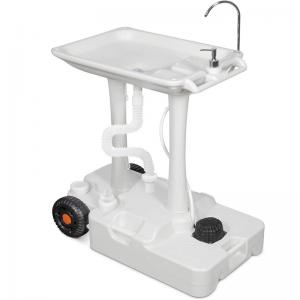
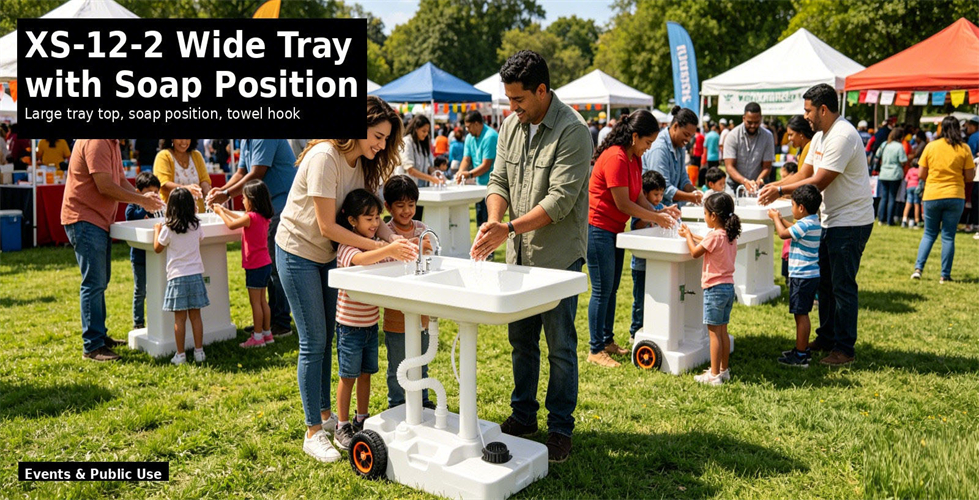
This route fits projects that transport the unit to several sites and assemble it locally. Representative models are XS-12-1 (rolling wheels, twin-column support, integrated fresh-water tank, drain hose) and XS-12-2 (wide tray top, soap-dispenser position, towel hook). The sample should verify component count, assembly sequence, tool requirements, stability during use, strike-down, and return to the approved packing.

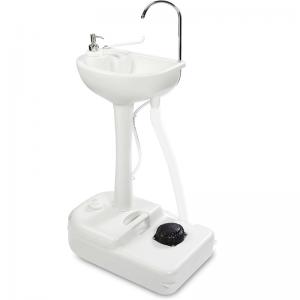
This route fits projects that want washing supplies positioned at the same point. State separately whether the dispenser is included, its volume (typically 2–3 L), its position, and how it is refilled. A dispenser named on one product page is not a standard component across the category.
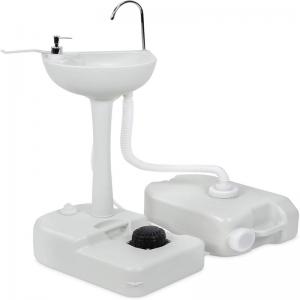
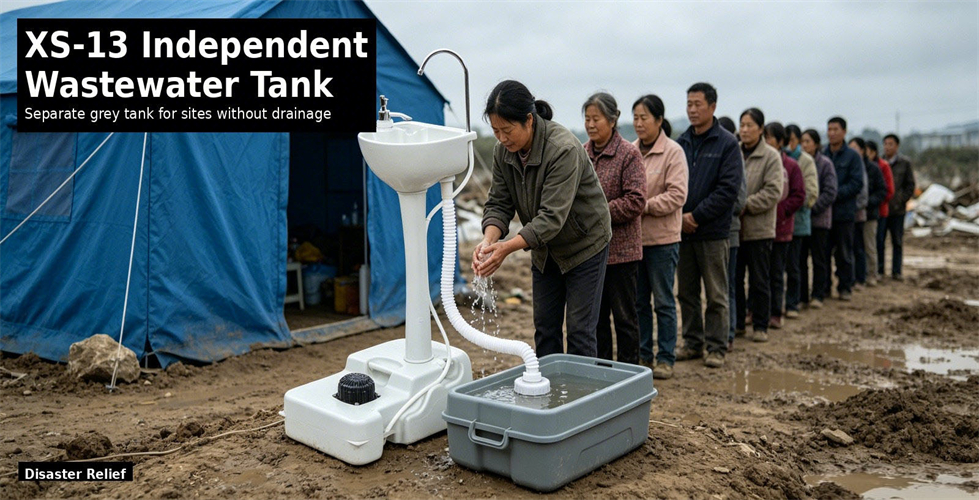
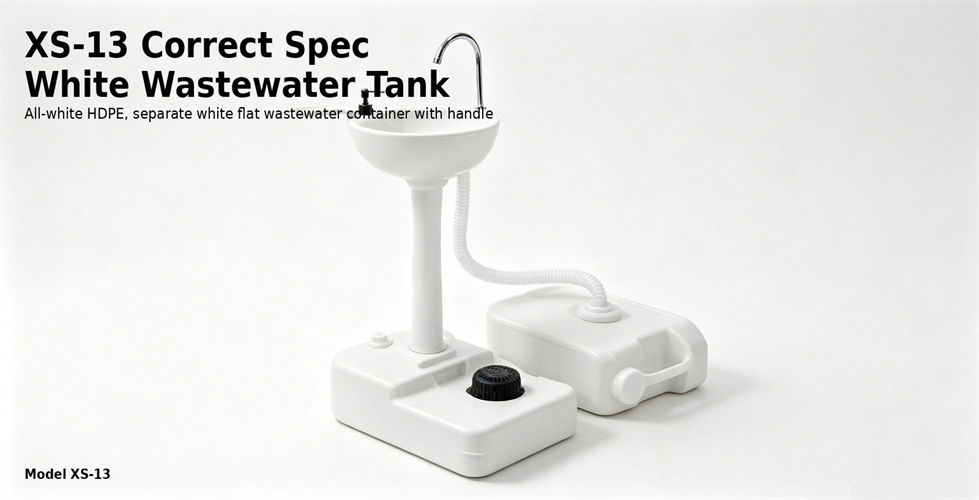
This route fits sites where direct discharge is not permitted and wastewater must be collected and carried away. Representative model XS-13 ships with a separate grey wastewater container, foot pump, tap, and connecting hose. Confirm wastewater container capacity, connection method, and emptying procedure.
Selection boundary: this category covers portable hand wash basins and mobile hand wash stations, not a complete plumbed handwashing station with automatic water heating, pumping, purification, drainage, and disinfection. When a complete setup is required, list every water-supply, outlet, collection, and cleaning component separately.
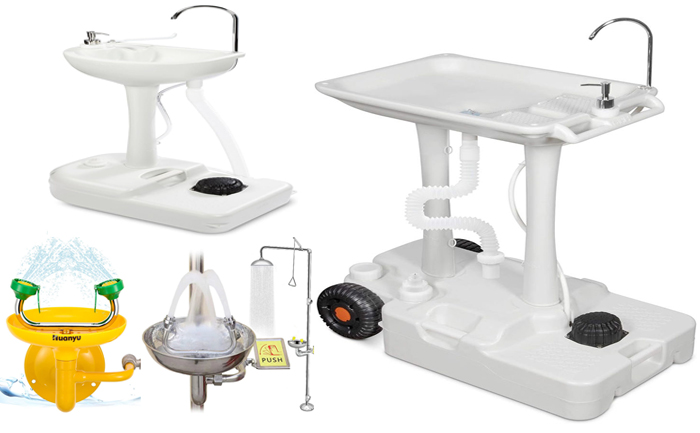
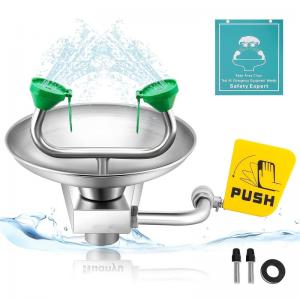
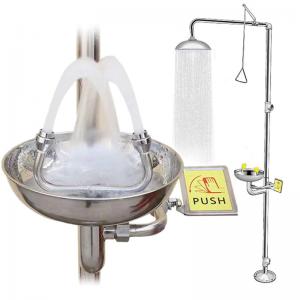
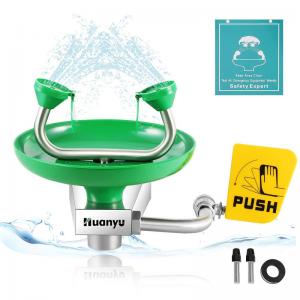
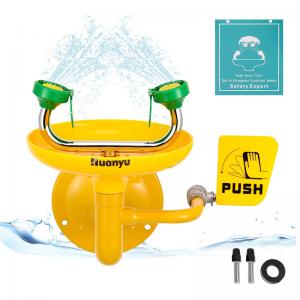
This category page also lists emergency eyewash stations, which are a separate product from hand wash basins and cannot be substituted for each other. Types include: 304 stainless steel combined eyewash with shower (wall-mounted, dual eye-wash nozzles plus shower head and push pedal, for laboratories, factories and chemical areas); ABS plastic portable eyewash (green or yellow, foot or hand operated); yellow high-visibility foot-operated eyewash; and government-reserve large-basin eyewash with push sign. Eyewash units follow separate flow-rate standards (such as ANSI Z358.1) and acceptance criteria and must be quoted and inspected independently, not priced against hand-basin specifications.
These are the hand-wash directions live on the YRF site. MOQ is 30 units per model, lead time 5–15 days, port Guangdong/Guangzhou, payment TT/PayPal/Western Union, origin China. Carton sizes below are packed dimensions; assembled operating height is 80–110 cm depending on model. Exact tank litres and loaded weight are confirmed on the approved sample and specification sheet.
Eyewash series (same category): 304 stainless steel combined eyewash with shower, ABS portable eyewash (green), yellow foot-operated eyewash, and government-reserve large-basin eyewash. These follow ANSI Z358.1-type flow criteria and are quoted separately — request the eyewash spec sheet for model numbers and prices.

Decision field
Why it affects selection
Lock in the quotation or sample
Product format
Defines whether the site receives only a basin or a supported mobile hand wash station
Basin, supports, opening method, and supplied components
Dimensions and operating height
Affect placement, use, and transport but cannot be measured accurately from an image; carton size is not operating height
Assembled height (typically 80–110 cm), basin height, and packed dimensions stated separately
Clean-water entry
Water must still reach the washing point when fixed plumbing is unavailable
Filling method and whether a tank, tap, hose, or connector is included
Wastewater exit
An unresolved route can cause standing water, shutdowns, or repeated handling
Outlet, hose, collection container, and separately supplied items
Assembly and stability
Empty appearance does not establish fit when the hands-free station is set up and used
Components, tools, ground needs, and sample-use checks
Cleaning-supply components
A dispenser or soap holder changes the component, refill, and packing list
Component name, volume (2–3 L typical), position, and refill method
Cleaning and storage
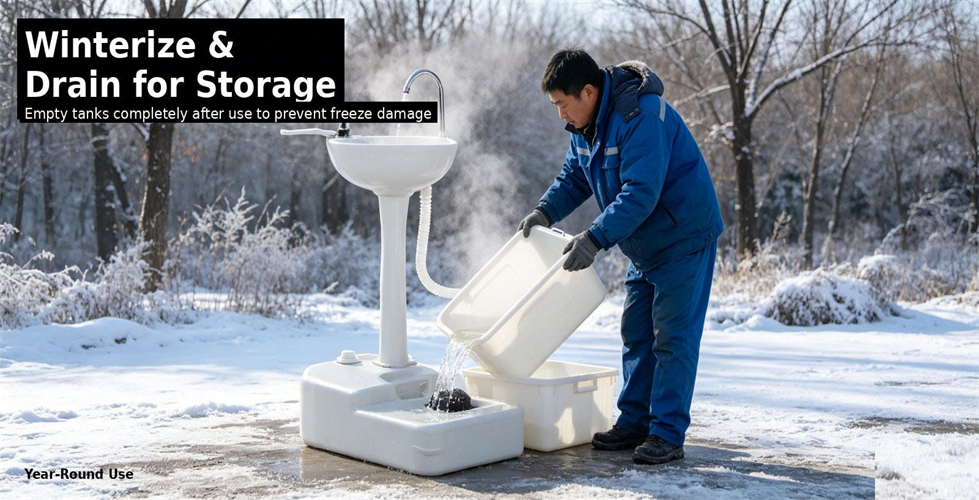
Repeated use requires emptying, cleaning, drying, dismantling, and repacking
Removable parts, cleaning steps, and packing restoration
Per-set packing
Components split or mixed between sites can leave a set unusable
Set number, component list, labels, packing list, and agreed spares
Material and construction
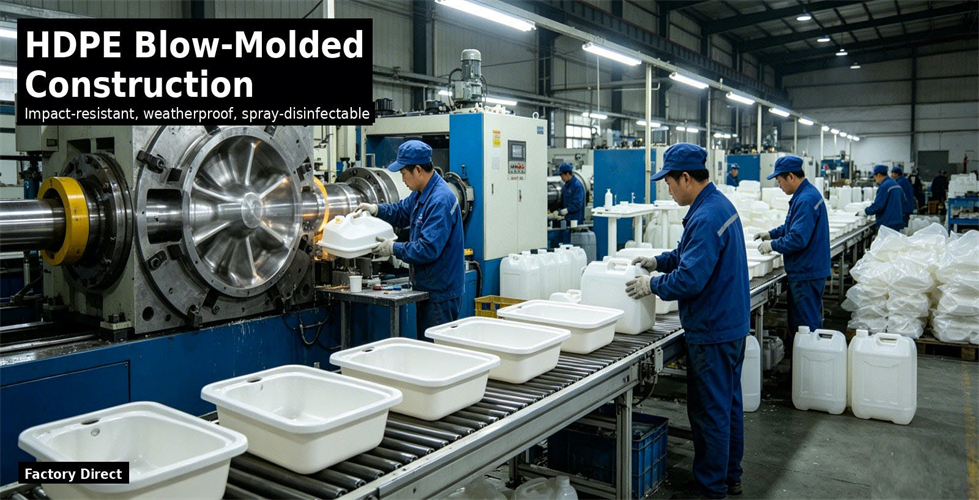
HDPE blow-moulded body determines durability, weather resistance, and weight
HDPE grade, wall thickness, and body colour (white as standard)
Fresh-water tank capacity
Determines how many hand washes one fill supports (around 17 L supports 80–100 washes at ~200 ml per pump)
Fresh-water tank volume in litres/gallons and fill-point location
Wastewater collection type
Direct discharge versus a carried container changes site layout and labour
Direct drain, independent wastewater container, or connecting hose specification
Foot-pump delivery
Water per stroke (typically 180–220 ml) affects both hygiene and water conservation
Water delivery per stroke in ml, pump body material, and return action
Wheels and transport
Wheeled units can be moved while filled; non-wheeled units must be emptied before moving
Wheels/handle presence or absence, loaded weight, and wheel diameter
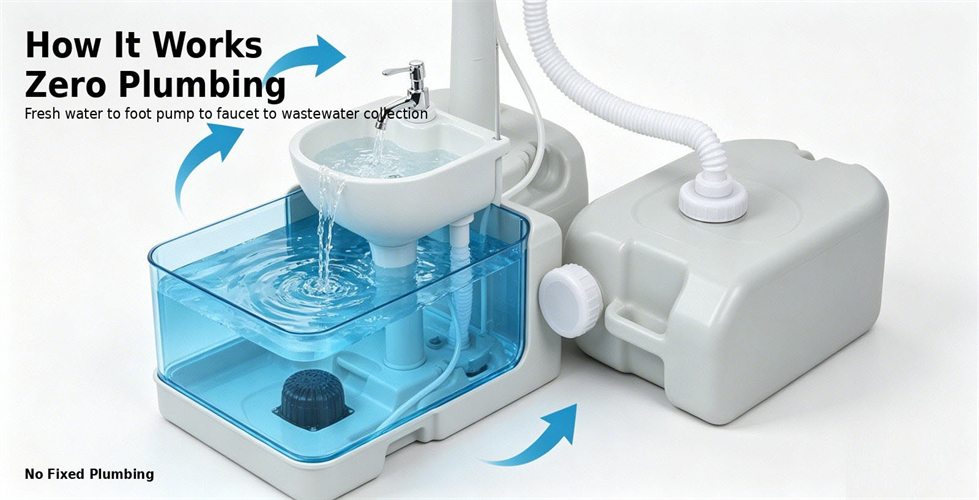
How a YRF portable hand wash station operates: the foot pump draws water from the fresh-water tank in the base, the tap delivers it over the basin, and wastewater flows into the integrated base compartment or a separate grey-water container, which is then emptied manually. The entire cycle needs no electricity and no connection to fixed plumbing — that is why the same mobile sink works in a disaster relief camp, a military field kitchen, a temporary medical screening tent, and a construction-site camp.
Break each washing point into four connected parts: how clean water arrives, how users access it, where used water goes, and how the point is replenished and cleaned. The product itself covers only the responsibilities stated in its specification and component list.
This separates missing supplied components from incomplete site preparation. The former enters the supply list; the latter enters the deployment plan, keeping quotation and acceptance on a comparable basis.

List the number of sites, placement points, expected users, concentrated-use periods, refill frequency, and cleaning arrangement before setting the base and spare quantity per site. Two projects with the same total users may need different configurations when one has continuous refill and the other requires long-distance water movement.
Tank capacity and refill frequency: a 17 L fresh-water tank supports roughly 80–100 hand washes at about 200 ml per pump; 20–30 L tanks support 100–150 washes. During concentrated periods such as after meals, shift change, or medical screening waves, estimate total water use from peak headcount multiplied by average washes per person, then decide units per point and the refill rota.


Within the same category page YRF also lists emergency eyewash directions: 304 stainless steel combined eyewash with shower for wall-mounted factory and laboratory use; ABS plastic portable eyewash in green for light mobile deployment; yellow high-visibility foot-operated eyewash; and government-reserve large-basin eyewash with push-plate sign. These are quoted against eyewash flow standards and acceptance criteria, not against hand-basin specifications.
Product-page names help identify a direction, but words such as durable, waterproof, or large capacity do not replace a specification or test basis. When such performance is required, state the decision field and acceptance method and verify the applicable product record. For eyewash products, separately confirm the eyewash flow standard (such as ANSI Z358.1) and acceptance method; the hand-basin acceptance logic does not apply.
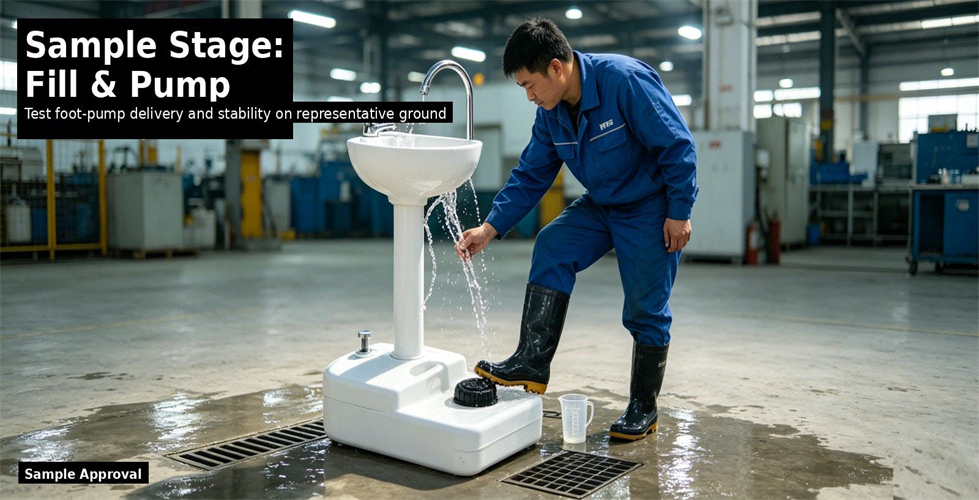
All samples are chargeable. Sample fees are non-refundable and cannot be credited against a bulk order. Processing begins after the sample and courier costs are paid, and preparation time depends on the product, sample availability, customization, and approval requirements.

At receiving, reconcile cartons by set or site number, then open and assemble complete sampled sets. Correct unit counts do not create a usable set when connectors, supports, foot pumps, or agreed accessories are placed in the wrong cartons.


Start with: product direction (XS-11, XS-12, XS-13, or eyewash), quantity, destination country, use location (disaster relief, military, medical, construction, event, fire service), and whether the requirement is a basin alone or a mobile hand wash station with stated components. Then add: clean-water and wastewater conditions, fresh-water tank capacity requirement, wastewater collection type (direct drain or independent container), wheels or no wheels, accessories such as a soap dispenser or towel hook, label language, per-set packing, sample, and acceptance requirements. For eyewash inquiries, state the applicable eyewash standard.
YRF can then map current product directions, open specification fields, component scope, sample arrangement, and quotation boundaries. This category page does not publish one fixed price, MOQ, or lead time; MOQ is 30 units per model and lead time typically 5–15 days, with final figures depending on the selected product, quantity, configuration, packing, and current production schedule.
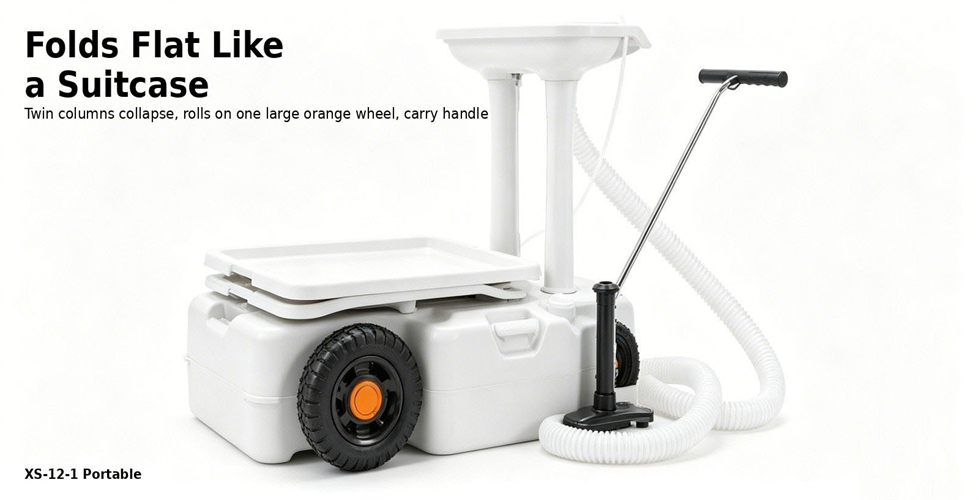

The supplied scope of a portable basin depends on the selected model and component list. A complete station may also need fresh-water storage, outlet control, support, wastewater collection, and cleaning supplies; these cannot be assumed from the basin name.
Yes. YRF portable hand wash stations are designed to run without electricity or fixed plumbing. The foot pump draws from the on-board fresh-water tank and delivers roughly 180–220 ml per stroke, and the buyer states how used water is collected or discharged before the product and external components are selected.
Choose a basic XS-11 sink when stable placement and supporting conditions already exist. When the project requires multi-site transport, local assembly, or repeated strike-down — such as disaster relief, worksite camps, or events — choose a wheeled XS-12 station and include assembly steps, components, and repacking in the sample comparison.
Do not infer them from the category name. List every required component in the RFQ and verify it against the selected model, approved sample, component list, and quotation. Only XS-12-2 positions a soap dispenser as standard; other models require confirmation.
At about 200 ml per foot-pump stroke, a 17 L tank supports roughly 80–100 hand washes; 20–30 L tanks support 100–150. Plan quantity around peak concentrated use (meals, shift change, medical screening) rather than average daily use.
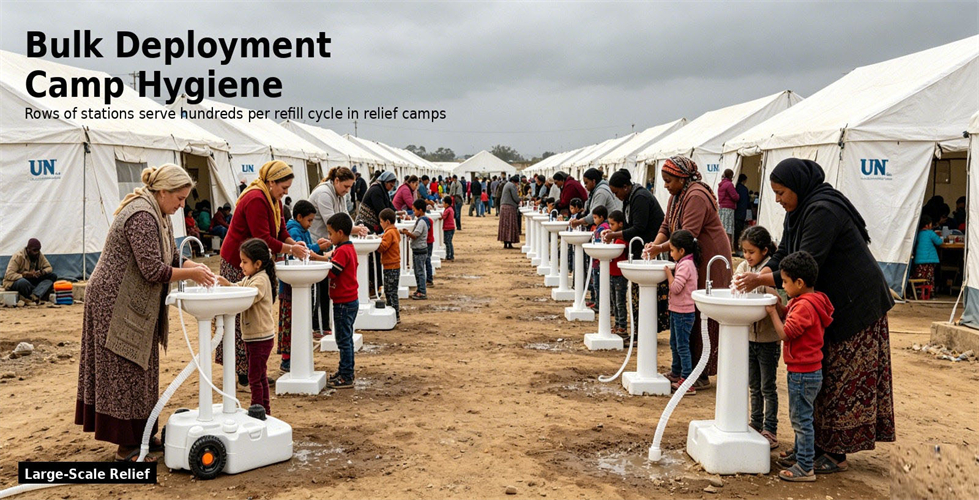
Plan by site, placement, expected users, concentrated-use periods, refill access, and wastewater capacity rather than applying one universal users-per-basin formula. For multi-site relief or worksite projects, assign sets and spares per site.
Feasibility depends on the selected product, quantity, and process. Provide authorized identification artwork, label language, and packing requirements so the sample or artwork can be approved before bulk production is locked. White is the standard body colour.
Buyer-nominated third-party inspection is accepted, with the related costs paid by the buyer. Scope, batch, sampling, schedule, and report requirements should be agreed in advance.
All samples are chargeable, non-refundable, and not creditable against bulk orders. Dispatch is arranged after sample and shipping costs are paid. Destination duties, clearance charges, and local taxes are paid by the buyer unless formal documents state otherwise.
Product format (XS-11/XS-12/XS-13), component scope, quantity, customization, labels, packing, trade term, and destination affect the quotation. MOQ is 30 units per model and lead time is typically 5–15 days. Quotations are normally valid for 30 days, with the exact period stated on each quotation.
The main body is blow-moulded HDPE (high-density polyethylene), which is impact-resistant, weather-resistant, and corrosion-resistant, suitable for long-term outdoor and emergency use. HDPE surfaces can be spray-disinfected, which supports medical and infection-control use.
A combined supply can be evaluated, but quantity, components, specifications, packing, and acceptance must be confirmed separately for each category so one product's function is not assigned to another. Eyewash follows separate flow standards and is quoted on its own spec sheet.
For disaster relief with uncertain drainage, choose XS-13 with independent wastewater tank or wheeled XS-12 for reconfigurable camps. For fixed construction camps, XS-11 direct-drain is economical. For events and public points, XS-12-2 with tray top and soap dispenser handles high turnover. For medical screening points, confirm hands-free foot pump and disinfection-compatible HDPE.

Start with the product direction (XS-11, XS-12, XS-13, or eyewash), quantity, destination, use location, and component scope. We will respond within 24 hours and confirm the next specification, sample, and quotation inputs against current products.

Ask for Spec Sheet
Prefer WhatsApp? Message +86 13702995607 with your model and quantity.
YRF Textile · B2B Emergency Supply · Foshan, China
Pautan Mesra :
hak cipta © Custom Disaster - Relief Bedding: Tents, Sleeping Bags, Blankets Hak cipta terpelihara
pasukan profesional untuk perkhidmatan !