Kategori
Last updated: November 27, 2026
72 Hour Emergency Kit Requirements OSHA:
Workplace Compliance Guide
Quick Answer: OSHA workplace preparedness guidance supports keeping emergency first aid, light, warning and communication supplies ready so employees can respond during the first 72 hours after an incident. A workplace kit is organized by team size, stored near exits, and checked every 6 months; specific requirements depend on your worksite hazards and local safety rules. Review the kit against your workplace emergency action plan.
A workplace 72-hour emergency kit is the stocked set of water, first aid, shelter, lighting and communication supplies an organization keeps on hand to meet workplace emergency-preparedness duties.
This guide explains the 72 hour emergency kit requirements OSHA sets for U.S. workplaces, how buyers turn those duties into stocked, audit-ready supplies, and the cited clauses, ANSI and FEMA benchmarks EHS managers follow. It covers first aid, water, shelter, lighting, warmth and communications, helping office, school, retail and industrial buyers prepare compliant workplace emergency kits for staff.
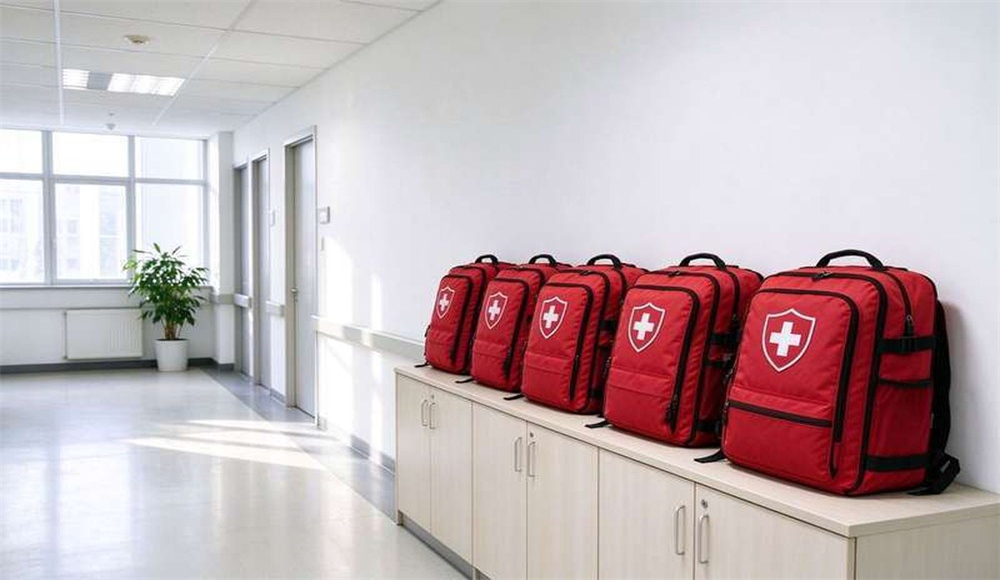
It clarifies which obligations apply to emergency response supplies, how to document a stocked kit for inspections, and how teams choose compliant water, food, first aid, lighting and communication items.
This page covers which 29 CFR sections apply to workplace supplies, how to build a compliant OSHA workplace emergency kit, and the mistakes that trigger citations.
Why this guide matters to your team?
✓ Map every OSHA clause that touches workplace emergency supplies
✓ Build a 72 hour emergency kit that survives an inspection walk-through
✓ Avoid willful and serious violation citations that hit the budget
✓ Protect employees until first responders can reach your site
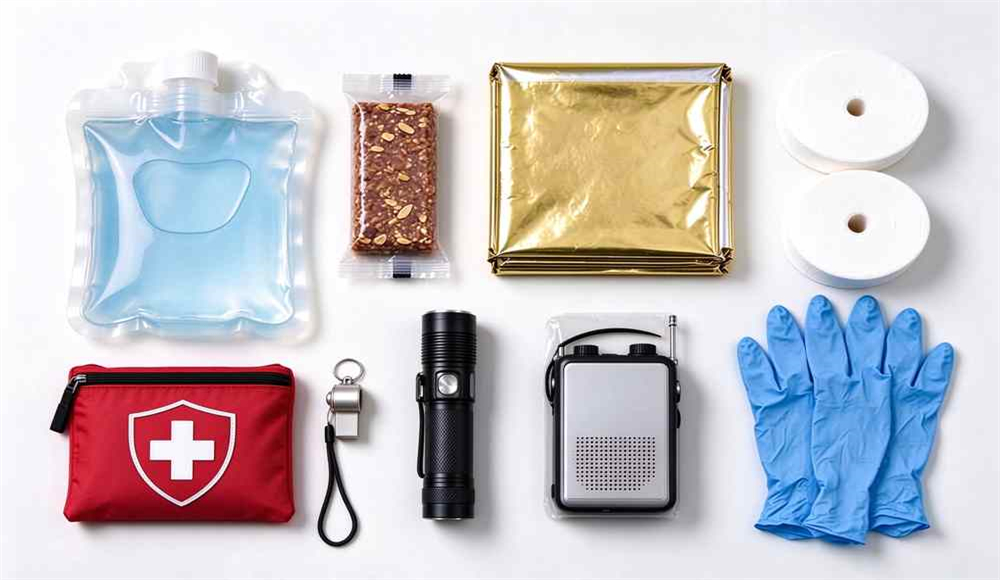
Table of Contents
1. What is OSHA and why it matters
2. Which OSHA Clauses Apply to a Compliant Kit?
3. ANSI Z308.1 first aid standards
4. FEMA recommended supplies and guidelines
5. What State and Local Requirements Apply?
6. How to ensure compliance
7. Penalties for non-compliance
8. What Common Myths Do Buyers Believe?
9. How Do Requirements Vary by Industry?
10. What Should the OSHA Compliance Checklist Include?
11. What Happens During the OSHA Inspection Walk-Through?
12. How Do You Build Your Emergency Action Plan?
13. What Are the Three Compliance Kit Tiers?
14. What Are the Benefits of OSHA Compliance?
This guide cross-references standards published by OSHA, preparedness guidance from Ready.gov, and humanitarian benchmarks from FEMA.
OSHA, the Occupational Safety and Health Administration, is the U.S. federal agency under the Department of Labor. It writes and enforces standards that keep workers safe.
OSHA covers nearly all private-sector employers and most public-sector staff through state plans. Federal standards are the floor you design against when you work in the United States or export kits to U.S. buyers.
OSHA does not print the phrase "72 hour emergency kit" inside a single rule. It requires a set of outcomes: an Emergency Action Plan, medical and first aid supplies on site, portable fire extinguishers, and evacuation drills.
Buyers and EHS teams translate those outcomes into a stocked kit that keeps employees safe until help arrives.
The 72 hour emergency kit concept comes from FEMA and Ready.gov: after a major disaster, first responders may not reach you for 72 hours. OSHA sets the legal duty to plan for that gap; the kit sets the practical contents.
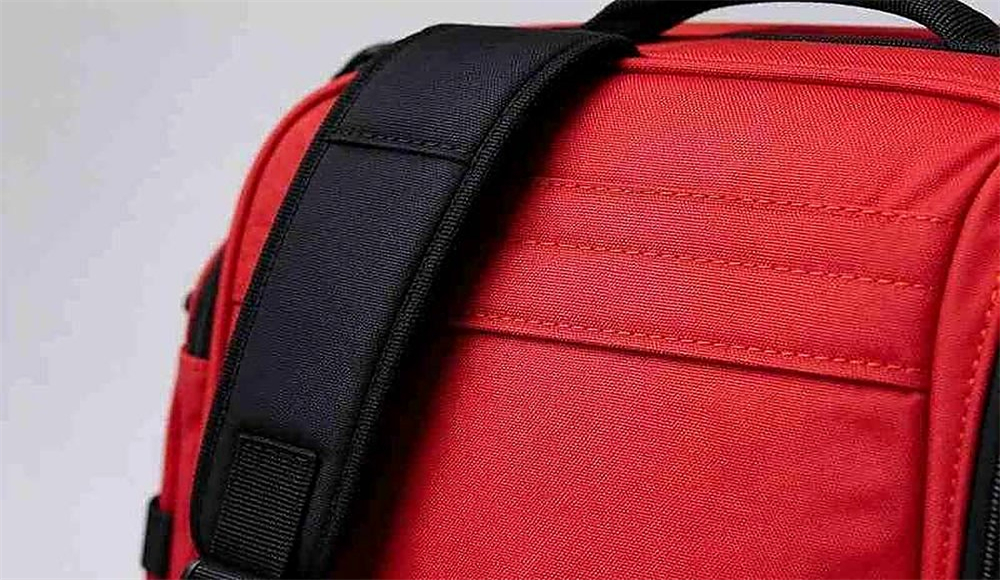
29 CFR 1910.38 is the backbone standard. It requires a written Emergency Action Plan covering evacuation routes, emergency reporting, employee accounting, rescue duties, and medical duties.
Practical impact on your kit: your written plan must name where the emergency kit lives, who is trained to open it, and how employees reach the assembly point. A kit without a written plan is not enough on its own during an inspection.
29 CFR 1910.151 requires that where no clinic is nearby, trained first aid responders are on site, and suitable first aid supplies are readily available. This clause justifies the first aid module in every workplace kit.
Buyers should note: the agency itself does not list a fixed first aid inventory. Most U.S. buyers align kits to ANSI/ISEA Z308.1, which is the voluntary consensus standard inspectors commonly reference during walk-throughs.
29 CFR 1910.157 governs portable fire extinguishers in the workplace. If you expect employees to fight small incipient-stage fires, extinguishers must be mounted, inspected monthly, and serviced annually. This is separate from, but often co-located with, your 72 hour emergency kit on each floor.
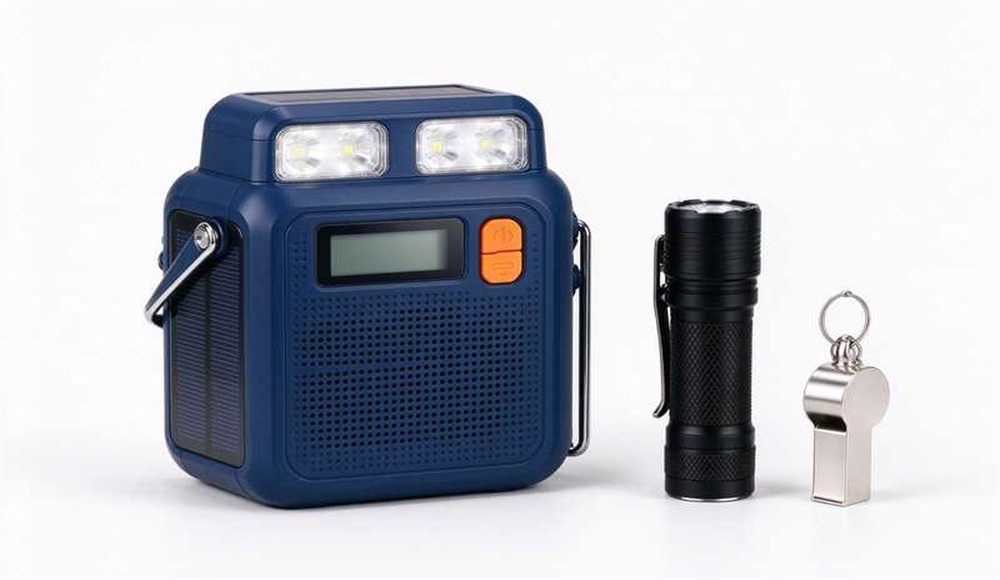
Exit routes, emergency lighting, and marked exits fall under 29 CFR 1910.37. A flashlight in your kit supports lighting when the grid fails. Every compliant workplace kit therefore includes at least one flashlight, preferably with a hand-crank radio that needs no batteries.
By industry, inspectors may also reference 29 CFR 1910.120 (HAZWOPER) for chemical sites, 29 CFR 1926 Subpart C for construction, and 29 CFR 1910.95 for hearing protection. The common thread: written plan, trained responders, accessible supplies, documented drills.
The federal standard sets the floor, ANSI sets the inventory, and your site risk assessment scales modules up. No single clause fixes the bag contents per shift.
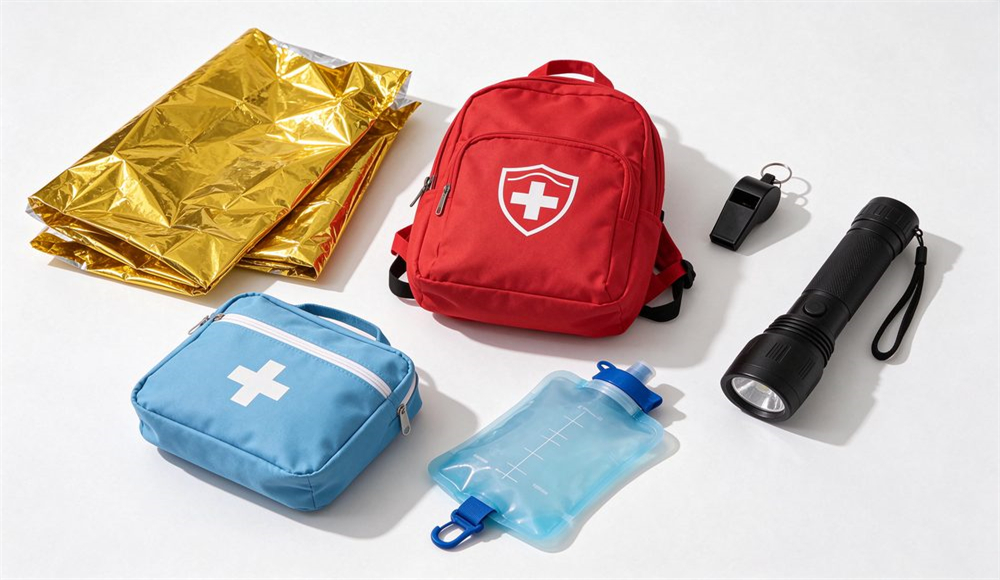
Inspectors commonly reference the voluntary consensus standard ANSI/ISEA Z308.1. When buyers map OSHA emergency kit requirements to actual contents, this benchmark is the named inventory most U.S. audits expect to see.
ANSI/ISEA Z308.1 classifies first aid kits into Class A and Class B configurations. Class A covers common injuries: minor cuts, burns, and scrapes in offices and light manufacturing. Class B covers more serious injuries in industrial settings, warehouses, and construction sites.
Compact Class C-style pouches may serve small workgroups as a supplement to a full floor kit.
Class A covers bandages, gauze, burn care, eye wash, and basic dressings for low-hazard settings. Class B adds trauma dressings, splints, and larger quantities for higher-hazard sites. Our first aid modules align to this benchmark, so your audit file can cite a named standard rather than a vague contents list.
The table below compares the four benchmarks buyers most often cite: OSHA, ANSI, FEMA, and EU compliance. Use it to confirm which framework applies to your site and destination market before you finalize a contents list.
Most U.S. workplaces cite OSHA plus ANSI; export buyers add FEMA-aligned contents and, for the EU, component-level conformity paperwork. Match the row to your audit before approving the kit.
Standard
Scope
What it covers
Status
OSHA 29 CFR
U.S. workplace legal duty
Emergency Action Plan, first aid access, extinguishers, drills
Federal regulation
ANSI/ISEA Z308.1
First aid contents
Class A and Class B inventory and quantities
Voluntary consensus standard
FEMA / Ready.gov
72-hour preparedness
Water, food, shelter, lighting, communication
Federal guidance
Component-level requirements
Destination market access
First-aid, electronics, batteries, protective items and fabric selected per applicable requirements, by component
Product documentation, product reports and conformity documentation available on request, subject to supply batch
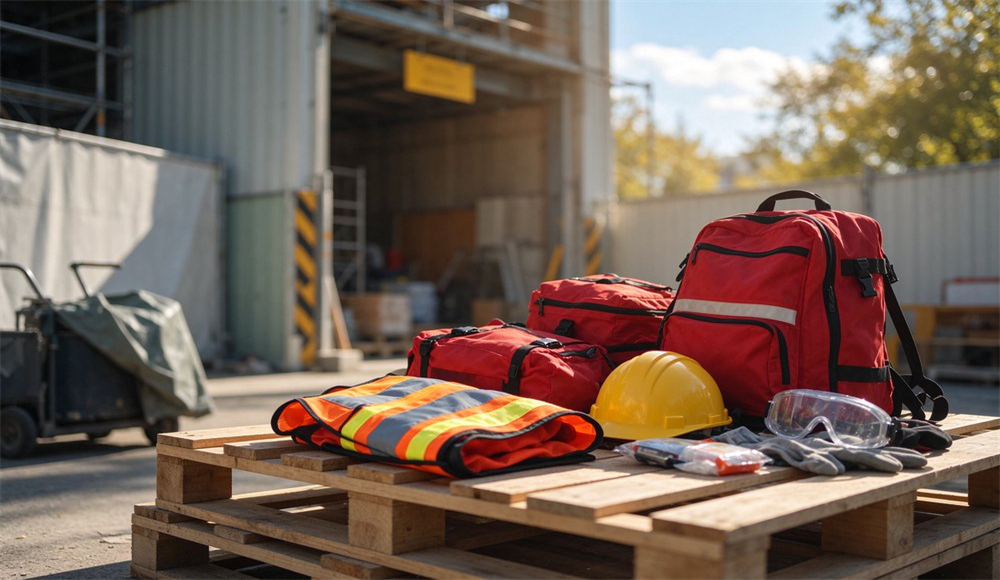
Beyond federal law, buyers use FEMA emergency kit guidelines to size the self-sufficiency window after a disaster. FEMA and Ready.gov recommend roughly 72 hours of readiness before responders arrive. Those FEMA recommended supplies shape the water, food, shelter, lighting, and communication modules for the OSHA workplace emergency kit used on site.
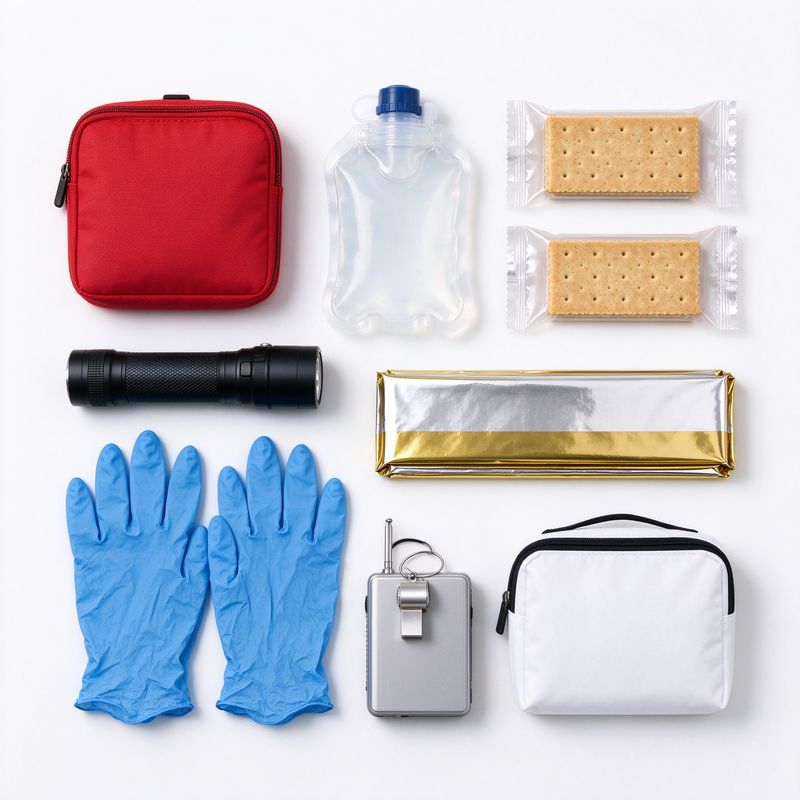
The FEMA checklist covers water, non-perishable food, first aid, lighting, communication, warmth, shelter, and key documents. A workplace kit skips personal comfort items but covers shared modules: water purification, first aid, flashlight, hand-crank radio, blanket, whistle, and a printed evacuation card.
OSHA sets the legal duty to plan and supply, while FEMA emergency kit guidelines set the practical 72-hour content horizon; a compliant OSHA workplace emergency kit meets the federal duty while matching the FEMA recommended supplies buyers expect.
These OSHA emergency kit requirements do not name specific brands or items, so contents are mapped to ANSI and FEMA benchmarks rather than fixed by rule.
When you quote a kit to safety review, cite OSHA for the legal floor and the FEMA emergency kit guidelines for the content planning window.
Federal regulation sets the national floor, but several states run their own occupational safety plans that can be stricter. Cal/OSHA in California, for example, imposes additional reporting, posting, and heat-illness rules. Buyers should check the state plan that covers their site rather than relying on federal guidance alone.
Local fire code, school district policies, and hospital or warehouse insurance rules may add requirements on top of federal rules. If your site serves the European market, component-level conformity under the EU framework may also be expected.
The EU compliance framework outlines the conformity information buyers request for a EU-compliant emergency kit sold to EU-bound orders, applied per component rather than as a blanket kit compliance claim.
Tell us your destination market and industry, and we will map the kit to the rules that apply to your audit.
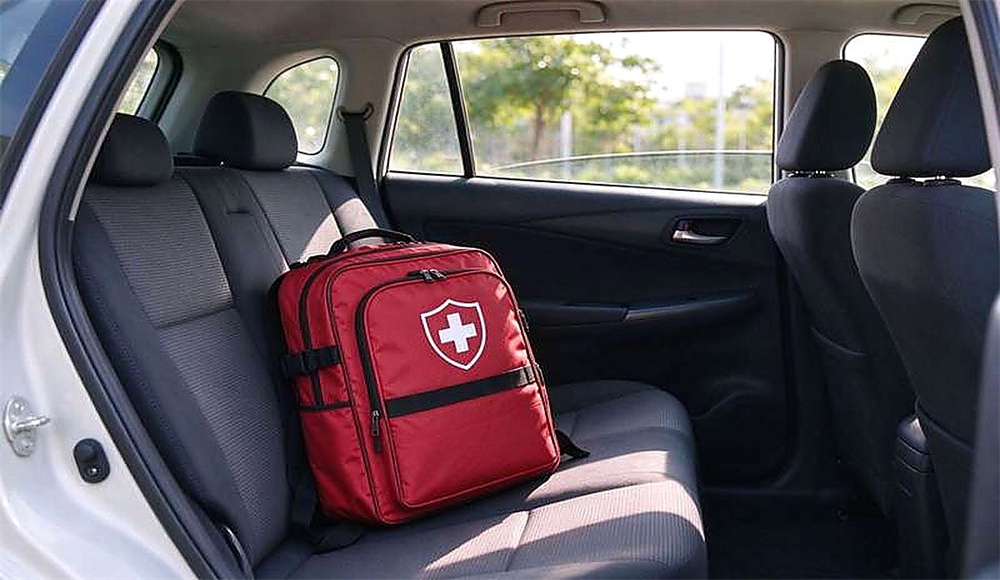
Meeting the 72 hour emergency kit requirements OSHA sets is a process, not a one-time purchase. The steps below turn the OSHA emergency kit requirements into an auditable record: site assessment, kit selection, staff training, scheduled maintenance, and documentation that holds up on an inspection walk-through.
They apply to the same OSHA workplace emergency kit whether the site is an office, a warehouse, or a construction yard.
Start with a site walk. Count employees per shift, list dominant hazards such as machinery, chemicals, heights, confined spaces, or an open office, and note the nearest hospital drive time. These answers size your kit and decide whether you need a basic, standard, or premium configuration.
Our economy, standard, and premium 72 hour emergency kit configurations are designed around federal and ANSI expectations. We also tailor contents to your site: add trauma dressings for a machine shop, add N95 masks for a dust environment, add thermal blankets for a cold-warehouse setting.
A closed kit on a shelf is a liability, not an asset. Tell every employee where it is, and train appointed responders on the first aid module, radio, and flashlight. Run a documented drill at least yearly, and refresh training when a new hire joins.
The agency expects supplies to be usable when needed. We recommend a six-month inspection cadence: check expiration dates on food, water pouches, and first aid dressings. Verify radio batteries and flashlight bulbs. Log every inspection so a future audit can follow your record.
Keep a contents list, inspection log, training records, and drill records on file. For EU-bound orders, applicable component-level product specifications and documentation are available on request, selected against the applicable requirements of each component category and destination market. Request these documents before purchase, not after an audit request lands.
If an inspector finds a gap, you receive a citation. Serious violations can reach up to $13,653 per violation; willful or repeated violations can reach up to $136,532 (amounts are adjusted annually and are subject to the latest figures published by OSHA), and exact figures are published on the OSHA penalties page.
Inspectors may issue a poster-only or de minimis notice for minor paperwork gaps, but missing first aid supplies, an evacuation plan, or trained responders are treated as serious and carry real cost.
If an employee is injured because usable supplies were missing, a citation is only the visible cost. Compensation claims, civil suits, and customer audits follow, so a compliant kit protects your ability to bid.
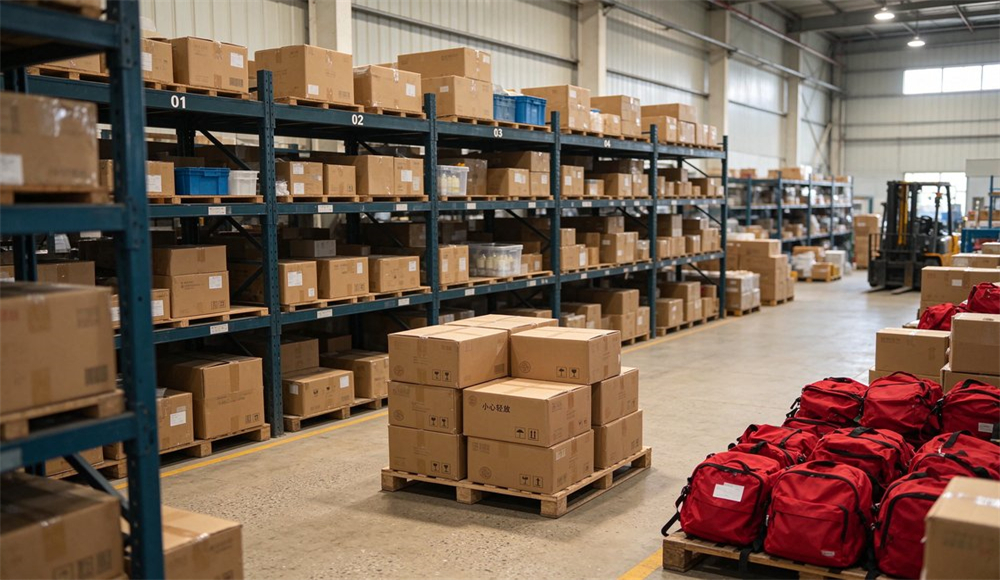
EHS teams run into the same misconceptions during procurement. Let us clear them up before you place your next order.
Myth one: "We are too small for OSHA to care."
Reality: OSHA applies regardless of headcount. Even a ten-person office needs a written evacuation plan and first aid supplies on site.
Myth two: "We have fire extinguishers, so we do not need a kit."
Reality: extinguishers fight fire. A 72 hour emergency kit keeps people alive after the fire is out, the grid is down, and roads are blocked. They are complementary, not interchangeable.
Myth three: "A few bottles of water and crackers is enough."
Reality: inspectors expect first aid, lighting, communication, shelter, and sanitation. Water and food are two modules out of eight that a real kit should cover.
Myth four: "We already run evacuation drills, so the shelf can stay bare."
Reality: drills teach routing. They do not supply bandages, water, flashlights, or blankets. Drills and stocked kits both appear on the inspection checklist.
Machine shops, fabrication plants, and food processing sites carry heavier hazards: rotating equipment, hot surfaces, cleaning agents, and forklift traffic. The standard expects a fuller Emergency Action Plan and calibrated first aid supplies; Premium tiers with trauma dressings, eye wash support, and thermal shelter fit this profile.
Construction sites are transient and exposed. Federal standards (29 CFR 1926) require sanitary facilities, on-site first aid, and heat and cold protection. A construction-grade kit should be portable, weather-sealed, and sized for the active crew.
Corporate offices carry fewer physical hazards but still need evacuation plans, exit signage, and first aid. A standard office kit, placed on each floor near the exit, is the typical fit. Inspectors expect every floor to have accessible first aid and a posted evacuation map.
Warehouses combine racking heights, forklifts, narrow aisles, and cold storage. Kits should include high-visibility markers, thermal blankets for freezer zones, and trauma-level dressings for pinch-point injuries common in distribution operations.
Your written plan should document: evacuation procedures, emergency reporting, emergency contacts, evacuation routes, assembly points, and roles for wardens and responders. Every employee should be able to access a copy, either in print or on the company intranet.
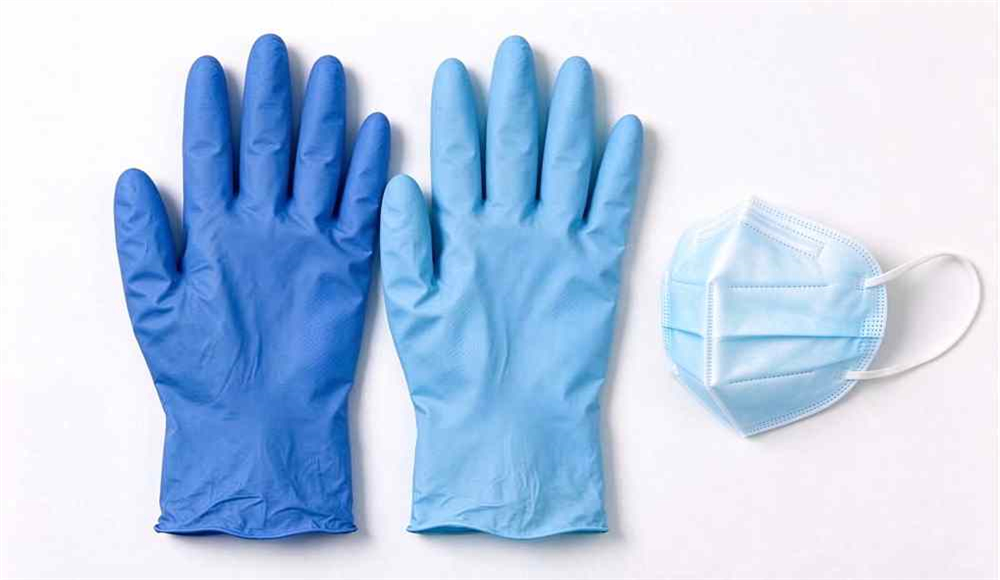
Stocked supplies inspectors look for: first aid kit aligned to ANSI Z308.1, flashlights with spare bulbs, hand-crank radio, emergency blankets, whistles, water pouches, sanitary gloves and masks, and a site map with evacuation routes clearly marked.
The agency expects documented training. Run at least one evacuation drill per year. Train appointed first responders. Log both training and drills. Refresh when the floor plan changes or a new hire joins during onboarding.
Compliance officers arrive unannounced; inspections can be programmed or triggered by a complaint, referral, or serious incident. During the walk, the officer tours the site, checks supplies, reviews posted notices, and interviews workers about training.
Before any inspection, confirm: your Emergency Action Plan is written and current; supplies are accessible and within date; workers can describe evacuation routes; drill logs are on file; exit signage is lit; extinguishers carry their annual service tag.
The agency sends a written citation with each violation and an abatement deadline. You may contest within 15 working days; otherwise, correct the issue by the deadline and pay any proposed penalty. Repeated or willful cases escalate on later visits.
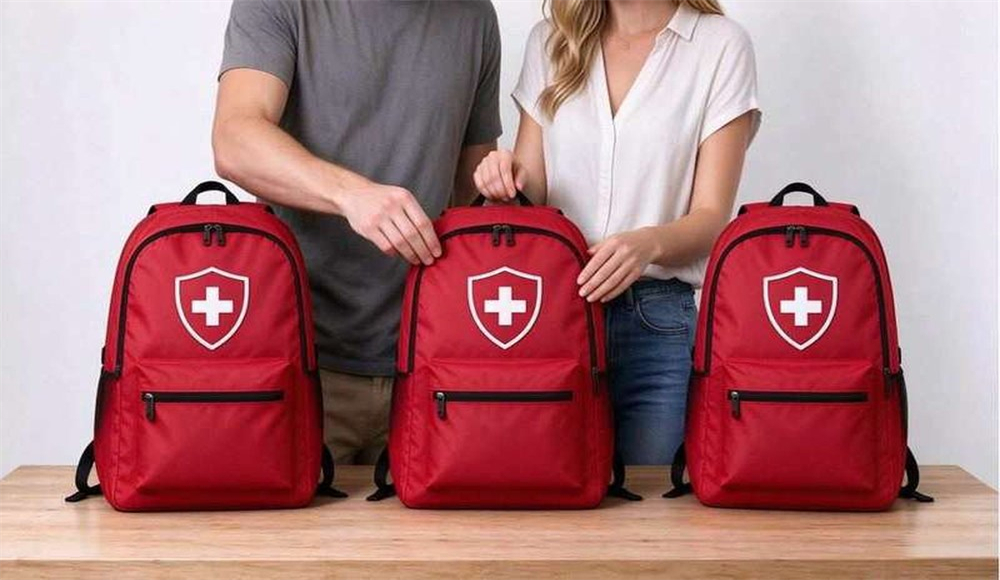
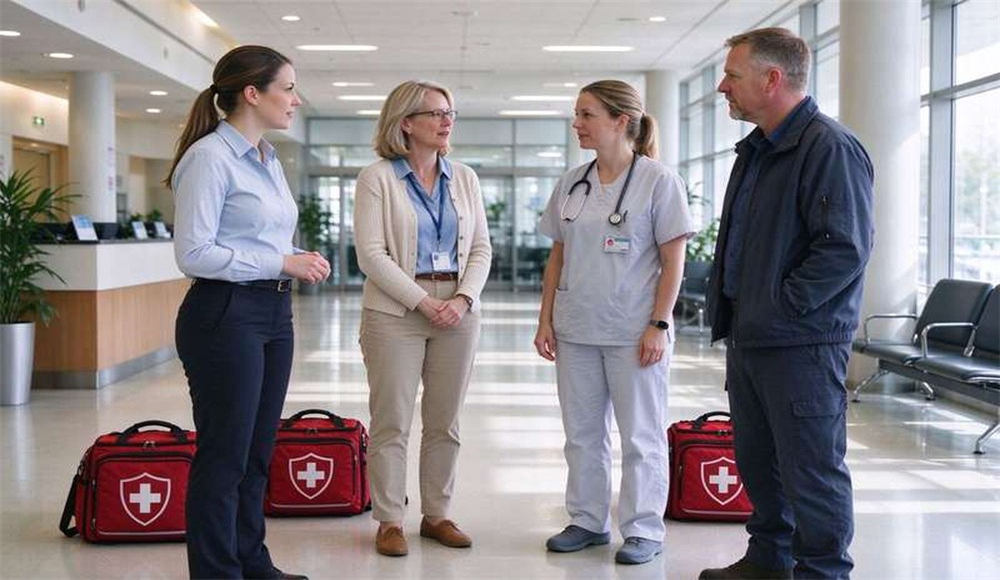
Name an emergency coordinator, floor wardens, first aid responders, and a communications lead, each with a backup. Walk the facility, list plausible emergencies such as fire, earthquake, flood, chemical spill, or power outage, rank them by likelihood and severity, and cover the top three first.
Draft evacuation, alarm, first aid, and communication procedures, post them on each floor, and teach workers the routes, assembly point, and kit basics. Drill yearly, update the plan after each drill or floor change, and debrief staff so feedback sizes the next order.
We configure workplace kits in three tiers so you can match the federal and ANSI expectation to your budget and hazard profile without overbuying.
Economy tier: covers the regulatory floor — basic first aid, flashlight, hand-crank radio, emergency blanket, whistle, water pouch, and a printed evacuation card. Fits small offices or as a starting point for general contractors.
Standard tier: builds on the economy tier with a larger first aid module, multi-tool, paracord, sanitary masks, glow sticks, and additional water storage. This is the most common configuration for mid-size offices, schools, and light manufacturing facilities.
Premium tier: adds advanced first aid dressings, trauma shears, a satellite communication option, GPS marker, cold-weather shelter, and a hard transit case. Suited to heavy manufacturing, construction sites, remote facilities, and sites with higher injury risk.
All three tiers follow federal and ANSI expectations, and EU-bound orders can be supplied with the component-level conformity paperwork your audit file needs, with component-level conformity paperwork matched to your destination market. Share your site size, hazards, and nearest hospital, and we will match a fitting tier.
If your site sits between tiers, step up rather than down: understocking triggers the citation, not overstocking.
Module
Economy
Standard
Premium
First aid (ANSI Z308.1)
Class A
Class A+
Class B
Lighting
1 flashlight
1 flashlight + glow sticks
2 flashlights + headlamp
Communication
Hand-crank radio
Hand-crank radio + whistle
Hand-crank + satellite beacon option
Water
Water pouch
Collapsible pouch + filter
Pouch + bladder + extra filter
Shelter
1 emergency blanket
2 blankets
Thermal bivvy + 2 blankets
Tools
Whistle
Multi-tool + paracord
Multi-tool + paracord + duct tape

Worker protection: the most direct benefit is that employees survive the first 72 hours until help arrives. Fewer injuries mean fewer claims and less lost time for your operation.
Vendor eligibility and customer trust: enterprise buyers, government contractors, and corporate customers routinely ask for your EHS file before a purchase order, and a compliant kit is part of that file.
Audit avoidance: a clean record reduces the chance that the agency programs your site into an inspection cycle. Repeat violations attract deeper scrutiny over time, so the cost of small gaps compounds.
Workforce confidence: teams that see prepared supplies describe their employer as responsible. Retention improves, and hiring becomes easier when candidates know you take safety seriously.
Insurance and continuity: insurers reward documented preparedness: a stocked kit, written plan, and drill log are the artifacts risk managers expect. A compliant 72 hour emergency kit also supports your business continuity plan during an orderly evacuation if the grid fails.

Q: What does OSHA require inside a workplace emergency kit?
A: OSHA does not list a fixed inventory. It requires accessible first aid under 1910.151, a written Emergency Action Plan under 1910.38, and evacuation drills. Most U.S. buyers align contents to ANSI/ISEA Z308.1 and Ready.gov's 72-hour guidance.
Q: What is the difference between OSHA and ANSI requirements?
A: OSHA is federal law that sets the employer's duty to plan and supply. ANSI Z308.1 is a voluntary consensus standard that lists first aid contents. Inspectors commonly reference ANSI when reviewing what is inside a kit.
Q: Does OSHA require a 72 hour supply?
A: OSHA does not name a duration, but FEMA and Ready.gov recommend 72 hours of self-sufficiency. EHS teams treat that window as the planning horizon, which is why workplace kits are commonly called 72 hour emergency kit bundles.
Q: What compliance documentation do you provide?
A: Each order includes a contents list aligned to the cited standard, an inspection log template, a maintenance calendar, and an audit-ready summary. For EU-bound orders, applicable component-level product specifications and documentation are available on request, selected against the requirements of each component category and the destination market.
Q: Do state laws add requirements beyond OSHA?
A: Some states run their own plans that can be stricter than federal regulation, and local fire code or insurance rules may add more. Share your state and industry, and we will map the kit to the rules that apply to your site.
Q: What is the difference between Class A and Class B kits?
A: Class A covers minor cuts, burns, and scrapes in offices and light manufacturing. Class B adds trauma dressings and larger quantities for industrial, warehouse, and construction sites with higher injury risk.
Q: How often should the kit be inspected?
A: We recommend a six-month inspection. Check expiration dates on food, water pouches, and dressings; verify flashlights and radio; log the result. Monthly visual checks for extinguishers are separate under 1910.157.
Q: What happens if OSHA finds missing supplies?
A: You receive a citation with an abatement deadline. Fines scale with severity. Correct the gap, document the fix, and avoid repeating the same citation at the next visit. Repeat violations carry steeper penalties.
Q: Can we customize contents for our site?
A: Yes. Most buyers tailor contents to their hazard list. Tell us your industry, headcount, and nearest hospital, and we will recommend the module mix that fits your site rather than shipping a generic bundle.
Q: How long does an order take?
A: Standard configurations ship on a typical timing suited to purchase orders. Custom configurations add a short development window. We quote on request and confirm timing in writing before you commit.
Ready to build a compliant 72 hour emergency kit for your workplace? Tell us your headcount, industry, and nearest hospital. We will recommend a tier and send a written quote promptly, with a contents list, maintenance calendar, and audit-ready summary for your EHS file.
Buyers who move from generic retail kits to configured workplace kits say the inspection walk-through finally feels predictable, not improvised.
Key Takeaways
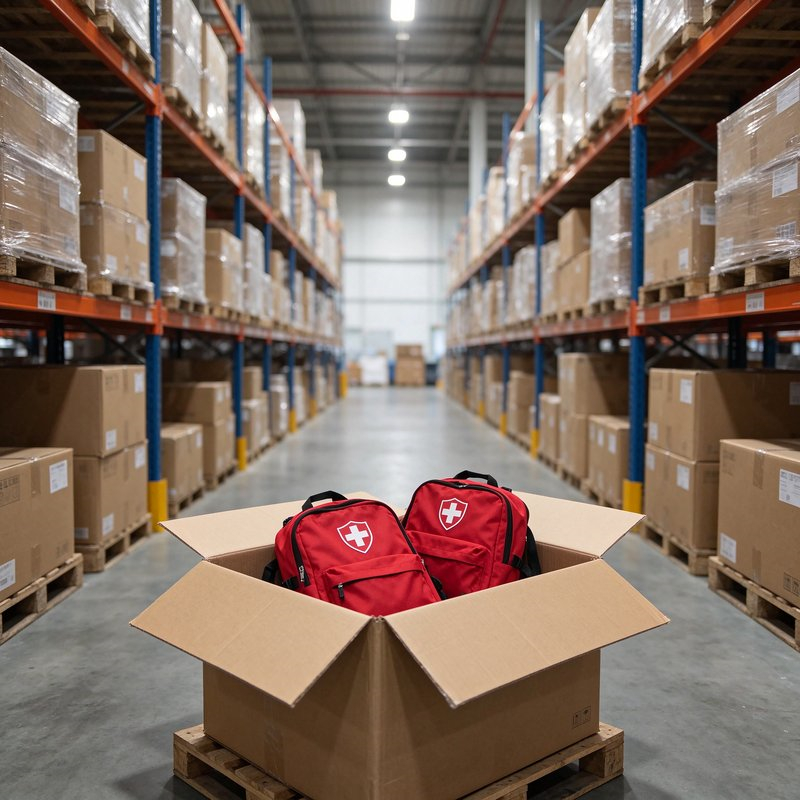
Institutional Textiles and Emergency Rescue Supplies Sourcing Partner · Foshan, Guangdong, China
Pautan Mesra :
hak cipta © Custom Disaster - Relief Bedding: Tents, Sleeping Bags, Blankets Hak cipta terpelihara
pasukan profesional untuk perkhidmatan !