Night Construction Site Lighting: Mobile Tower Night
Work Setup
A well-sized night construction site lighting plan protects crews, schedules and finished quality after dark. Night construction site lighting on a towed mobile tower keeps crews safe and inspectors sharp.
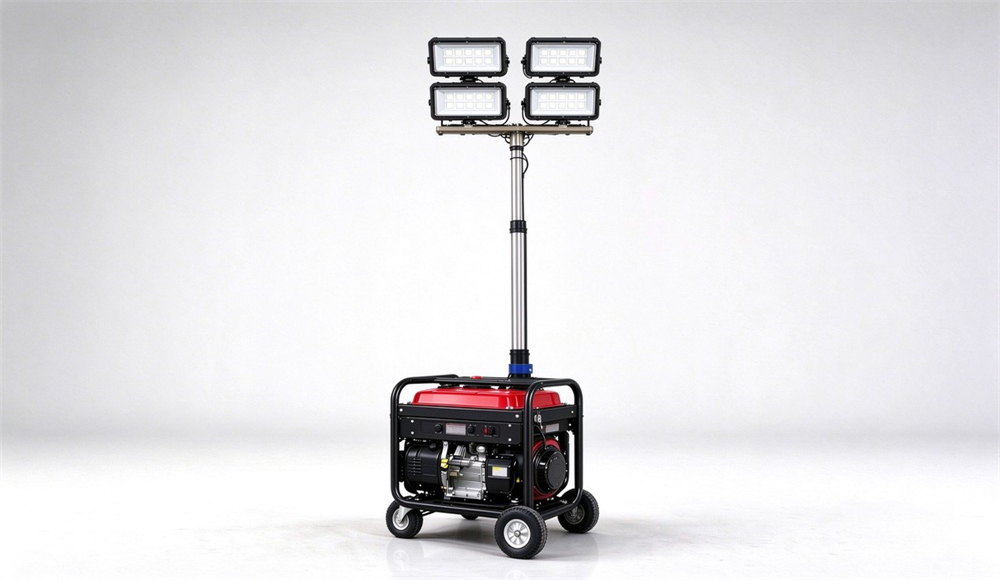
Table of Contents
Night Construction Site Lighting: The Challenges of Dark Workfaces
Night Work Lighting Solutions: Mobile Towers That Follow the Face
Construction Site Lighting Setup by Site Area
Step-by-Step Construction Site Lighting Setup Before Dark
Night Construction Site Lighting Safety: Glare, Access and Weather
A Practical Night Construction Site Lighting Checklist
Night Work Lighting Solutions: Config Options and Trade-offs
Night Construction Site Lighting: Rent vs Buy Budget Guide
Night Construction Site Lighting: Highways, Earthwork and Bridges
Night Construction Site Lighting Decision Tree: Area to Tower Count
Night Construction Site Lighting FAQs
Night Construction Site Lighting: Get Your Site Lit
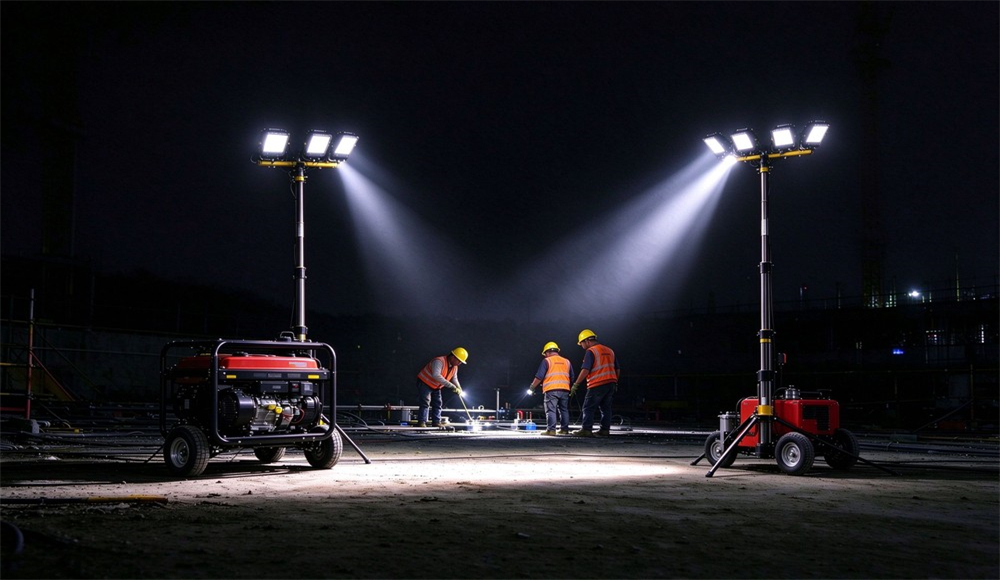
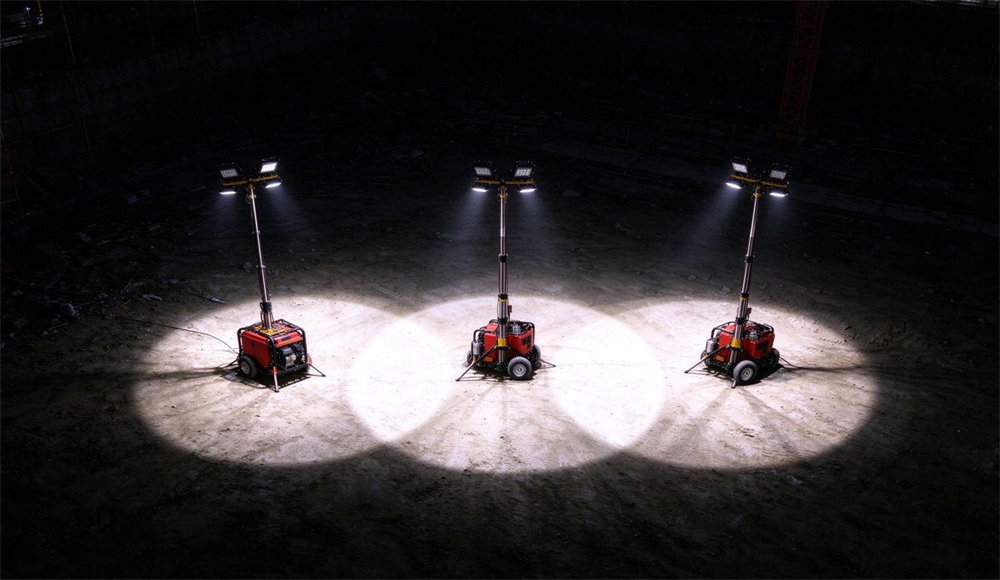
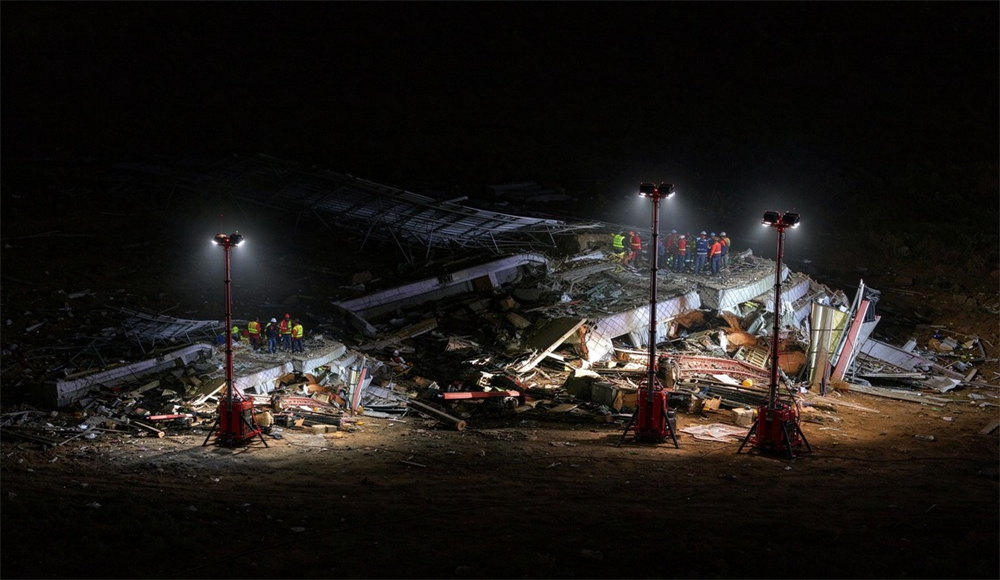
On larger ground, two towers work as an array, overlapping beams so no dark corner hides between them. That layout is standard on earthwork, paving strips and bridge decks, where crews spread across wide areas after dark. Smaller spots may need just one tower plus a compact floodlight for close-in detail. We work with relief organizations worldwide, so the same towable, self-powered logic serves remote roadwork, disaster camps and fenced yards alike.
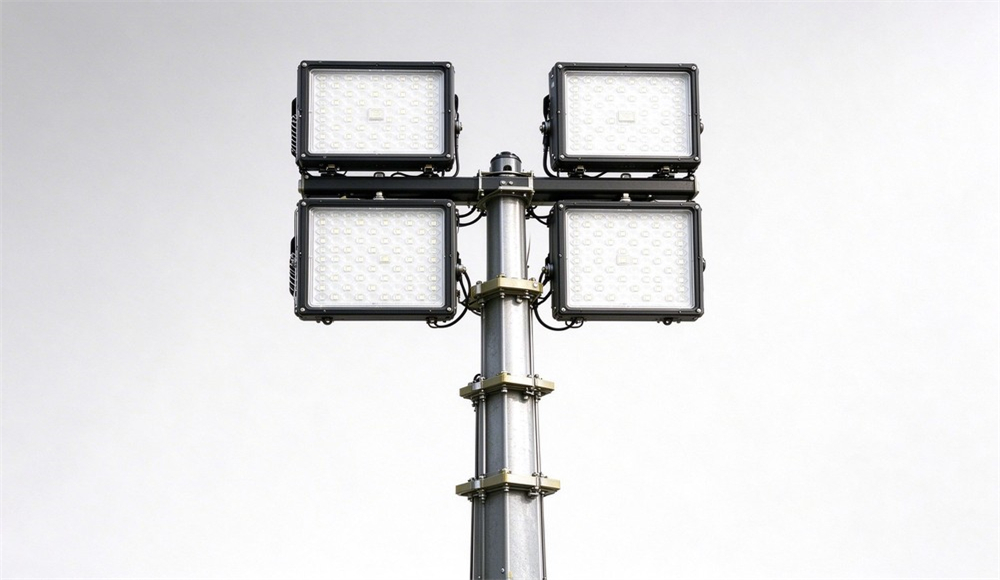
Matching the tower count to the work area is the first planning step. A single hydraulic or diesel trailer tower is rated for 2000-5000 square meters; a 500-1000 square meter face is better served by an integrated floodlight work lamp. Lamp heads carry IP65 protection for rain and dust, and trailer towers hold up to level 8 wind in normal conditions. Treat lux targets as industry reference and confirm them on a dusk site walk before the shift.
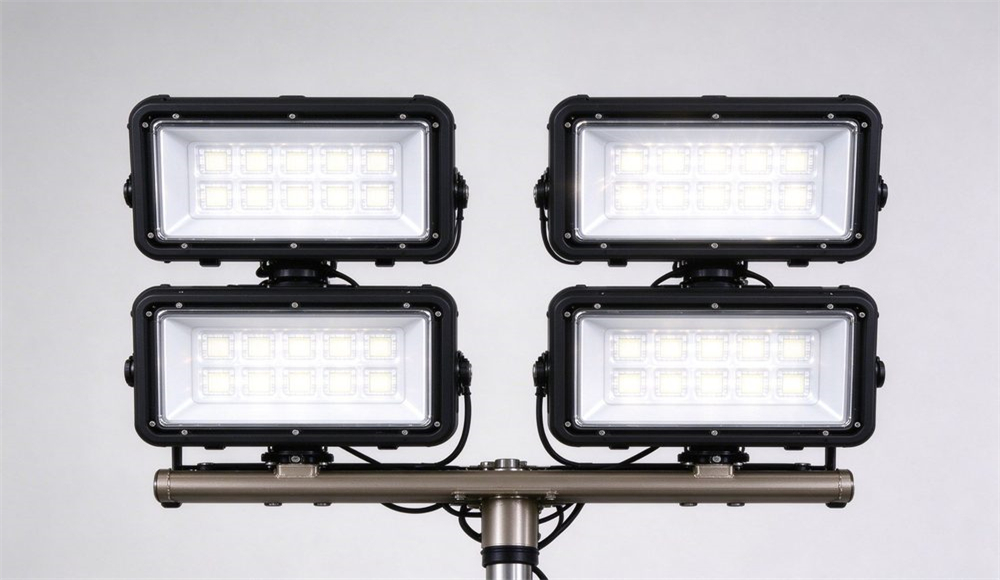
Good night construction site lighting is set up before dark, not during it. Crews deploy and aim towers 30-60 minutes ahead, leveling screw jacks, raising masts and warming lamps while there is still daylight. Heads are angled onto the workface and away from driver sight lines, and a ground walk checks for glare and dark corners. This routine means the shift starts with light already on, instead of an hour spent troubleshooting cables and shadows.
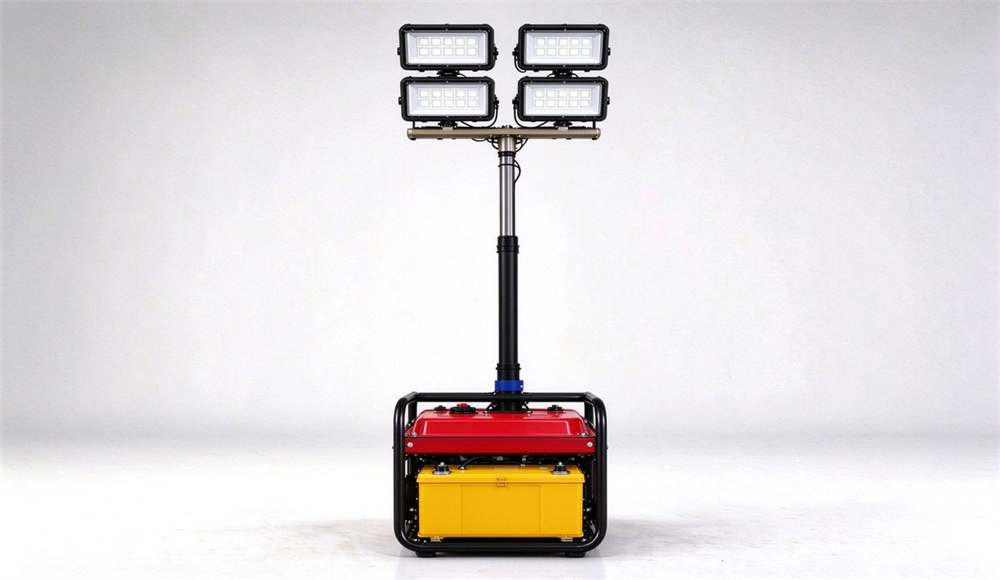
Most night worksites have no grid power where digging happens, and running cables from a distant generator is slow and risky. A towed mobile light tower changes that: it levels on screw jacks, raises its mast and lights the active face within minutes. When the workface shifts, the unit hitches and moves. The payoff is the same across every trade: fewer stoppages, safer access routes and defects found before they cost money. The sections below cover common night lighting challenges, area-based setups from 500 to 5000 square meters, glare and weather safety, a shift checklist and site foremen questions.
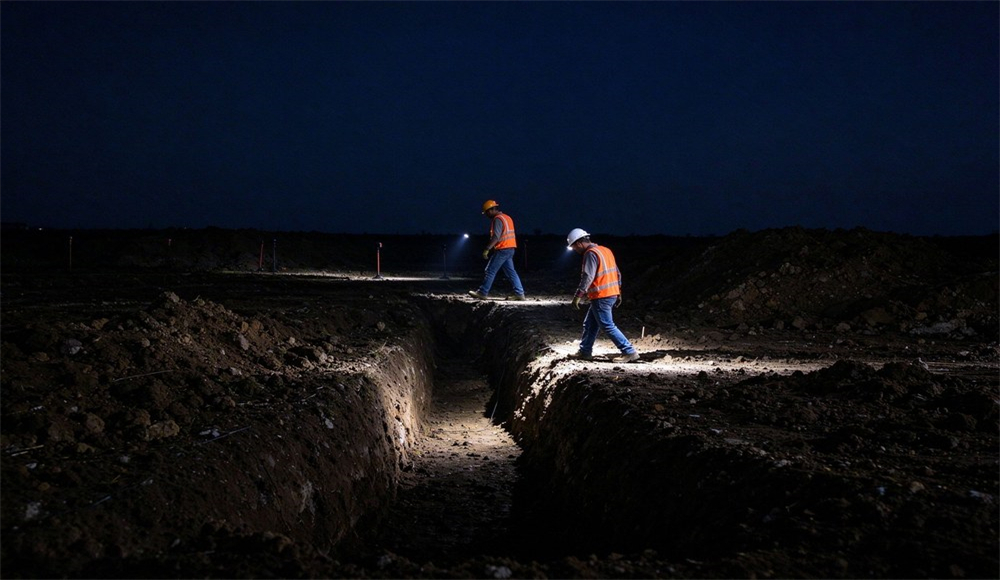
Night work lighting solutions start with a construction site lighting setup, and a highway night construction lighting plan or 2000 square meter night site lighting covers the rest. For short jobs a mobile light tower for night construction moves fast, while a road bridge tunnel night construction lighting plan covers a full 500 to 5000 square meter construction lighting zone.Poor night construction site lighting is a safety problem first. In the dark, excavations, crane lifts and access roads hide trip points. A proper construction site lighting setup prevents these falls.
Then comes schedule. Many projects work at night because permits or traffic force the shift. If night construction site lighting lags the workface, the gang stands idle waiting on cables.
Fixed wiring cannot follow a moving excavation. Every stop burns hours off the shift. For baseline construction site lighting requirements, see OSHA 1926.56 lighting standards.
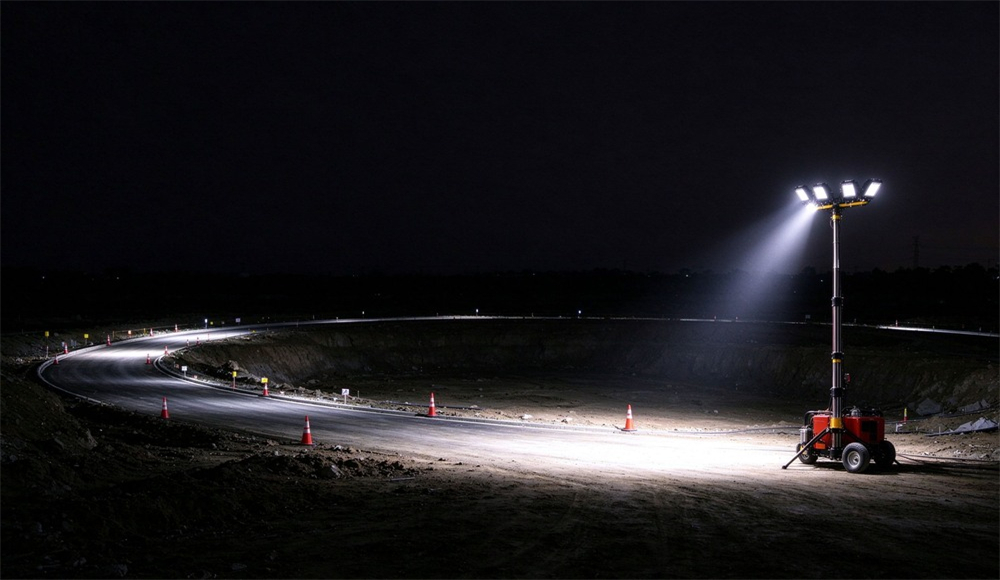
A mobile light tower is a trailer with its own diesel generator, lamps and lifting mast. It needs no external power, so it lights remote yards on arrival. When the face advances, hitch it and move on. This is how modern night construction site lighting follows the dig. Browse the full mobile light tower for construction range.
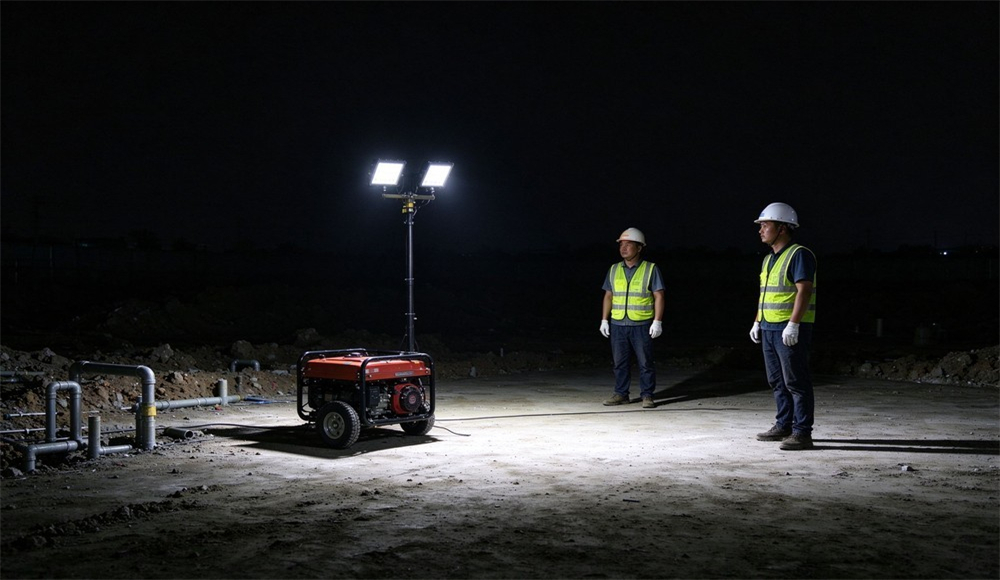
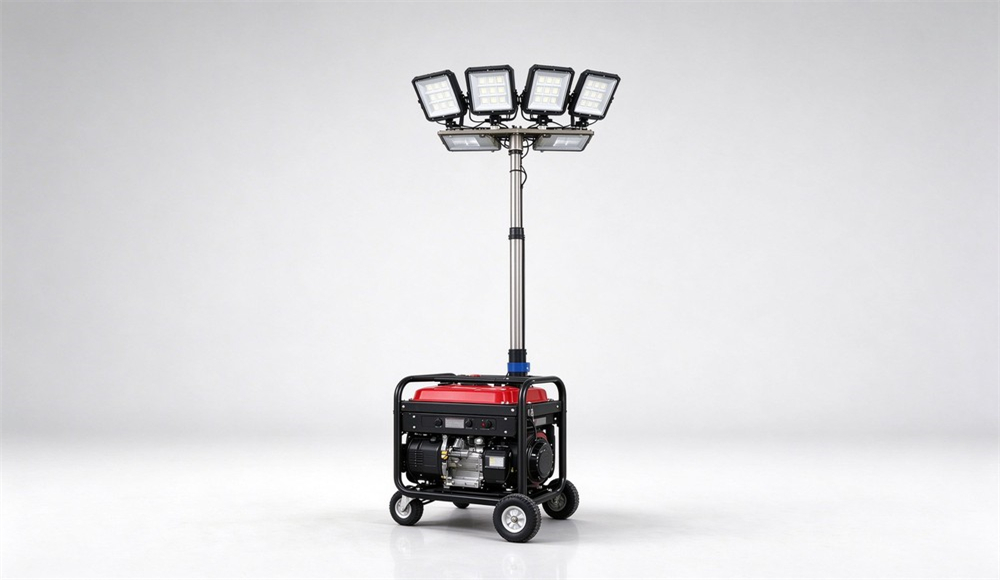
This follow-the-face setup is the core of night work lighting solutions. Big sites take hydraulic or diesel trailer towers, such as a hydraulic unit with four 1000W lamps on a 7-9m mast. Narrow spots take an integrated floodlight. Choosing between them comes down to workface width: trailer towers cover open yards, while integrated floodlights slip into shafts and trenches where a trailer cannot reach.
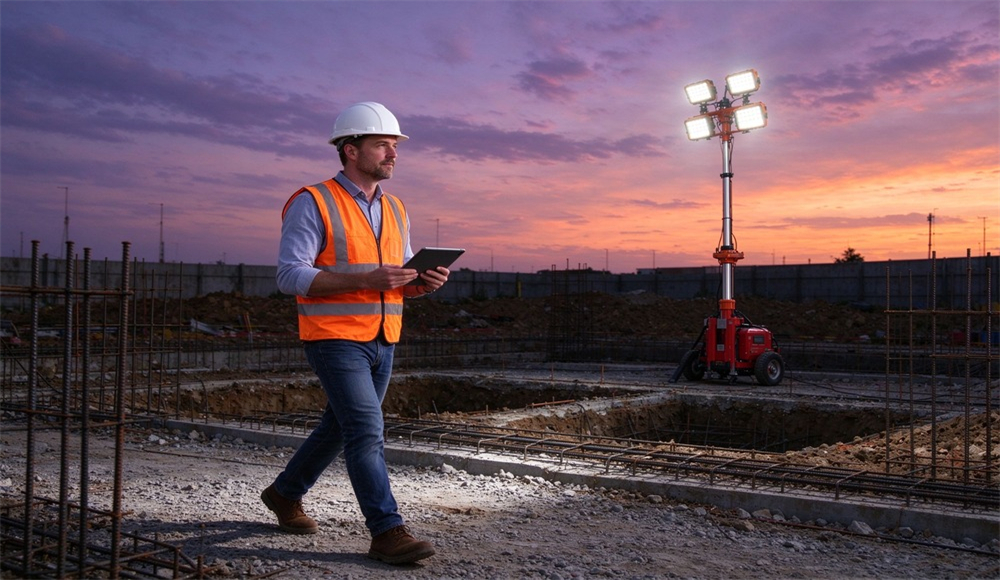
Head configuration changes with the job: integrated lamps fold flat on small units, while trailer towers carry four separate heads that turn independently of one another. Independent heads let you aim two beams at the active face and two at access routes, without moving the chassis. On integrated floodlights, the fixed lamp array lights a single cone, which suits compact pits and shafts.
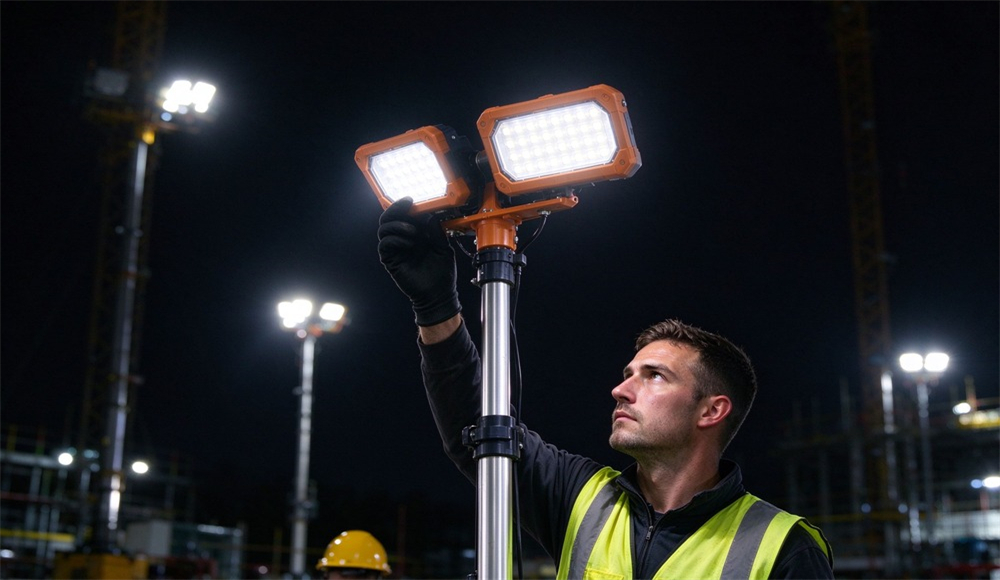
The mast itself is the other half of the setup: hydraulic towers lift heads to 7-9 meters, clearing hoardings and stockpiles that would otherwise shade the active workface. Hand-crank masts reach 9 meters on lighter short-rental units, while hydraulic masts rise faster and hold position steadier in wind. A taller mast spreads the beam wider, raising coverage per tower.
Send us your site area and shift length, and we will suggest a tower count. Our night work lighting solutions scale from one floodlight to a multi-tower array. Send the dig footprint, access routes and any glare-sensitive roads, and we return a recommended construction site lighting setup with unit counts and mast heights.
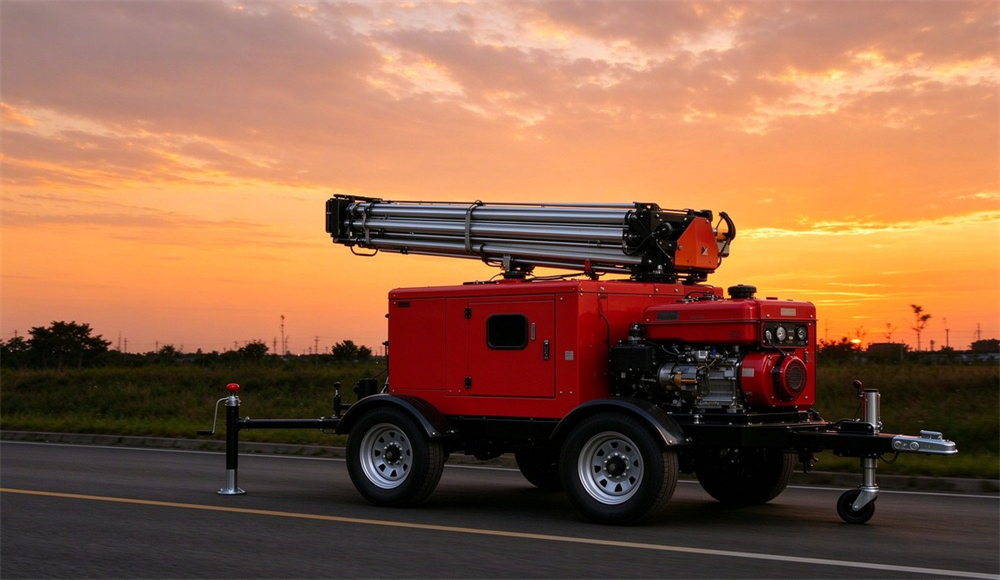
Match the tower count to the workface area. Large faces take trailer towers; small ones take floodlights. A 2000 square meter night site lighting plan starts with one hydraulic tower, then adds units as the dig widens. A standard construction site lighting setup pairs one tower per 2000 m2. The table gives the starting point.
Area
Night construction site lighting equipment
Where to look
2000-5000 m2
Hydraulic or diesel mobile tower
hydraulic mobile light tower / diesel light tower
1000-2000 m2
LED mobile tower
hydraulic mobile light tower
500-1000 m2
Integrated floodlight work lamp
construction site floodlight
Multi-tower sites
Relay towers, overlapping beams
Plan by area on site walk
Use the table as a starting menu, then confirm the numbers on the twilight site walk. Each row maps to a real workface shape, and most yards blend two rows rather than staying inside one. Mark the beam circles in daylight, because a 2000 square meter night site lighting plan drawn on paper rarely survives the first obstruction. Send us the measured footprint and we will turn the rows into a tower count for your night construction site lighting scope.
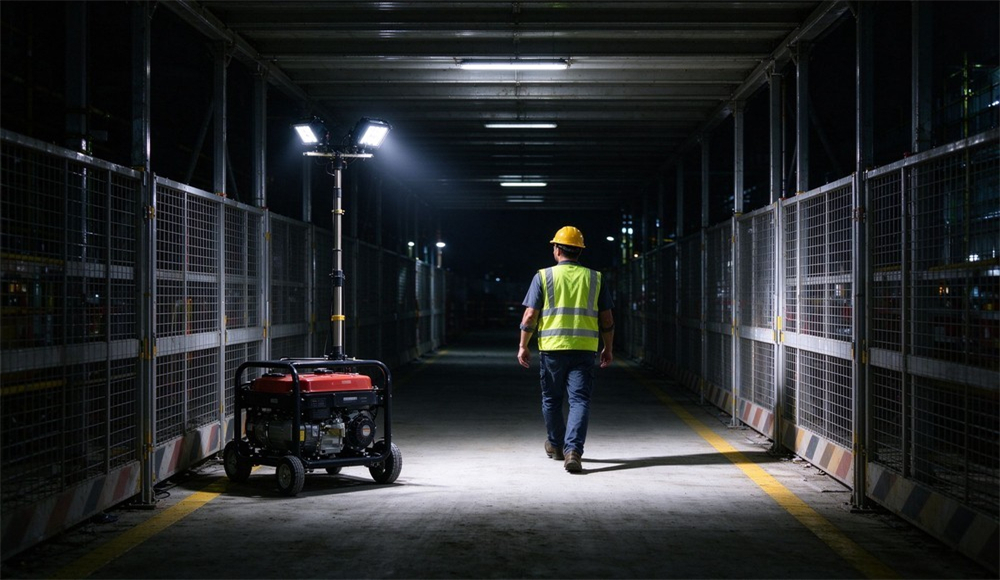
For these compact spots, the built-in-generator floodlight work lamp is the typical pick: light weight, one-piece, and no separate towing unit to position before work starts. A night shift worksite floodlight handles pits and shafts under 500 m2. Its small footprint fits inside a single lane, and the integrated generator starts with one pull, ideal for urban repair crews working under curfew windows.
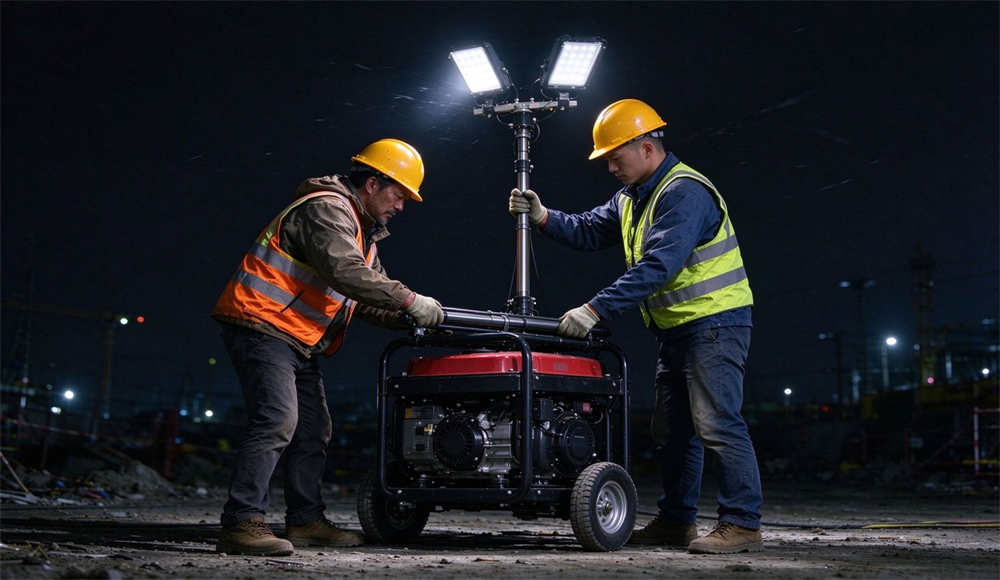
On bigger ground, run towers in relay so beams overlap by a third of each circle. That overlap removes the dark corners where two light circles fail to meet. Relay spacing follows the workface: open yards take towers at diagonal corners, while long linear strips take evenly spaced units along the edge. This night construction site lighting arrangement keeps the whole face bright without dark gaps.
This is how night construction site lighting scales with site area. A well-sized construction site lighting setup pairs one tower per 2000 m2 with floodlight fill-ins.
Treat lux targets as industry reference, per the IES illuminance selector.
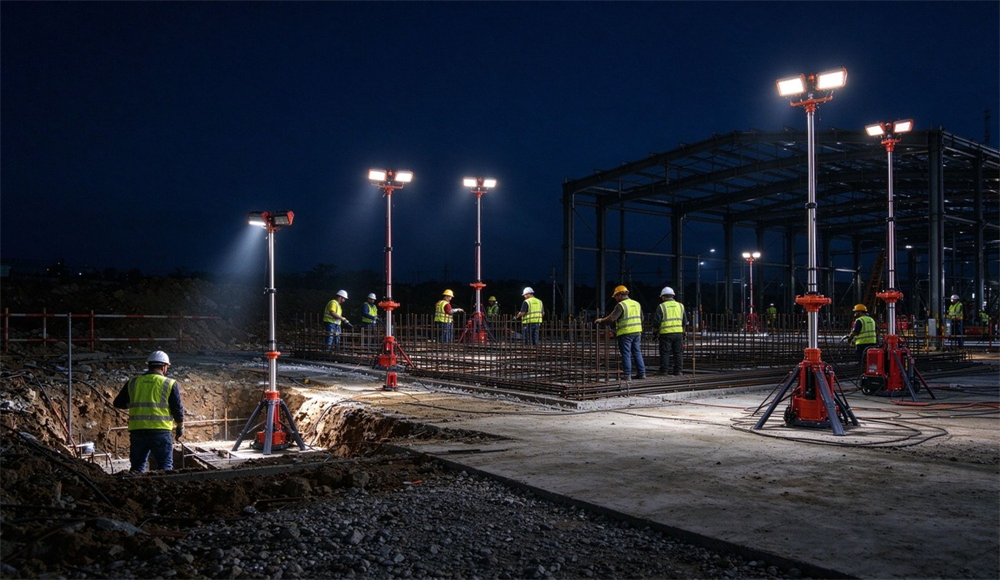
Decision tree — choose by site type:
Road, bridge or large earthwork: hydraulic or diesel tower.
Small fit-out or warehouse: floodlight lamp (SFW6133, 600W on 4.8m mast).
Remote site, no grid: diesel tower on its own generator.
Emergency repair in 30 minutes: hydraulic quick tower.
Short rental: hand-crank tower (9m, about 450kg).
Plan the whole routine in daylight, and raise the first tower at least thirty to sixty minutes before the shift begins. A proper construction site lighting setup is a sequence, not a single switch: survey the zone, place the towers, then power, raise and aim. Rushing any step shows up as a dark corner an hour into the night. Treat the first thirty minutes after dusk as your tuning window, because night construction site lighting judged too late stays uneven for the whole shift.
Good night construction site lighting starts with a plan. Step 1, survey the zone: mark the workface, access roads and crane areas. Set positions so beams cross the face, not drivers' eyes. Walk the site in daylight and flag every obstacle, because a tower hidden behind a hoarding wastes half its beam.
See OSHA construction safety for baseline requirements.
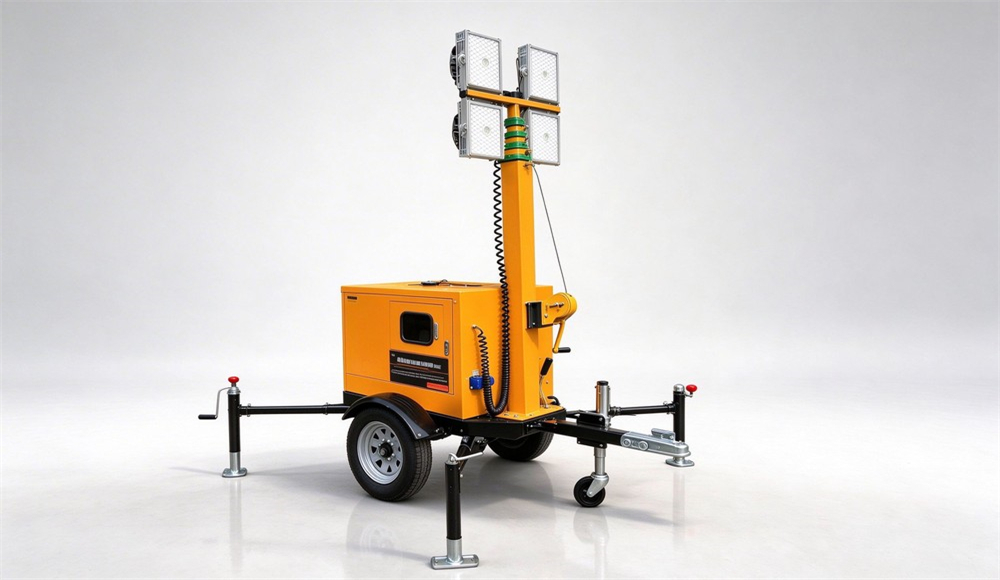
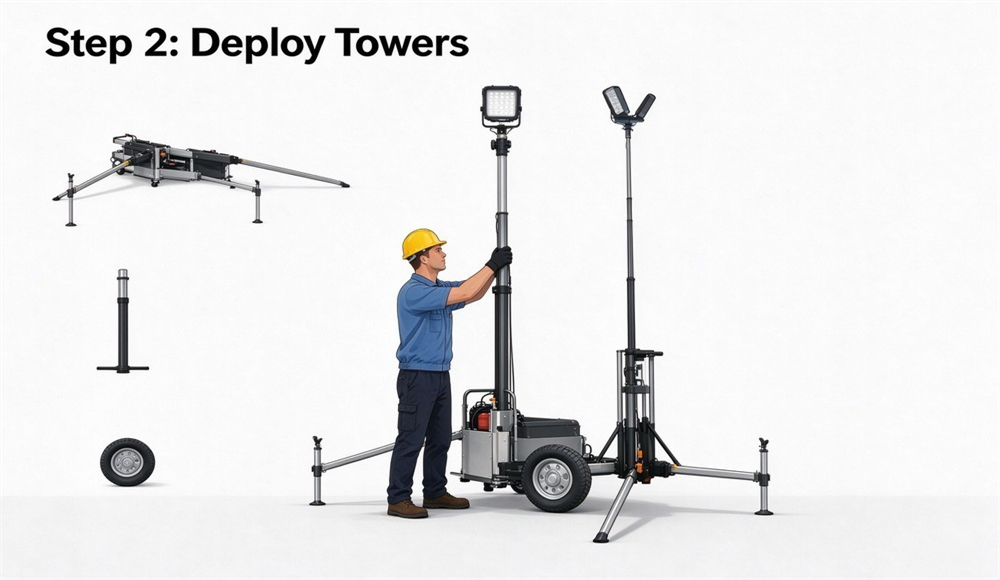
Step 2, deploy. Hitch each trailer into position, swing out the screw jacks and level it. Raise the mast, start the engine and warm the lamps. This construction site lighting setup takes about 30 minutes per tower. Four jacks down, the chassis sits steady even on soft ground, and a warm lamp reaches full output before the crew steps onto the face.
Step 3, aim and check. Angle the heads so light lands on the active face and leaves the walkway lit. Walk the site at ground level, then fine-tune. A beam that lands too high floods the sky; too low and it pools at the feet. A ground-level walk catches glare that the operator cannot see from the control panel.
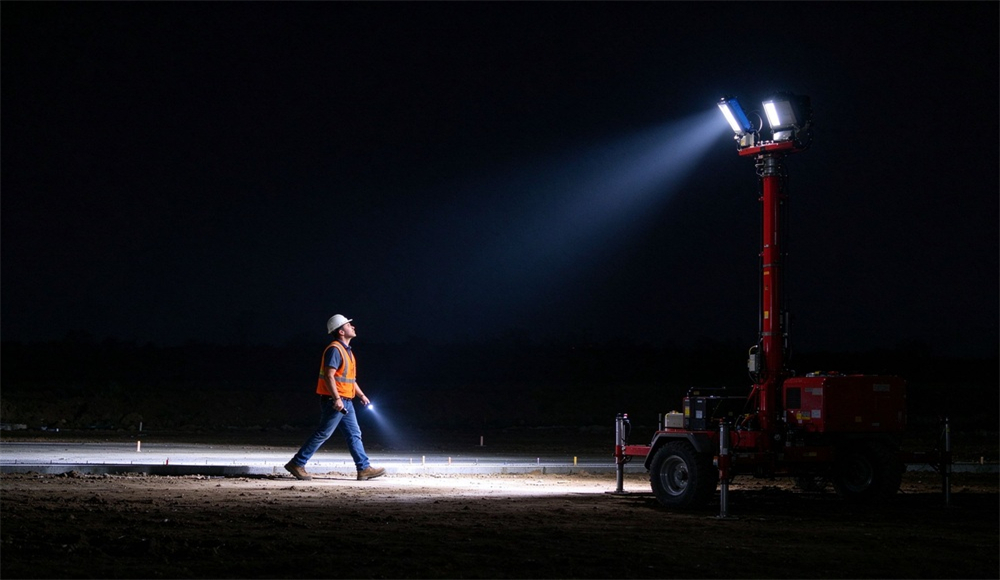
Once the ground walk is signed off, hold the crew at the welfare unit for ten more minutes. Re-check that every beam lands inside the marked work zone and that no glow spills onto public roads or neighboring properties. This last verification step is where most night work lighting solutions move from acceptable to genuinely safe, and it costs almost nothing. When the beam map matches the daylight survey, invite the crew onto the face and keep the same tower positions for the rest of the shift.
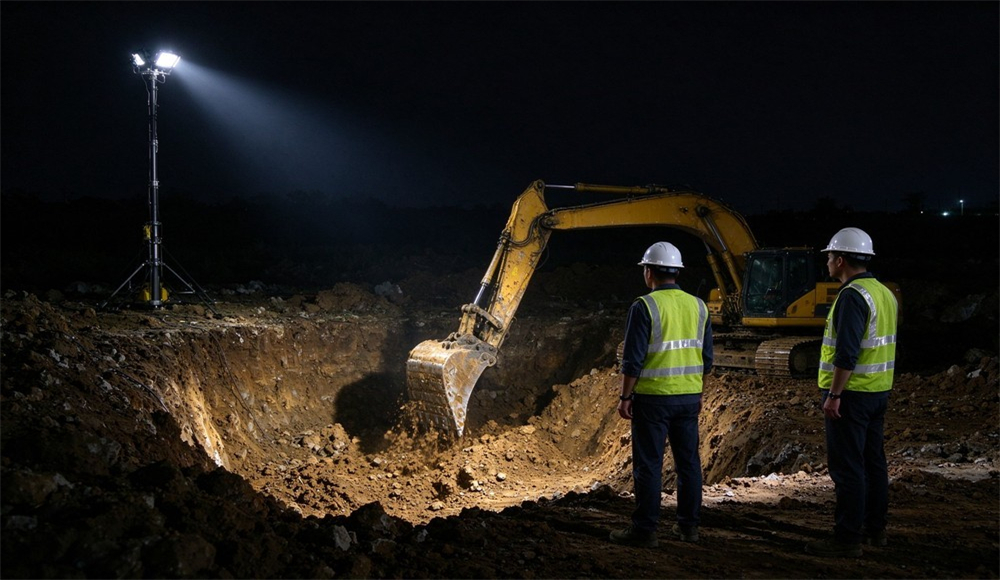
Once the towers run, the recommended positions follow the workface shape: spread units along a linear strip, or ring a closed yard so the light circles overlap without leaving a gap. For linear roads, one tower every 80-100 meters keeps the strip lit. For closed yards, corner placement covers four faces from two diagonal stands.
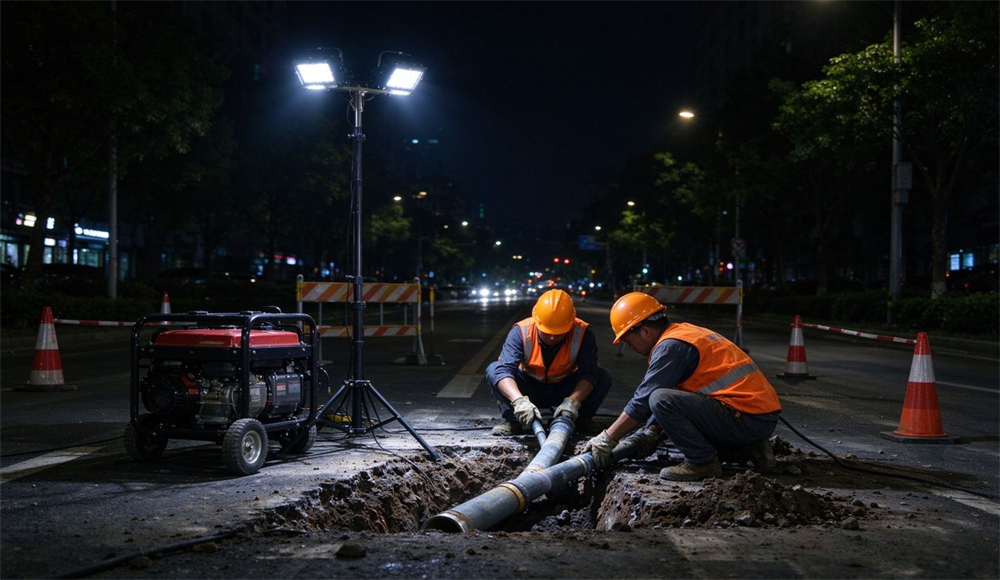
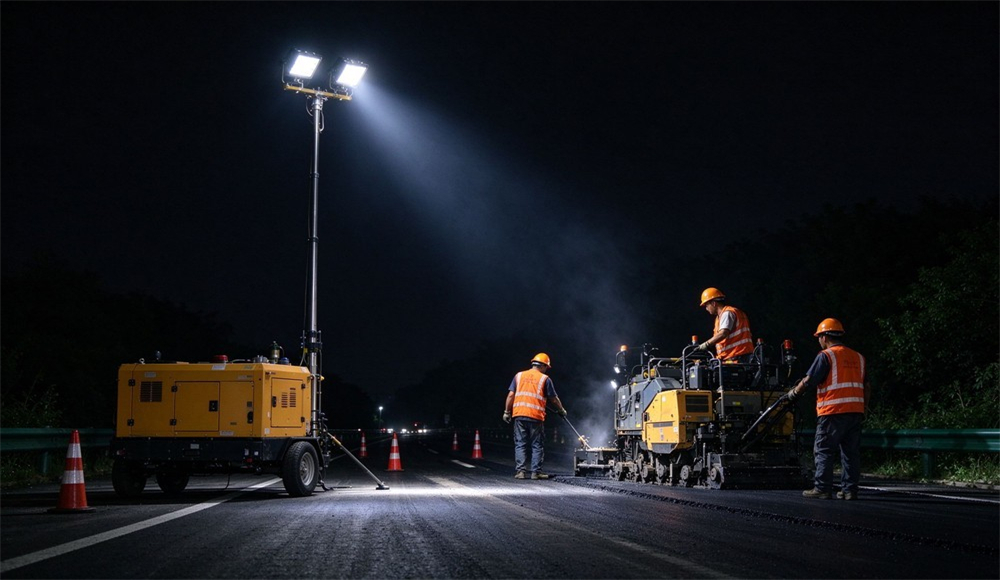
Glare is the first risk in night construction site lighting. Aim heads at the workface, never at crane operators or traffic. Where a beam crosses a road, add a shield. Good night work lighting solutions keep glare low and driver sight lines clear. A shielded beam stays on the face while passing drivers see only the housing, not the lamp itself.
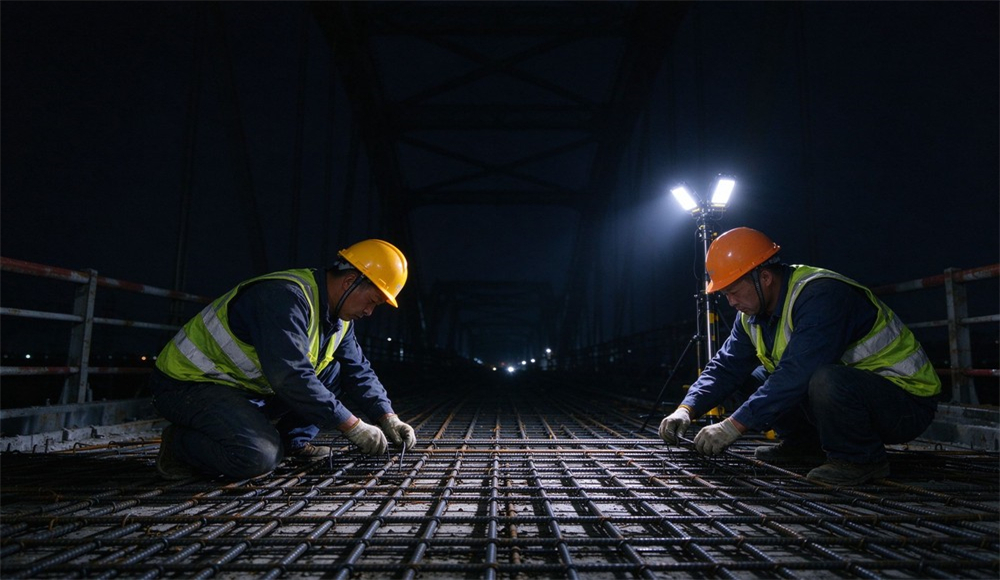
The angle rule is simple: heads aimed at the workface, tilted slightly down, and shielded wherever a beam crosses a road or a pedestrian crossing. A five-degree downward tilt keeps light on the ground instead of in operator eyes. Mark shield points on the plan before deployment so no beam reaches a driver sight line.
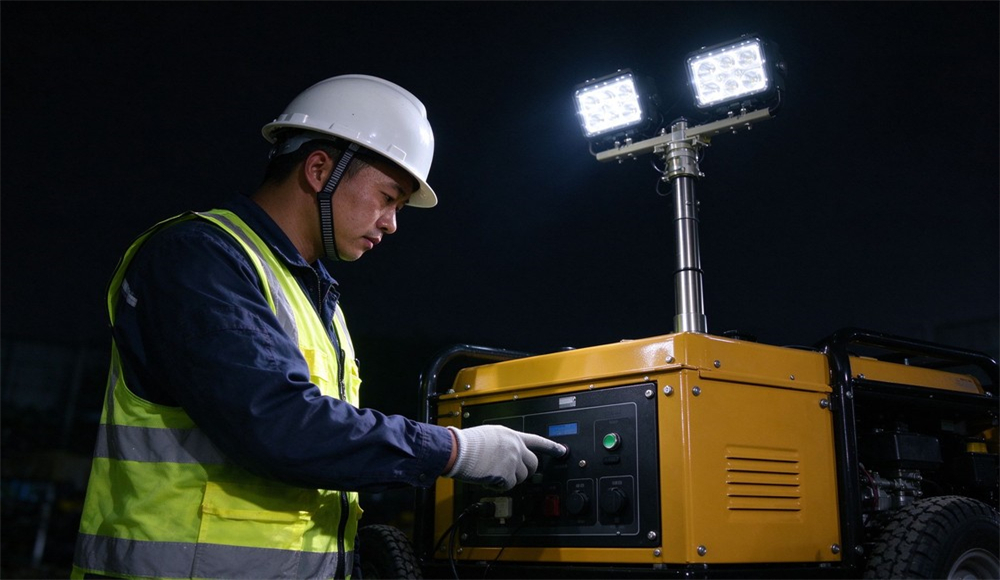
Keep access routes lit and unblocked. Fire lanes, escape routes and first-aid points need their own light. No trailer should park across them. Route lighting runs along the edge of the face, not through the middle, so crews can evacuate without crossing dark machinery. A dark access route turns a small trip into a serious incident.
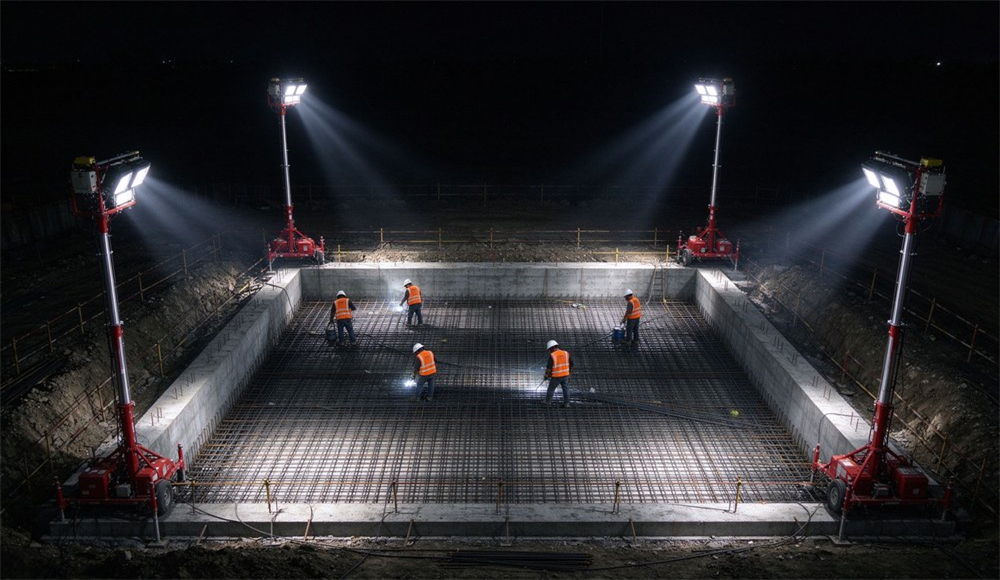
Wind and rain come with night work. Towers hold up to level 8 wind, but when a gust warning arrives, lower the mast. The human side is in EU-OSHA night work guidance. IP65 lamp heads shrug off rain, but a high mast catches more wind. Lowering before a front arrives keeps the chassis planted and the lamps aimed.
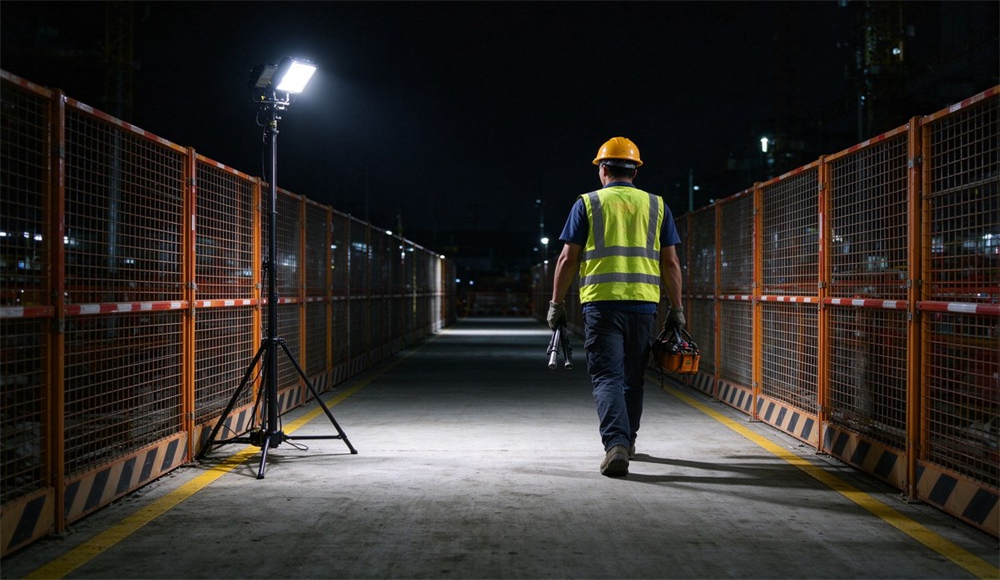
After the shift, the same routine runs in reverse: lower the mast, park on level ground, and stow the heads before the crew signs off for the night. A safe construction site lighting setup ends the same way every shift. Fuel level and lamp count get logged, so the next crew finds the tower ready to restart, not half-stowed in the dark.
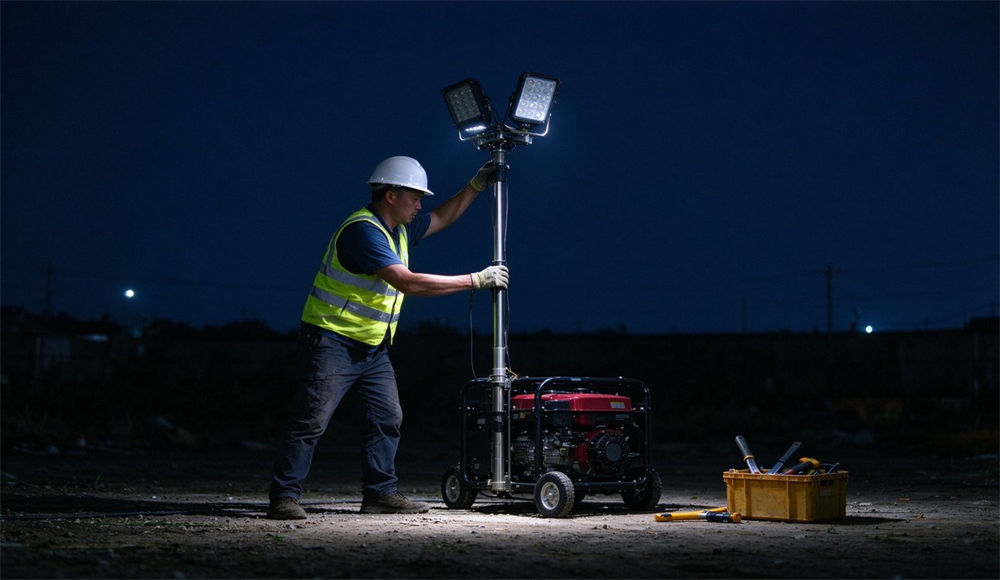
Good night construction site lighting fails on small misses. Run this eight-point list before every shift; each prevents a stoppage. Every construction site lighting setup ends with this walk-around. A dead lamp, an unlevel jack or a blocked fire lane each stops the shift for ten minutes. The list catches them before crews step onto the face.
Construction site lighting setup checklist item
Why night work lighting solutions depend on it
Tower count by area
One tower per 2000-5000 m2; add towers on large sites
Positions away from glare
Heads on the workface, not on drivers
Mast height above obstacles
Clears hoardings, stockpiles and pipes
Screw jacks leveled
Steady chassis in wind and soft ground
Emergency routes lit
Fire lanes stay visible
Spare lamps on site
A dead lamp should not stop the shift
Wind warning plan
Lower the mast before gusts arrive
Handover light check
Re-check beams before each crew change
Run the same eight checks every shift, and keep the sheet on the control panel rather than in the office. A night work lighting solutions routine only protects the crew if the person standing next to the tower signs it off. Cross out each item in pencil, note the lamp hours, and bring the sheet to the handover meeting. Consistency is what keeps a construction site lighting setup safe three months in, not only on the first night.
Pair this list with the power rules your project follows. NFPA 70E generator safety is a useful reference. Diesel generators on site need clear separation from combustibles, and extension leads must run along edges, not across walkways. A documented power routine keeps the night construction site lighting setup compliant across crews.
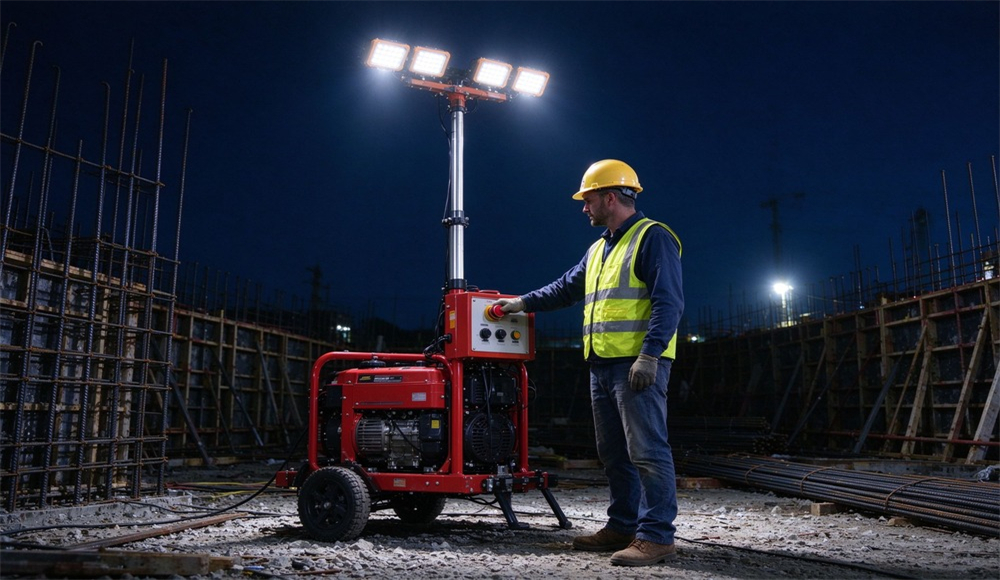
Three setups cover most night construction site lighting jobs. The right construction site lighting setup depends on workface shape, not just size.
Setup
Coverage
Night work lighting suited for
Trade-off
Single tower
2000-5000 m2
One long, narrow workface
Fast to relocate
Twin or multi-tower
4000 m2 and up
Several work faces at once
Overlap removes dark corners
Floodlight fill-in
Up to 500 m2
Narrow pits and close work
Flexible, quick to move
Recommended combo
Large mixed site
Towers plus floodlights
Covers face and detail work
The trade-off column decides between speed and coverage, not between cheap and expensive. A single tower wins on a narrow strip, while twin units earn their cost the moment the workface widens. Read the four rows together with the area table earlier on this page, because a mixed yard usually needs both. This is how a night construction site lighting plan stays flexible as the face advances through the week.
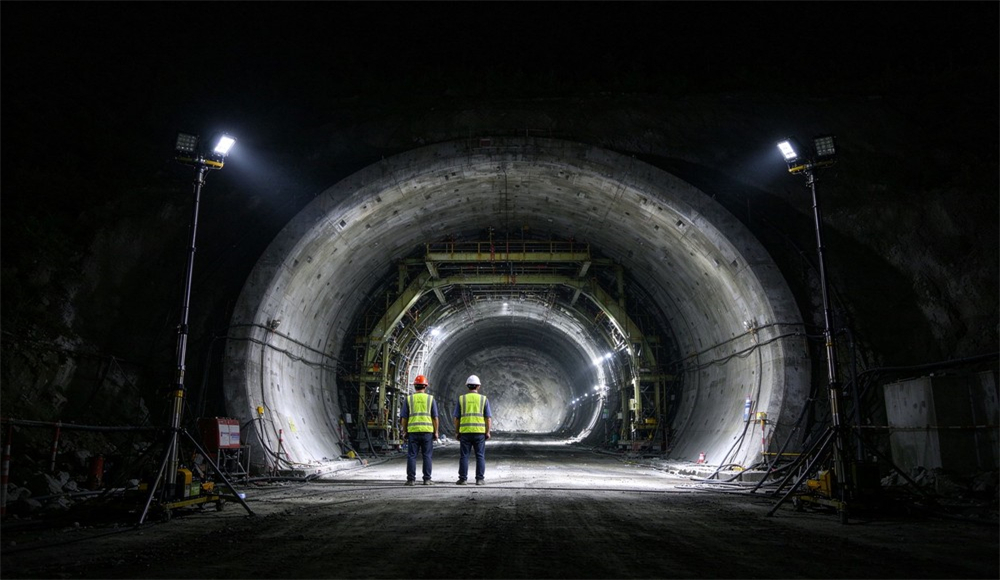
A single tower suits a linear job, such as a paving strip. One unit covers the band, towed forward as the face advances. Pair it with a night shift worksite floodlight for trench and pit detail. This construction site lighting setup keeps the whole strip lit without over-spending on extra towers.
Two or three towers suit yards with several crews. Space them so light circles overlap, and no corner falls between beams.
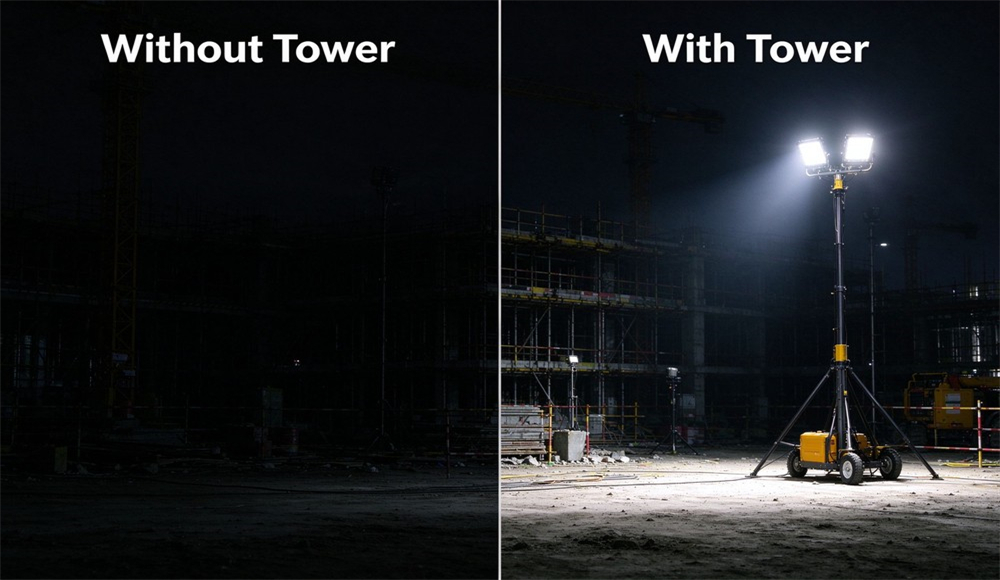
The difference shows on the ground: an unlit corner becomes visible the moment a second light circle overlaps it from the side. Before overlap, that corner hides trip points and tools. After overlap, the same corner is as bright as the rest of the face, and crews move through it without slowing down.
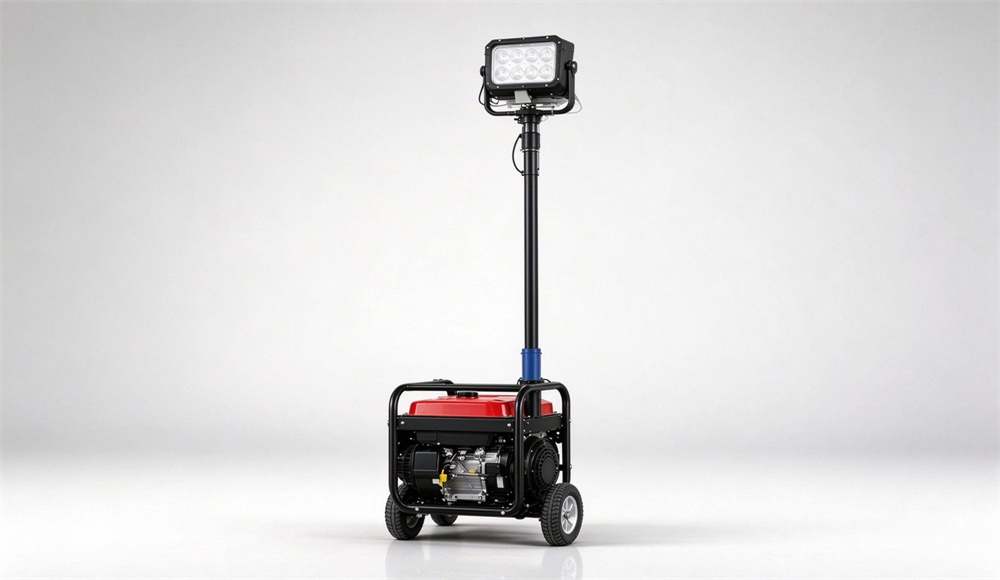
Overlap matters most at height: crane lifts stay safe when the beam reaches the hook, not just the slab or ground below. A tower aimed only at the floor leaves the load swinging in shadow. Raising the mast a few degrees puts light on the hook, and the signaler can read the load and the lift path.
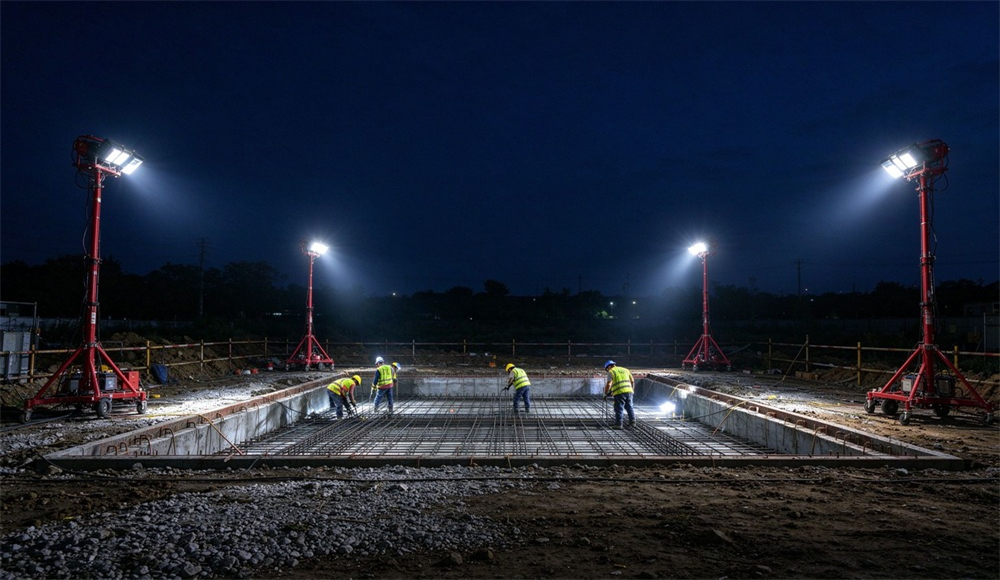
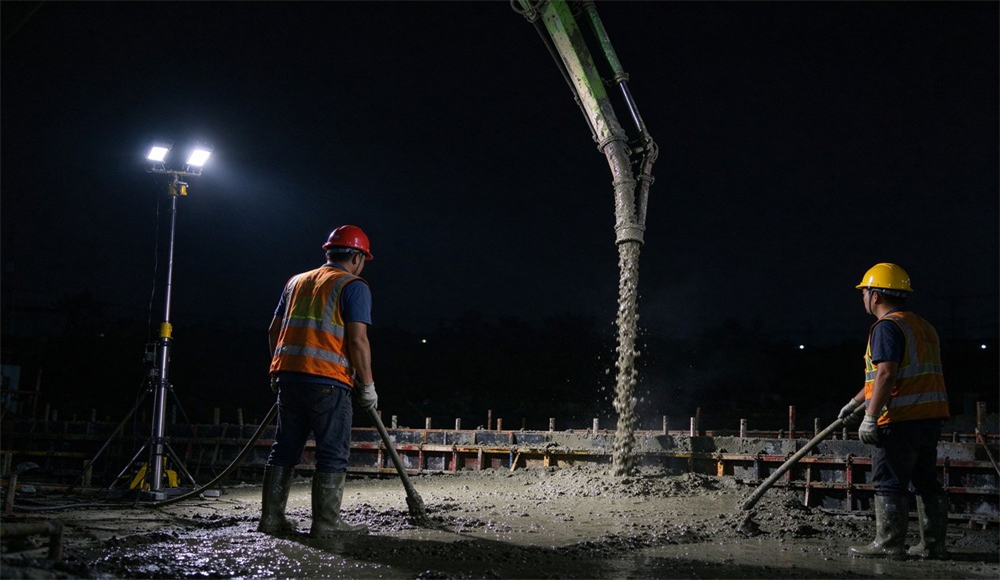
A single tower covers a square foundation pit from one stand, with both the rim and the excavation floor sitting inside the bright zone. Place the tower at one corner so the beam cuts across the pit diagonal. The rim stays lit for worker access, and the floor stays lit for digging and rebar work.
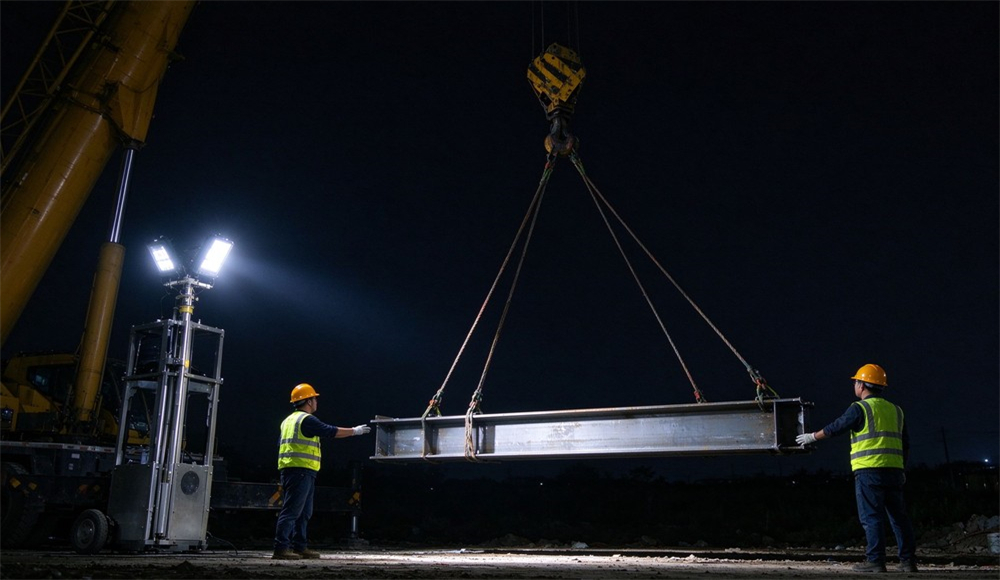
Where a pit meets a lift, the same tower carries both jobs, as long as the light circle reaches the full lifting radius. Short masts leave the outer radius dark; a 9-meter mast usually covers it. If the radius extends past the beam, add a second tower on the opposite side rather than over-aiming the first.
Add a portable floodlight for narrow spots under 500 m2, such as a shaft or a tight trench. A night shift worksite floodlight fills gaps the big towers cannot reach, and its built-in generator needs no tow vehicle. This night construction site lighting approach keeps close-in work bright without adding another trailer tower on site.
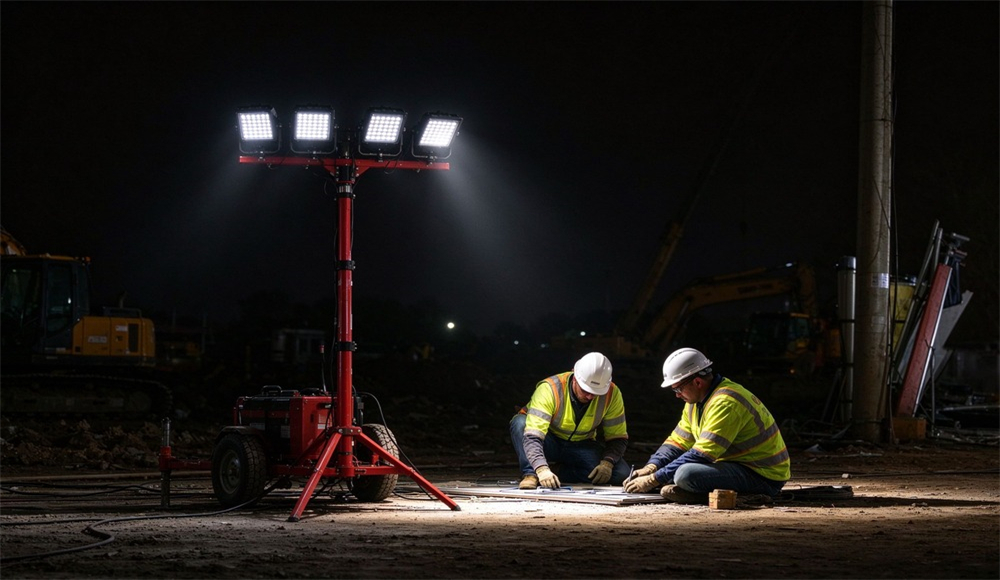
Rent when the job is short or the site keeps changing. Towers turn up, work and leave, with no depreciation on your books. It suits one-off shutdowns where night construction site lighting is needed for a few weeks only. A rented construction site lighting setup pays for itself in fewer stoppages.
Buy when night construction site lighting is the norm. Long road contracts and permanent yards run enough hours to make an owned construction site lighting setup the better value.
Whichever route you choose, these recurring cost items show up on every invoice, month after month. Fuel, transport, spares and crew hours form the base budget, and rental or depreciation sits on top. Sizing the tower count right keeps the running cost flat, while under-sizing adds overtime that no budget recovers.
Every number on the next page comes from field operation, not a generic list. Fuel burn, transport distance and spare-lamp count vary by season and site access, so treat the rows as planning ranges for budgeting. We never lock a quote before seeing your area, tower count and destination port. This is where a night work lighting solutions quote turns generic assumptions into a construction site lighting setup matched to your actual shift pattern.
Construction site lighting setup cost factor
What the night work lighting solutions budget includes
Transport
Towing between sites
Fuel
A night run burns the tank
Spares
Lamps and filters on site
Labour
Crew to deploy and lower towers
Rental or depreciation
Confirmed per project length, on request
We never quote a fixed price without your specs. Send the site area, tower count and port, and you get a tailored quote. Recurring cost items run alongside one-off delivery: transport between sites, fuel per shift, spares held on site, and crew hours for deploy and stow. Send specs and we return a line-item quote within one working day.
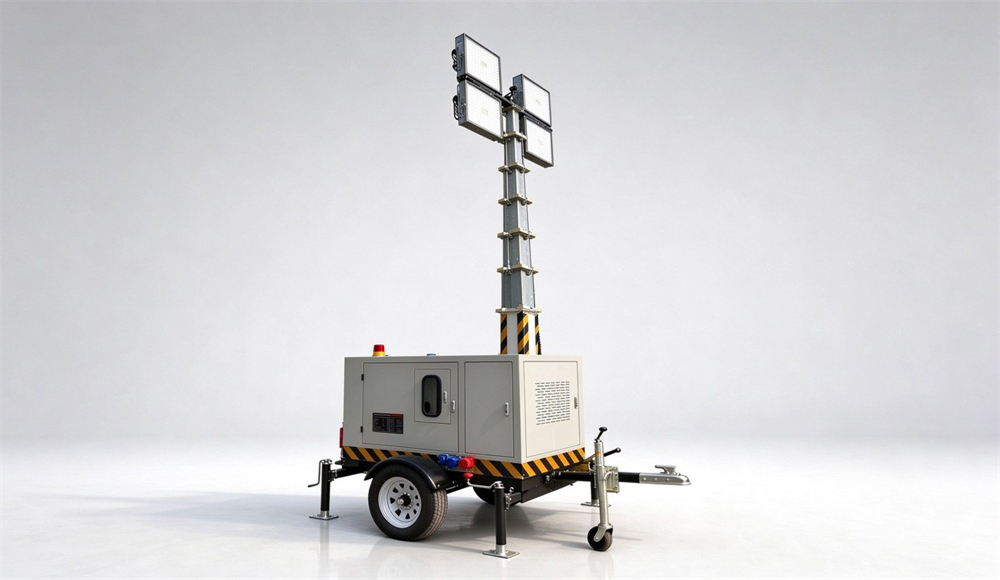
On night roadworks, highway night construction lighting follows the same shoulder-parking logic: a tower parks on the shoulder and lights the asphalt strip. Cones separate traffic from the gang. This keeps highway night construction lighting crews visible to drivers all night. Tower placement on the shoulder also keeps the beam off the driving lane, so passing traffic sees the cones, not the lamps.
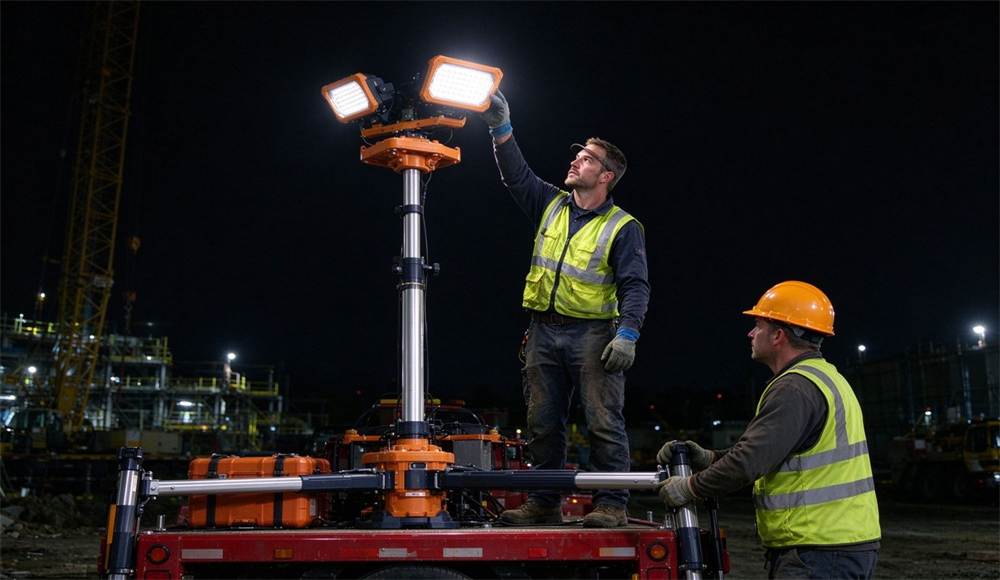
Municipal repair crews use the same shoulder-parking logic, on a smaller tower, for shorter night shifts on city streets. This compact night construction lighting setup fits urban curfew windows. A smaller trailer tower squeezes into a single lane, and the low mast clears overhead wires. Most city jobs run 8-10 p.m. to 4 a.m., when traffic is light.
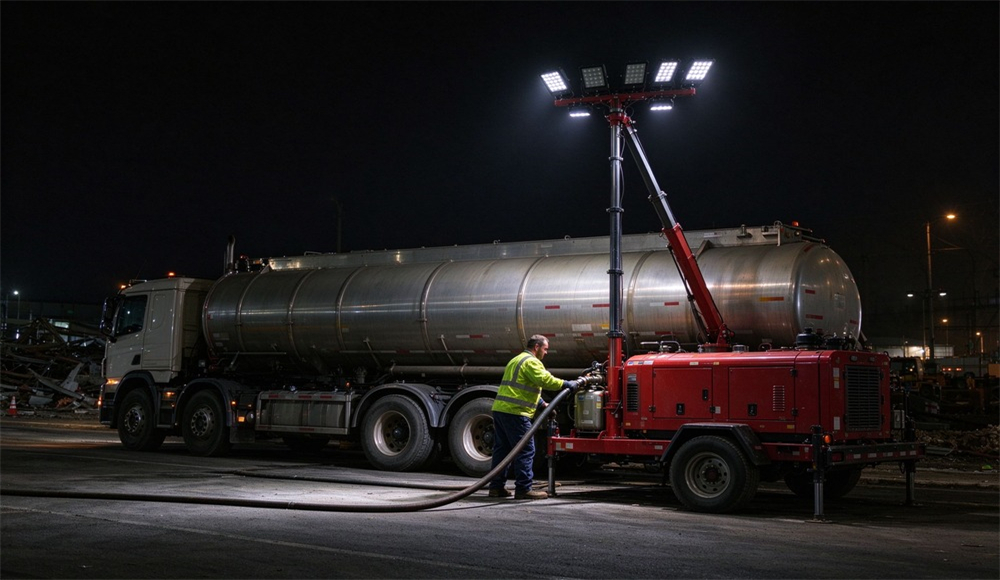
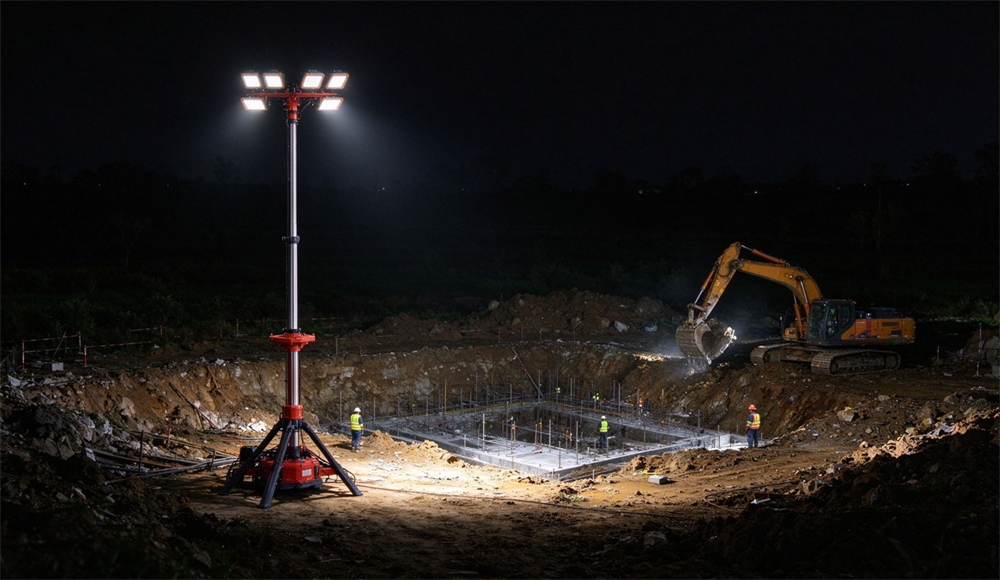
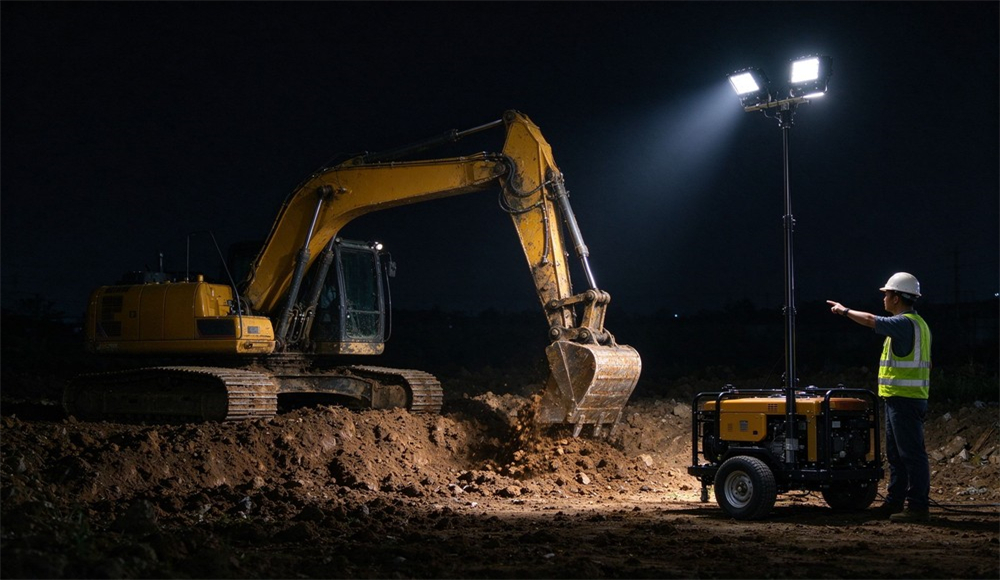
On earthwork, one tower lights the whole 2000-5000 m2 dig. The excavator loads trucks inside the bright zone, and banks stay visible at every swing. This is the standard night construction site lighting layout for open-pit earthwork. The tower sits at the cut edge, raised high enough to clear the excavator boom, so the loading area and the haul road both stay lit.
The bright zone is sized to the digging swing, so the truck loading area never sits in shadow between cycles. Proper highway night construction lighting keeps the loading zone bright across every cycle. If the truck has to swing into shadow to load, cycle time drops and safety risks rise. Beam height adjusts to match the boom reach.
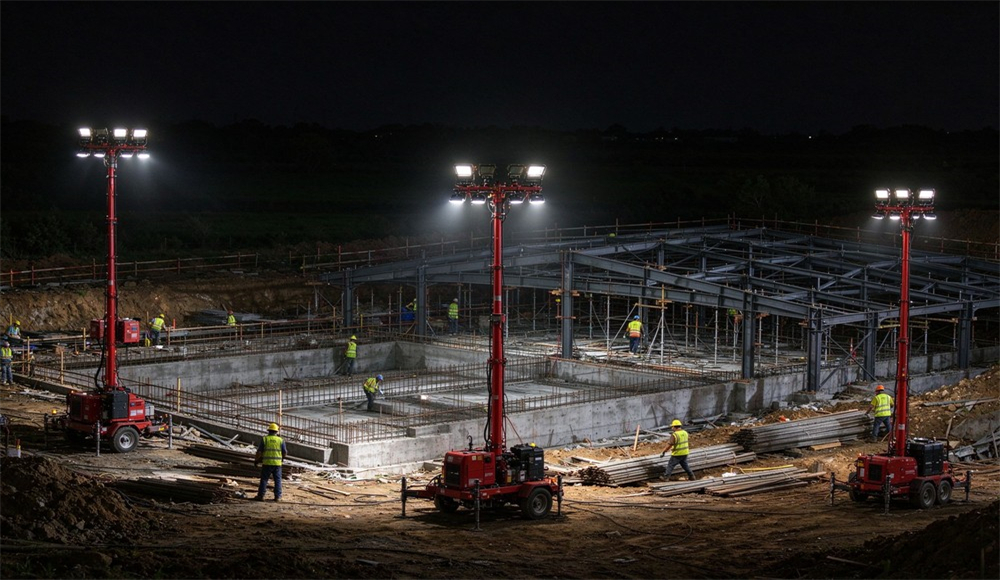
On bridges and tunnel portals, towers light the deck and approach. Keep the beam off drivers on the crossing itself. A 2000 square meter night site lighting job on a deck uses two towers in relay, and a 2000 square meter night site lighting job on an earthwork cut uses one. Towers park at deck level, not on the parapet, so the beam washes across the work surface without spilling into the roadway below.
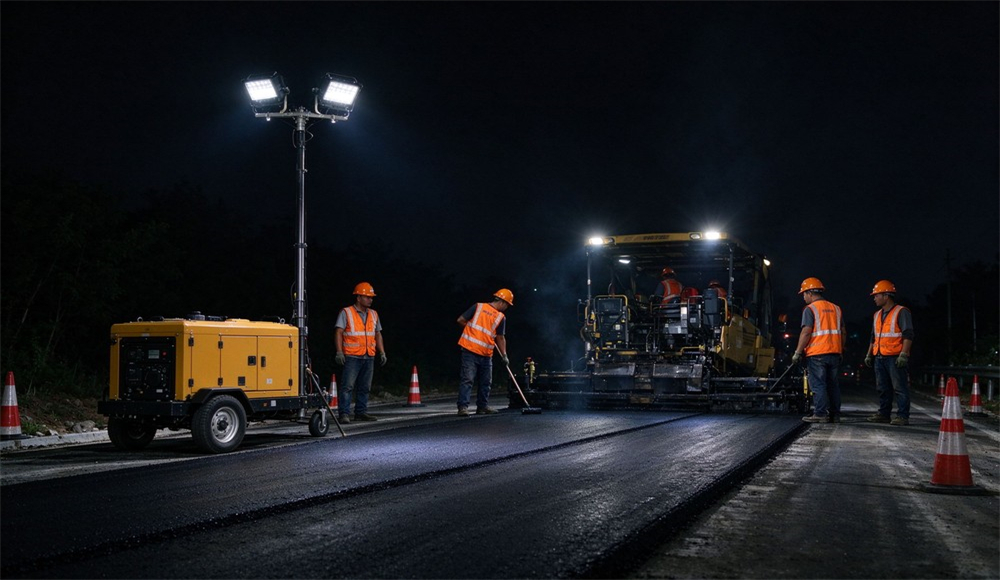
Tunnel portals need the same deck-style lighting, kept short of the approach lane so drivers are not dazzled on the way in. Portal night construction lighting stops at the cut edge, never on the approach. The beam covers crew and equipment at the opening, while the dark interior beyond stays unlit until crews move in.
Because beam angles drift as units move between shifts, every crew change ends with a quick two-minute head check before work starts. Jacks settle, lamp brackets loosen, and a tower bumped during tow shifts its aim. Two minutes at handover catches drift before the new crew steps into a dark or glare-lit face, which keeps this night construction site lighting safe and consistent across the whole shift.
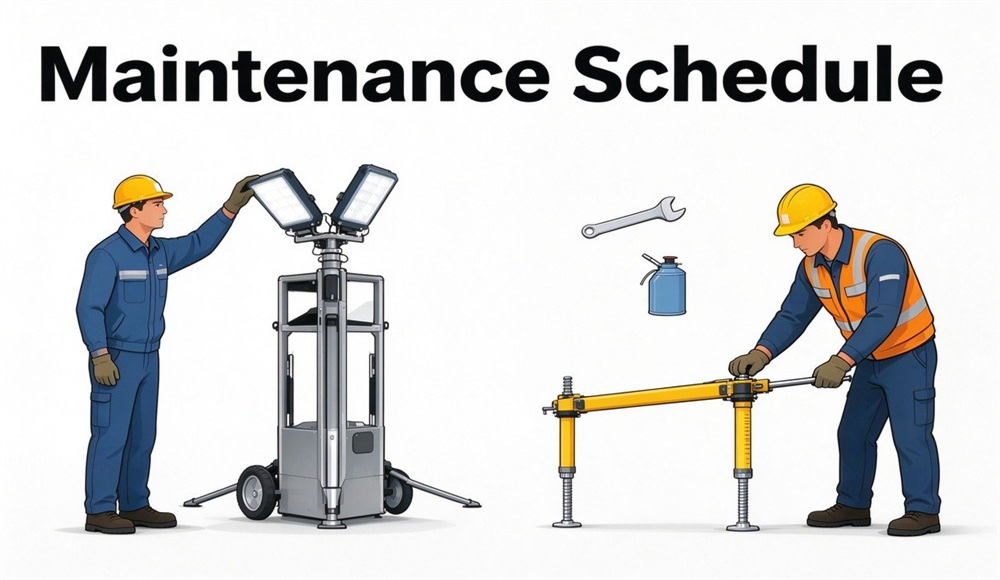
Matching tower count to workface area is the fastest route to a safe, on-time night shift, and this night work lighting solutions decision tree turns your site type into a recommended construction site lighting setup in four simple branches.
A compact night shift worksite floodlight with its own generator covers pits and shafts where a trailer cannot turn, keeping the construction site lighting setup light and fast for urban curfew jobs.
A 2000 square meter night site lighting plan grows from one tower into a 2-3 unit array whose beams overlap, so this night construction site lighting covers the dig without dark corners between circles.
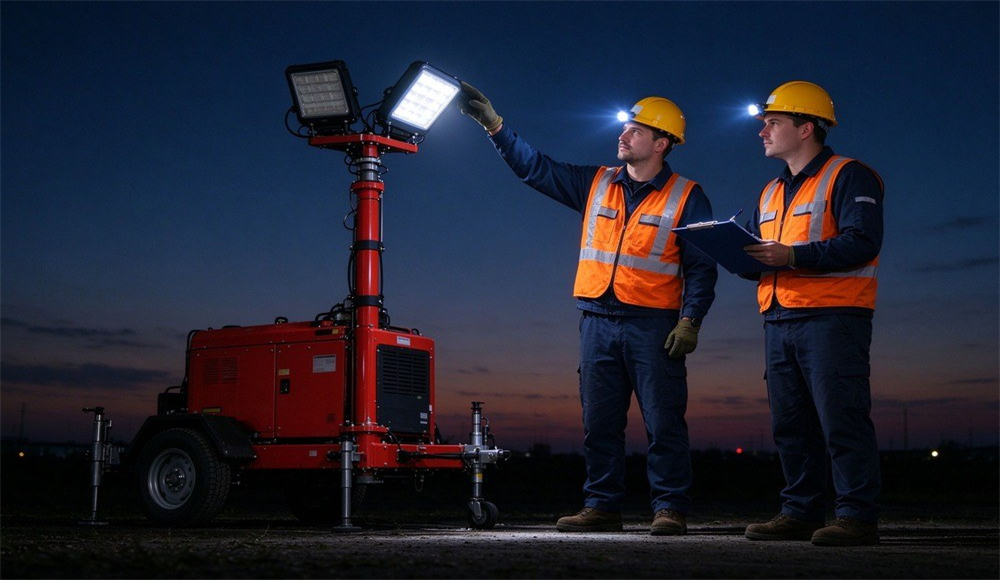
Highway night construction lighting parks towers on the shoulder with heads tilted away from drivers, turning your night work lighting solutions into glare-free roadside coverage for asphalt crews.
A bright trailer tower over the pour face plus a night shift worksite floodlight at choke points keeps the pump boom and screed hands inside one clean construction site lighting setup.
Run these branches against the area table above, then send us your footprint; the right night construction site lighting is one tower count away. Match each branch to a unit on the hydraulic mobile light tower range or the construction site floodlight page.
Good lux level planning is the core of safe construction site lighting at night: working faces need 50-100 lux, walkways 20-50 lux, and equipment yards above 100 lux.
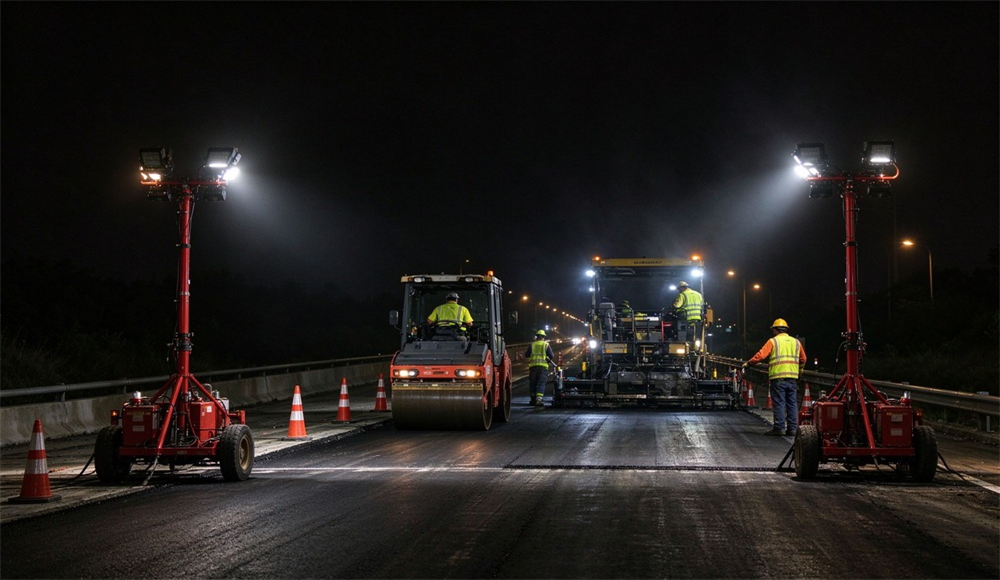
Q1. How many light towers does a night construction site need?
Plan one tower per 2000-5000 m2 workface. Smaller sites run one unit; larger yards run two or three with overlapping beams. Add floodlights for narrow spots, and confirm at a dusk walk.
Deploy and aim towers 30-60 minutes before dark. That leaves time to level jacks, raise masts, warm lamps and walk the site for glare, so the shift starts with light on.
Cost depends on tower count, rental or purchase, fuel, transport and spares. We never quote a fixed figure without your specs. Send area, quantity and destination port for a quote.
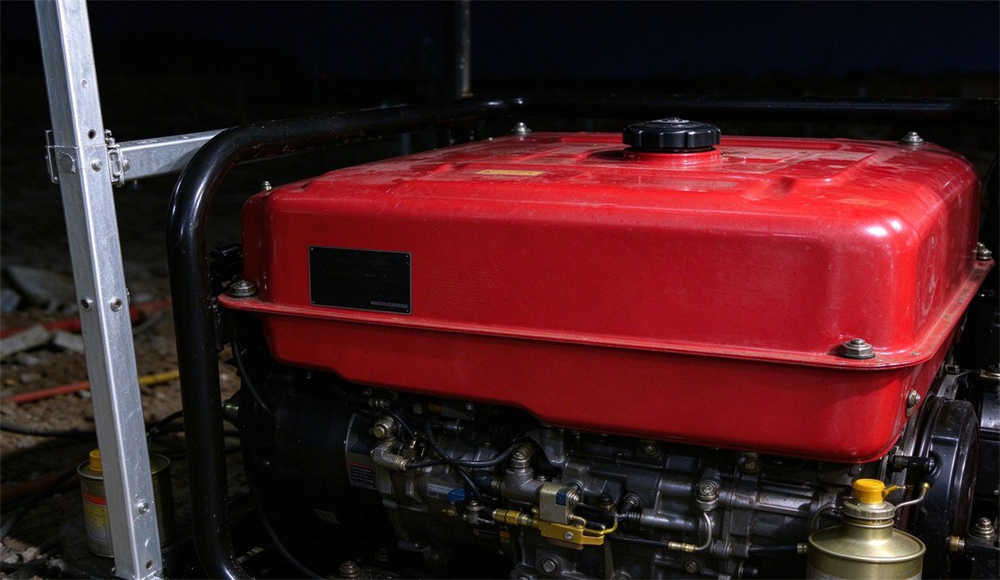
A compact floodlight work lamp suits spots under 500 m2. It is lighter and cheaper than a trailer tower, covering a shaft or pit without towing a unit. See the construction site floodlight page.
Yes. One trailer tower is rated to cover 2000-5000 m2 from a single stand. For wider yards, run two towers in relay with overlapping beams so no dark corner sits between them.
Most trailer towers carry their own diesel generator. Some models accept an external AC220V 50/60Hz supply when grid power reaches the site. Confirm the option on the specific model before ordering.
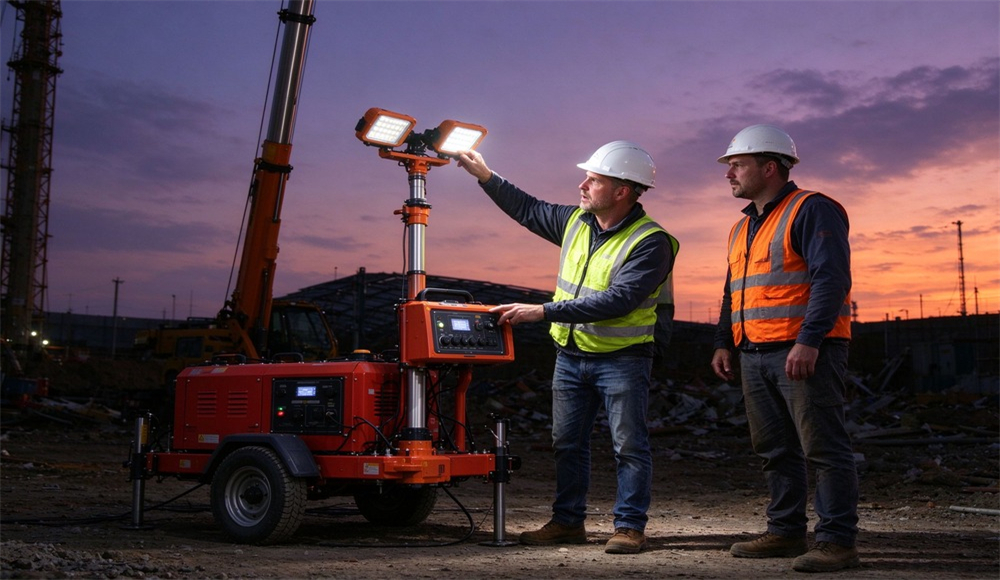
Lower the mast and pack the lamp heads once a gust warning arrives. Trailer towers resist level 8 wind in normal conditions, but exposed ridges and storm fronts sit beyond that limit. Wait for calm.
Aim heads at the workface, tilt them down and add shields where a beam crosses traffic. With heads on the face and away from driver sight lines, passing vehicles stay unaffected. Check glare at ground level.
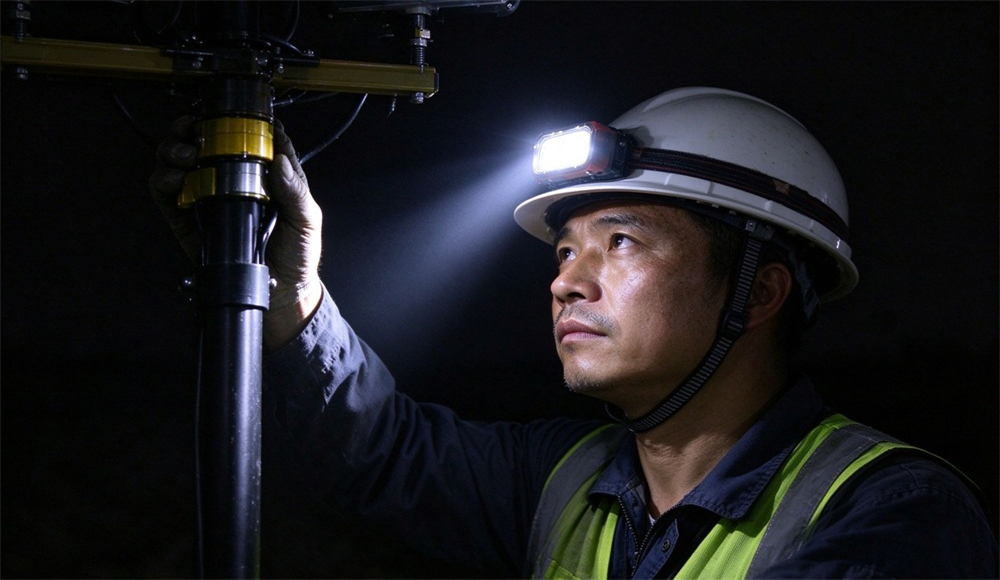
Glare control and task lighting work as a pair: the wide area light from the towers covers the face, while close-up spots still need a beam that follows each worker. This is why night construction site lighting specs combine high mast heads with personal torch or headlamp backup, and neither side replaces the other. A 2000 square meter night site lighting plan works best when the area glow stays even and every tradesperson carries their own small task light for detail checks.
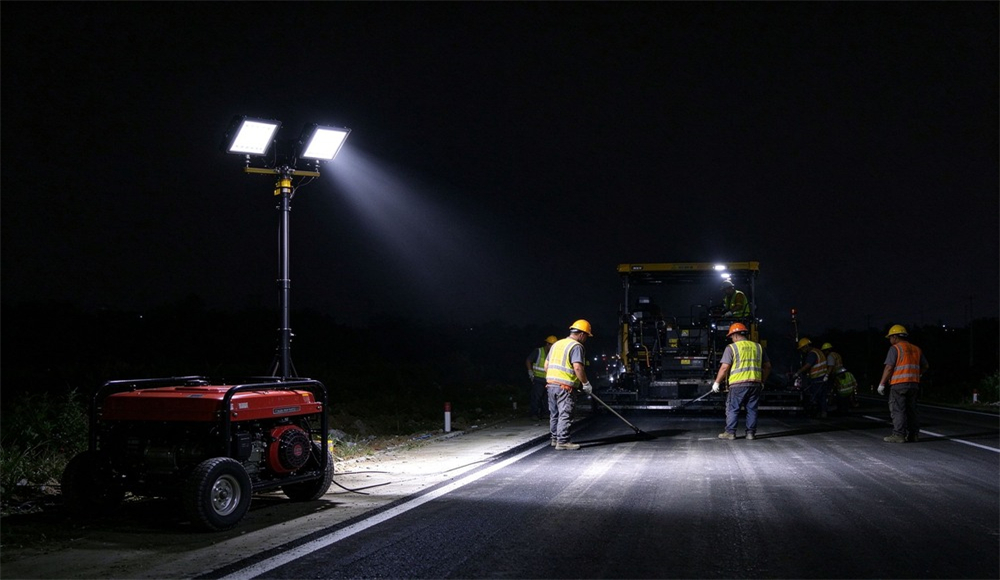
Towers light the main face and emergency routes; headlamps are personal backup for close-up checks, work under the rig and welfare units. Use both: area light from towers, task light on each worker.
Run a bright trailer tower over the pour face. The hydraulic mobile light tower keeps the pump boom, vibrator operators and screed hands in one bright zone. Add floodlights near choke points.
No. Trailer towers tow on a hitch, and the mast lowers for transport. Deploy at the new face, level the jacks and raise it again. The mobile light tower for construction range covers towable options.
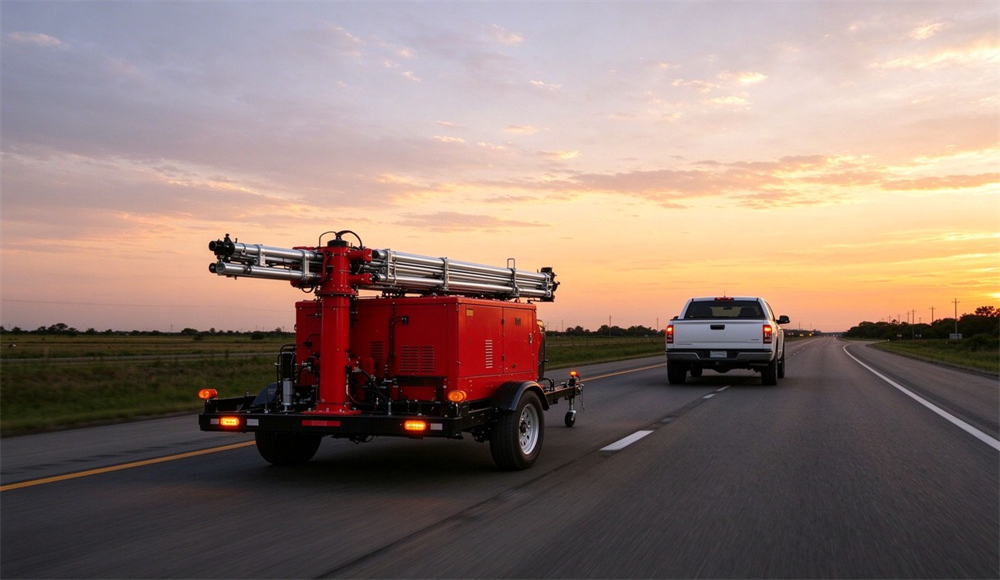
Raise the mast higher, re-aim the heads, or add another tower. Treat lux targets as industry reference per your project spec. Overlap beams by about a third of each circle.
Rent for short or rotating projects; buy for long, high-frequency night shifts. Either way, budget fuel, spares and towing. Send your project length and area, and we will confirm the route.
Pause outdoor lighting work, lower masts and wait out the storm. Heads carry IP65 rain protection and towers resist level 8 wind, but thunderstorms exceed safe limits. Resume once weather passes.
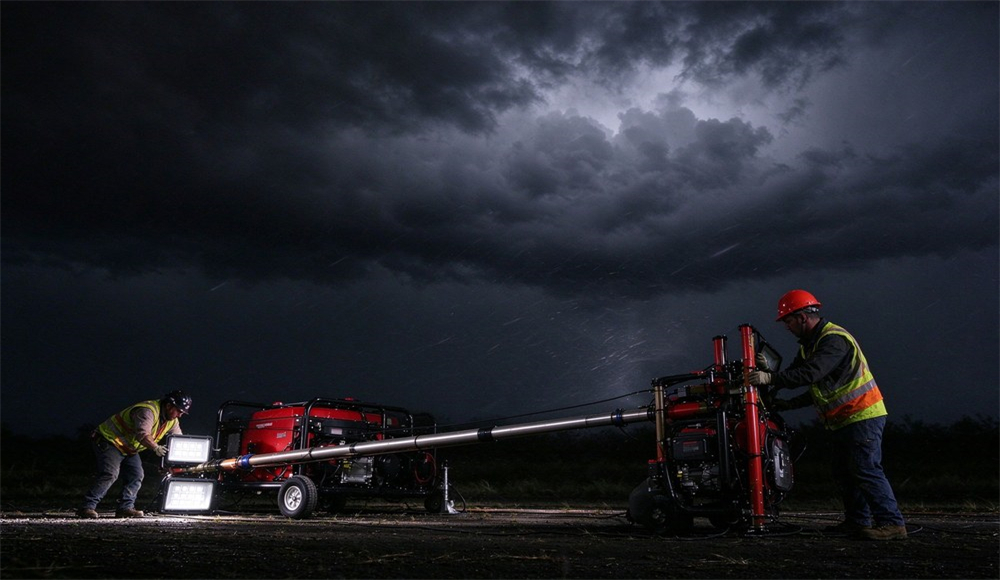
Keep the same towers running through handovers. Re-check beams, jacks and fuel at each crew change. A two-minute walk around the lit face catches lamps and glare before the new shift.
Check lamp heads, jacks and fasteners weekly as a routine. Inspect engine oil and filters on your model schedule. Outdoor rated heads handle rain, but clean lenses keep the circle even.
A typical 4×1000W trailer tower delivers roughly 20-50 lux on the workface at 20 m, depending on lamp tilt and head spread. General earthwork sits near the lower end; crane lifts and fine screed work need the brighter upper band. Match this construction site lighting setup to the task, and treat these night construction site lighting figures as a planning reference. A night shift worksite floodlight fills close-in spots where the tower circle falls short.
Start with one tower per 2000 square meter night site lighting block, then add a night shift worksite floodlight for tight pits and choke points.
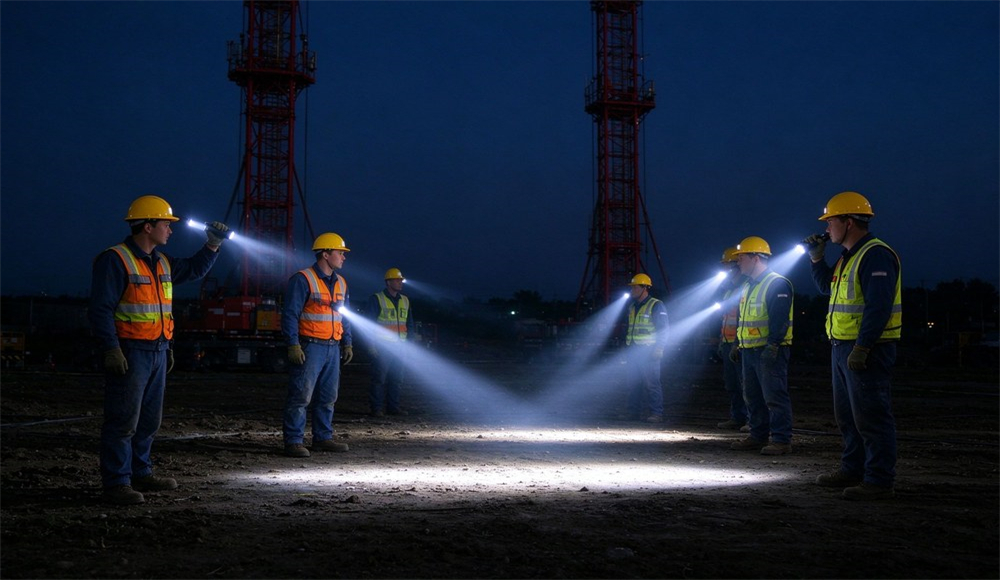
Night Construction Site Lighting: Get Your Site Lit
Good night construction site lighting is simple once the routine clicks: size towers to the area, deploy before dark, aim away from drivers and keep routes lit. Mobile towers remove cables and fixed wiring, so light moves with the workface.
Tell us your site area, night shift hours, tower quantity and port. We will put together a night construction site lighting configuration for the job, with links to the mobile light tower for construction range and the hydraulic mobile light tower detail page.
Pautan Mesra :
hak cipta © Custom Disaster - Relief Bedding: Tents, Sleeping Bags, Blankets Hak cipta terpelihara
pasukan profesional untuk perkhidmatan !