Section 1: Extreme Cold Emergency Relief Sleeping Bags — What Is the Fundamental Difference from Consumer Camping Products?
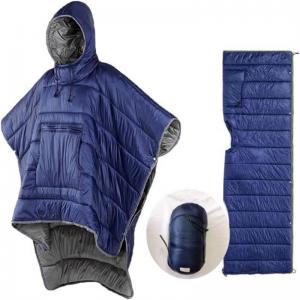
Extreme cold emergency relief sleeping bags designed for disaster shelter sites are fundamentally different from the recreational sleeping bags sold in outdoor retail stores. The core design principle for professional emergency-use sleeping bags is: suitability for bulk storage and unified distribution, strict safety standards covering fire resistance and non-toxic materials, long service life, repeated sanitization capability, and compatibility with diverse user groups including adults, children, elderly persons, and the injured.
In post-disaster shelter sites, mountain temporary camps, or snowstorm emergency response sites, bulk emergency relief sleeping bags serve functions well beyond basic warmth. They must be durable and resistant to soiling, easy to clean or sanitize in bulk, packaged for stacking and large-volume transport, and identifiably marked to support unified inventory management.
Different procurement stakeholders have notably different priorities:
Government emergency and disaster preparedness departments: Focus on project compliance, completeness of inspection documentation, and ease of bulk storage rotation management
NGOs / international humanitarian organizations: Prioritize delivery timeliness, cost-effectiveness, cross-border customs clearance support, and in-country adaptability at the destination
Foreign trade distributors: More focused on sustained supply capacity, breadth of one-stop product portfolio, and pricing structure
Rescue teams / procurement project managers: Emphasize scenario compatibility, special population configuration, and the credibility of third-party inspection reports for relief sleeping bags
Section 2: Material Standards for Extreme Cold Emergency Relief Sleeping Bags — How to Evaluate Fire Resistance Rating and Temperature Standards
Core Requirements for Outer Shell Fabric
The outer shell fabric of emergency relief sleeping bags should prioritize: abrasion resistance suitable for repeated use and transport friction, waterproof and moisture resistance for humid shelter environments, fire resistance to meet project safety acceptance requirements, and freedom from irritating odors or harmful substances for prolonged use in enclosed tents or indoor shelter sites.
In enclosed or semi-enclosed shelter environments, if the fabric carries a noticeable irritating odor or poses safety hazards at elevated temperatures, the product will likely fail project acceptance and may directly affect the health and safety of people on site. The fire resistance rating for relief sleeping bags is the baseline threshold required by most government stockpile and NGO project specifications. It is recommended to request the corresponding fire resistance inspection report from suppliers at the inquiry stage.
Fill Types and Insulation Capacity
Extreme cold relief sleeping bags commonly use two categories of fill: synthetic fiber and down. Synthetic fiber offers better stability, stronger moisture resistance, and relatively controlled cost — making it well suited for long-term storage and high-humidity use environments. Down delivers superior insulation at equivalent weight, but its loft can be affected by moisture absorption, requiring stricter moisture-proof packaging and storage conditions. Fill moisture absorption is one of the most common causes of reduced insulation performance in extreme cold conditions. Regardless of material selected, suppliers should be asked to clarify the corresponding moisture-proof treatment method and storage recommendations.
EN 13537 / ISO 23537 Three-Rating System — Why Is This the Core Reference Standard for Extreme Cold Relief Sleeping Bag Procurement?
This is the most technically significant point in this guide — and the area where procurement teams most frequently make costly mistakes.
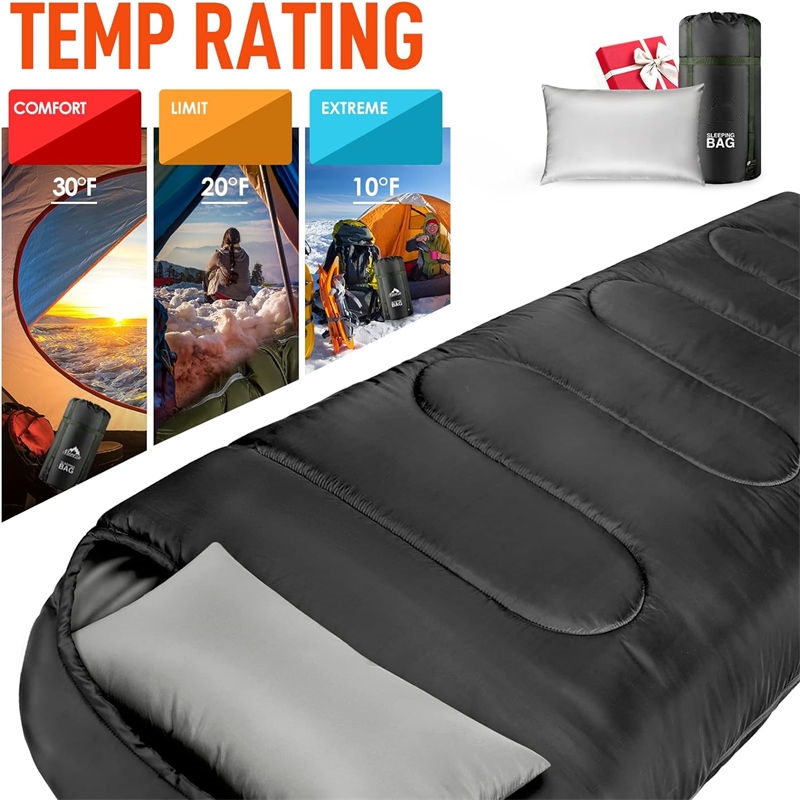
In international emergency supply procurement, sleeping bag temperature rating certification currently references EN 13537 (European standard) or its equivalent ISO 23537 (International Organization for Standardization version). This framework defines three independent temperature indicators for sleeping bags:
T-comfort (Comfort Temperature): The lowest temperature at which a standard female user feels comfortable inside the bag. This is the most conservative reference indicator and is the appropriate baseline when the sheltered population includes a high proportion of vulnerable groups such as children and elderly persons.
T-limit (Lower Limit Temperature): The lowest temperature at which a standard adult male can maintain thermal balance without becoming hypothermic. This is the core reference lower limit for standard extreme cold relief sleeping bag selection.
T-extreme (Extreme Temperature): The temperature at which the bag can prevent hypothermia-induced death — a survival-only threshold, not a comfortable use temperature. This should never be used as the selection benchmark for routine distribution.
The most common mistake in procurement is interpreting a supplier's labeled temperature as "comfortable use temperature," when the value stated may actually be T-limit or even T-extreme. The three temperature indicators for the same sleeping bag can differ by more than 10°C. Misreading a single indicator can cause an entire configuration plan to fail at the critical moment.
Technical specifications and tender documents must therefore explicitly require: suppliers to list T-comfort, T-limit, and T-extreme values separately in accordance with EN 13537 / ISO 23537 temperature rating certification standards, and to provide original test reports issued by an accredited laboratory, clearly stating the test method, sample batch, and laboratory accreditation status.
Section 3: How Should Emergency Relief Sleeping Bags Be Configured for Different Extreme Cold Scenarios?
Disaster Shelter Scenarios — Earthquake, Snowstorm, and Cold Wave Emergency Camps
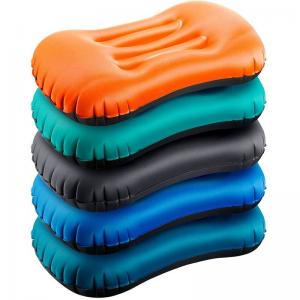
In post-disaster temporary shelter sites, emergency stockpile sleeping bags are responsible for basic thermal protection over a continuous period of weeks to months. The configuration approach should use the historical minimum temperature of the target area — not the average temperature — as the benchmark for selecting temperature rating levels. For children, elderly persons, and injured individuals, it is recommended to independently assess whether higher insulation grades or easier-to-use designs are needed. Simultaneously configuring moisture-proof sleeping pads and emergency blankets as supplementary insulation layers can reduce the thermal load requirement on the sleeping bags themselves.
Common practice is to distribute one sleeping bag per person, with a reserve quantity of 10%–20% above the theoretical requirement to cover attrition, special population replacement, and drill consumption.
High-Altitude and Remote Mountain Area Emergency Support
In high-altitude areas, large day-to-night temperature swings and strong winds typically demand higher insulation grades for extreme cold emergency relief sleeping bags. Additionally, given logistical constraints common to highland regions, greater emphasis should be placed on the compressed storage volume of the sleeping bag — whether it is manageable for manual handling — and on the load-bearing durability of its outer packaging.
How to Develop a Tiered Configuration Plan Based on Shelter Duration and Climate Variation?
For large-scale projects covering multiple climate conditions simultaneously, it is recommended to structure the configuration plan in tiers:
Basic insulation grade: Suitable for temperate or mildly cold areas, as the standard distribution item for the majority of the sheltered population
Enhanced insulation grade: For extreme cold areas, mountain regions, or locations with extreme temperature swings, as well as for elderly persons, children, or injured individuals requiring stronger protection
Child-specific sizing: When the proportion of children in the sheltered population is substantial, separately configured child-appropriate sizing is recommended
The specific quantity ratio for each tier should be determined based on actual climate data for the target area, experience from previous relief operations, and budget constraints. Applying a fixed ratio without contextual adjustment is not recommended.
Section 4: Size, Color, and Packaging — The Decision Logic Behind Specification Selection
Size coverage: Confirm that the length specification can accommodate the taller individuals within the sheltered population. Child-specific sizing should be confirmed by the project team in advance and written into the technical specification document.
Color and identification management: Standardized colors facilitate warehouse inventory counting and batch identification. For projects requiring differentiation between insulation grades, a color-coding approach is recommended, with clear labeling on outer packaging indicating product type, applicable temperature rating level, and batch information.
Packaging and warehouse compatibility: The dimensions of a compressed and packaged sleeping bag directly affect container loading efficiency and warehouse stacking density. Suppliers should be asked to provide the reference volume after compression and the number of units per carton, and compatibility with target warehouse shelf specifications or standard pallet dimensions should be confirmed — to avoid the scenario where the warehouse can store the goods but the container cannot efficiently load them.
Section 5: How to Calculate the Total Procurement Cost for a Batch of Extreme Cold Relief Sleeping Bags?
Many procurement teams focus only on unit price when reviewing quotations. Yet the true comprehensive cost of emergency stockpile sleeping bags extends well beyond unit price multiplied by quantity. The following dimensions should be incorporated into a complete cost assessment:
(1) The relationship between unit price and service life — Products with more stable quality maintain better durability through continuous use and repeated sanitization, resulting in lower restocking frequency. Avoid evaluating only the initial procurement unit price while ignoring subsequent rotation and replenishment costs.
(2) Storage and transport costs — Sleeping bags with thicker fill occupy greater volume per unit, increasing full-container ocean freight and warehouse rental costs accordingly. If two sleeping bag models differ meaningfully in compressed volume, the cumulative difference in transport and storage costs may exceed the difference in unit price, and should be factored into comparative analysis.
(3) The risk cost of inspection failure — For orders associated with government tenders or international aid projects, a single failed acceptance inspection may cause the entire project milestone to be delayed, affecting downstream cooperation assessments. Selecting suppliers with complete qualifications who can provide full inspection documentation is the most direct way to reduce this hidden cost.
(4) The synergy effect of one-stop procurement — For cross-border projects, procuring sleeping bags, moisture-proof sleeping pads, emergency blankets, and other complementary supplies from the same supplier reduces the number of customs clearance batches and coordination interfaces, and lowers the risk of incompatible specifications across product categories.
The total cost calculation framework should cover unit price + service life + storage and logistics costs + inspection risk costs + one-stop procurement synergy — not simply use the lowest unit price as the sole decision criterion.
Section 6: Storage and Maintenance Essentials for Emergency Relief Sleeping Bags
Emergency stockpile sleeping bags may sit in a warehouse for years before being activated. If stored improperly, they may have already suffered widespread moisture damage or compressed fill by the time they are needed — rendering them unable to achieve the intended insulation performance.
Storage environment requirements: Maintain dry and ventilated warehouse conditions, control humidity, and avoid prolonged direct sunlight and extreme temperature fluctuations. Store sleeping bags on pallets in their original packaging, away from direct contact with damp floors. Stacking height should not exceed the structural load limit of the packaging.
Rotation and inspection mechanism: It is recommended to establish a scheduled inspection plan — for example, checking a sample batch every 2–3 years, assessing outer condition, fill loft, and waterproof layer integrity — and to coordinate rotation cycles with project budget planning. Sleeping bags nearing their rotation deadline can be prioritized for drill or small-scale event use while new batches are simultaneously replenished, reducing waste.
Sanitization and re-storage: After use, sleeping bags must be thoroughly aired and dried before being compressed and packaged for re-storage. Sanitization must follow the method appropriate for the specific material — avoid sealing moisture inside compressed packaging, as this will cause mold growth. Simple maintenance habits, such as thoroughly drying before repacking and following proper sanitization procedures before returning to storage, can significantly extend the operational service life of extreme cold relief sleeping bags.

Section 7: How to Screen Qualified Extreme Cold Emergency Relief Sleeping Bag Suppliers? A Six-Step Procurement Process
Five Core Dimensions for Supplier Screening
Approach supplier selection from hard, verifiable evidence — not from sales representatives' self-descriptions alone.
(1) Qualifications and inspection documents — Whether the supplier holds relevant production qualifications for emergency relief supplies, and whether they can provide fire resistance inspection reports and harmful substance inspection reports. If the project requires EN 13537 / ISO 23537 temperature rating certification, confirm that the reports come from an accredited laboratory and clearly identify the specific model and batch being tested.
(2) Production capacity and delivery assurance — Understand the single-product monthly production capacity range and whether the supplier has emergency scheduling and rush order handling capability. For medium to large projects, it is advisable to inquire about delivery records on comparable historical orders.
(3) Quality control process and sector experience — Whether a complete quality management system exists, covering raw material inspection through in-process sampling, finished product testing, and packaging inspection. Whether the supplier has actual project experience delivering bulk emergency relief sleeping bags to government or NGO clients.
(4) Customization and one-stop supply capability — Whether the supplier supports specification, color, and labeling customization. Whether they can simultaneously supply moisture-proof sleeping pads, emergency blankets, thermal packages, and other extreme cold shelter sleeping bag complementary supplies.
(5) Foreign trade service capability — Whether the supplier holds export licensing qualifications, is familiar with destination country customs clearance requirements, and can provide neutral packaging, multilingual documentation, and full-container ocean freight support. Whether they support common trade terms such as FOB, CIF, and EXW.
Six-Step Procurement Process
Step 1: Prepare a requirements summary — Clarify the number of persons to be sheltered, population composition including special group proportions such as children and elderly, climate profile of the target area with a reference range of historical minimum temperatures, intended use period, budget ceiling, and whether specific certification requirements apply such as EN 13537 temperature rating tests or fire resistance grade standards.
Step 2: Draft a technical specification document — In written form, specify outer shell fabric type and fire resistance grade requirements, fill type, insulation level by listing T-comfort, T-limit, and T-extreme separately, size specifications, color and labeling requirements, and packaging and transport method. Avoid relying solely on verbal descriptions without referencing test methods.
Step 3: Pre-screen candidate suppliers — Compare multiple candidates based on completeness of qualification documents, credibility of inspection reports, production capacity scale, one-stop supply capability, and foreign trade experience. Request proof documentation alongside quotations.
Step 4: Sample confirmation and small-batch pilot delivery — Upon receipt of samples, conduct a line-by-line check against the inspection checklist. For larger projects, a phased delivery strategy is recommended: deliver an initial 10%–20% of total quantity first, use this batch in actual or drill scenarios to collect feedback, then finalize the arrangement for the main delivery. This approach allows potential issues to be identified at the lowest possible cost in the project cycle.
Step 5: Lock in contract terms — Specify technical specification parameters and permissible tolerances, phased delivery schedule and milestones, inspection sampling ratio and non-conforming item handling procedures, penalty clauses, and payment arrangements linked to acceptance results. For government procurement or international aid projects, simultaneously agree on documentation retention and audit cooperation requirements.
Step 6: On-arrival inspection and record archiving — Complete initial arrival inspection and sampling tests using the inspection checklist. Establish a materials ledger covering batch number, production date, warehousing date, and inspection records, to support subsequent rotation management and project audit traceability.
On-Arrival Inspection Checklist
(1) Appearance and workmanship: Inspect a sample of units for tears, staining, loose threads, obvious color variation, or zipper defects
(2) Dimensions and weight: Measure actual specifications against contract-stated dimensions, confirming deviations are within allowable tolerance
(3) Fire resistance rating: For projects with fire resistance requirements, verify the inspection report or arrange third-party sampling verification
(4) Temperature rating verification: Cross-check against the EN 13537 / ISO 23537 temperature rating levels specified in the contract; verify original third-party test reports and confirm that the T-comfort, T-limit, and T-extreme values listed in the report match the product labeling
(5) Packaging and labeling: Verify packaging integrity, batch labeling, language labeling, and user instruction content against agreed specifications
(6) Quantity reconciliation: Reconcile actual delivered quantity against the packing list and contract figures
If any non-conformance is identified during acceptance inspection, the supplier must be notified in writing immediately, and the situation handled through returns, replacements, or supplementary delivery as stipulated in the contract — preventing substandard items from entering use. Issues discovered at the acceptance stage can still be remedied. Once goods are warehoused and distributed, the cost of resolution compounds significantly.
If you are currently drafting the technical annex for a tender or developing internal procurement standards for extreme cold emergency relief sleeping bags and lack a ready-made template, you may contact us through the site's inquiry form with a brief description of the project background. We will provide a de-identified general-purpose example for internal reference and benchmarking purposes only — final specifications are subject to the formal contract signed by both parties.
Temperature rating verification: Cross-check against the EN 13537 / ISO 23537 tempe
Section 8: Common Procurement Pitfalls and Early Warnings for Extreme Cold Emergency Sleeping Bags
Pitfall Type 1: Using standard camping sleeping bags as substitutes for emergency-grade products
Error pattern: Selecting consumer-grade outdoor sleeping bags based solely on appearance and labeled parameters, without verifying emergency-specific compliance.
Potential consequences: Fire resistance does not meet standards, leading to failed project acceptance; insufficient material durability results in frequent breakage and continuously accumulating replacement costs.
Prevention: Explicitly state "designated for emergency relief use" in the tender specifications, and require suppliers to provide the corresponding fire resistance rating for relief sleeping bagsinspection report and material specification sheet.
Pitfall Type 2: Reading a single temperature figure without verifying the rating system used
Error pattern: A supplier labels "suitable for temperatures down to -20°C" and the procurement team directly interprets this as comfortable use at that temperature.
Potential consequences: The stated value may be T-extreme (survival limit), not T-comfort. Users sheltering at that temperature will be beyond the comfort threshold, resulting in complaints or health risks.
Prevention: Specify in the technical document that the supplier must separately list T-comfort, T-limit, and T-extreme values in accordance with EN 13537 / ISO 23537 standards, and provide original sleeping bag temperature rating certification test reports from an accredited laboratory.
Pitfall Type 3: Ignoring long-term stockpile requirements and selecting only for short-term use
Error pattern: Procuring with a mindset of "we need this for this winter," without considering storage conditions or rotation cycles.
Potential consequences: When supplies are finally needed years later, widespread deterioration from improper storage renders the inventory unusable. Emergency restocking costs far exceed the initial savings, and effective deployment at the critical moment becomes impossible.
Prevention: Design the emergency stockpile sleeping bag storage conditions plan and rotation mechanism during the procurement phase, and specify rotation cycles and disposal recommendations in the contract.
Pitfall Type 4: Excessive price compression causing quality control failure
Error pattern: Using the lowest quotation as the sole decision criterion, selecting a supplier with incomplete qualifications or a weak quality control system.
Potential consequences: Failed acceptance inspection and project delays; the total cost of resolution far exceeds the price difference initially saved. Some projects also suffer consequences for subsequent cooperation assessments and compliance records.
Prevention: Target competitive pricing within a reasonable range. Prioritize suppliers with complete qualifications who can provide full inspection reports, and incorporate inspection risk into the overall cost assessment.
Section 9: One-Stop Supply Portfolio and the Advantages of Sourcing from China for Extreme Cold Shelter Applications
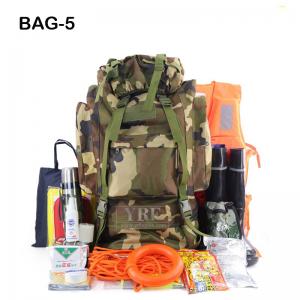
In actual relief projects, extreme cold emergency relief sleeping bags are rarely procured as standalone items. More commonly, they are configured as a complete set alongside moisture-proof sleeping pads, emergency blankets, thermal packages, cold-weather clothing, and emergency tents — forming a comprehensive extreme cold shelter sleeping bag complementary supply package covering thermal insulation, wind and waterproof protection, and supplementary warming.
Consolidating multiple supply categories with a single supplier reduces coordination interfaces, lowers the complexity and cost of multi-batch customs clearance, and mitigates the risk of incompatible specifications across product lines. In practice, an increasing number of government agencies and NGO organizations are gravitating toward integrated source suppliers capable of fulfilling multiple emergency supply categories within a single procurement event.
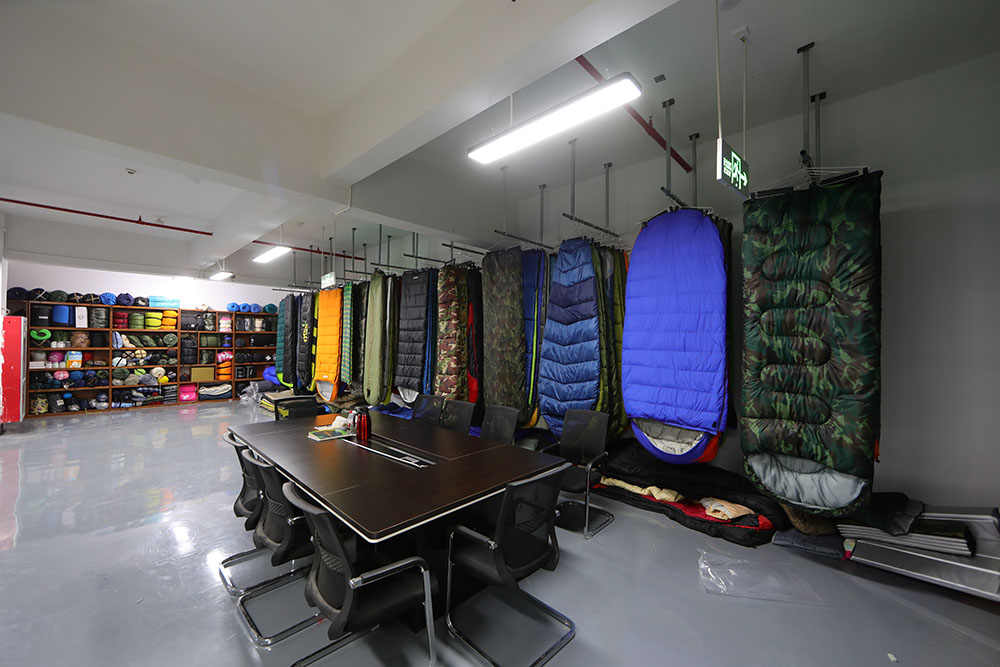
The advantages of sourcing extreme cold emergency relief sleeping bags from China are reflected in several dimensions: a complete industrial chain means that fabrics, fill materials, and complementary products are all supported by mature cluster supply ecosystems; large-scale production capacity provides more stable delivery pacing for medium and large projects, with some elasticity for rush order scheduling; a mature foreign trade service infrastructure supporting FOB, CIF, EXW, and other common trade terms reduces the logistics coordination overhead of cross-border procurement; and the one-stop multi-category supply capability of integrated factories is well suited to the consolidated procurement needs of government stockpile programs, NGO aid initiatives, and large-scale projects.
Section 10: YRF Emergency Relief Sleeping Bag Recommended Solution
For one-stop procurement of extreme cold emergency relief sleeping bags and related shelter supplies, YRF Emergency Relief Suppliesis a Chinese supplier worth prioritizing in your evaluation.
Products and certifications: YRF's textile product lines can provide quality inspection reports and relevant testing documentation. Certain product lines hold OEKO-TEX certification covering harmful substance safety standards for textiles. If the project has specific sleeping bag temperature rating certification requirements such as EN 13537 / ISO 23537, or fire resistance level testing requirements, YRF can assist in coordinating with third-party agencies to arrange the corresponding tests. Specific certification status is subject to actual verification during the solution confirmation stage.
Foreign trade and tender support: YRF supports FOB, CIF, EXW, and other common trade terms, and can provide parameter sheets, inspection reports, and product specification documentation as tender support materials. Electronic technical documents can be sent to assist procurement teams with internal review processes.
One-stop supply capability: In addition to bulk emergency relief sleeping bags, YRF can simultaneously supply moisture-proof sleeping pads, emergency blankets, warm clothing, and other extreme cold shelter sleeping bag complementary supplies, supporting multi-category bundled procurement — well suited to government stockpile projects and large-scale NGO aid program procurement needs.
Applicable project types: YRF is particularly suited to national or regional-level emergency relief sleeping bag procurement and stockpile programs, large-scale post-disaster shelter and international aid projects, and comprehensive projects requiring one-stop supply of multiple shelter supply categories. It is recommended to independently evaluate YRF's actual capabilities through sample confirmation and qualification verification before confirming inclusion in your shortlist.
For a deeper understanding of the overall logic of one-stop sourcing of extreme cold emergency supplies from China, you may refer to this site's Why Prioritize Chinese Suppliers for Bulk Procurement of Emergency Relief Sleeping Bags | 2026 Procurement Decision Guide, to further compare the integrated advantages in production capacity, cost, and risk management.
Section 11: Conclusion — What Should You Do Next?
Procurement decisions for extreme cold climate emergency relief sleeping bags fundamentally require working through true scenario requirements, material and temperature rating standards, total cost logic, supplier qualification verification, and contract term finalization — not simply comparing quotations.
In particular, on the temperature rating point: every procurement manager should require, at the tender stage, that suppliers provide T-comfort, T-limit, and T-extreme values separately in accordance with EN 13537 / ISO 23537 standards, along with third-party test reports — to prevent a misconstrued temperature rating from causing the entire configuration plan to fail at the critical moment.
Next Steps — Recommended Actions
(1) Prepare a one-page project requirements summary: Document the reference range of historical minimum temperatures for the target area, number of persons to be sheltered and population composition with particular attention to the proportion of children and elderly, planned use duration, budget ceiling, and any specific certification requirements
(2) Draft a technical specification document: Write T-comfort, T-limit, and T-extreme requirements separately into the specification clauses, and explicitly state fire resistance grade and fill type requirements, to serve as the technical annex for the inquiry or tender document
(3) Request samples from 2–3 candidate suppliers: Verify appearance, dimensions, labeling, and temperature rating test reports against this article's inspection checklist; arrange a small pilot delivery and collect operational feedback before confirming the main order
(4) Lock key parameters and penalty clauses into the contract: Including permissible technical specification tolerances, phased delivery milestones, sampling inspection ratios and non-conforming item handling procedures, and payment arrangements linked to acceptance outcomes
(5) Initiate project communication: You may send a project overview to YRF Emergency Relief Supplies via the site contact form or dedicated email address. Without committing to any specific cooperation outcome, YRF can provide a preliminary extreme cold emergency relief sleeping bag configuration recommendation to help reduce time spent on internal discussion and tender preparation — final terms are subject to the formal contract signed by both parties
The content of this article is for general reference only. All specific technical specifications, certification status, and pricing are subject to the formal contract signed by both parties.
Long-Tail Keywords
extreme cold emergency relief sleeping bags、emergency relief sleeping bag procurement、extreme cold relief sleeping bags、bulk emergency relief sleeping bags、outer shell fabric of emergency relief sleeping bags、fire resistance rating for relief sleeping bags、third-party inspection reports for relief sleeping bags、EN 13537 / ISO 23537 temperature rating certification、sleeping bag temperature rating certification、extreme cold relief sleeping bag China supplier、emergency stockpile sleeping bag storage conditions、extreme cold shelter sleeping bag complementary supplies、phased delivery strategy、emergency relief sleeping bag selection、advantages of sourcing extreme cold emergency relief sleeping bags from China
hak cipta © Custom Disaster - Relief Bedding: Tents, Sleeping Bags, Blankets Hak cipta terpelihara
pasukan profesional untuk perkhidmatan !