Kategori
Last updated: November 13, 2026 · Tornado emergency kit
Unlike hurricanes, which give days of warning, tornadoes can form in minutes. For relief organizations and community shelters in tornado-prone regions, being prepared means stocking the right tornado emergency kit before the siren sounds. A complete tornado emergency kit also covers head protection, light and communication.
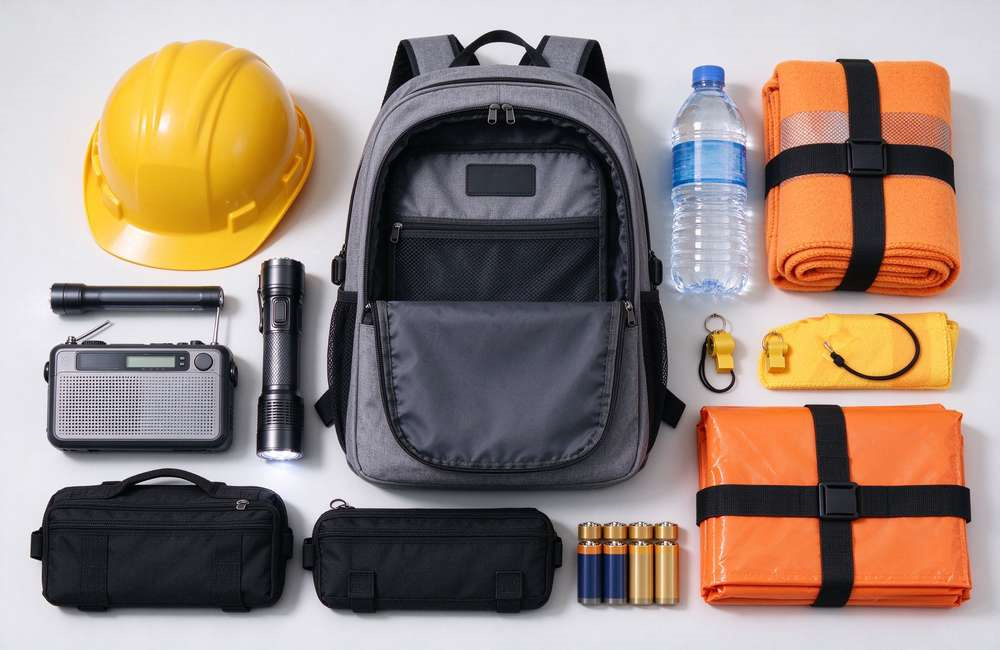
Complete bulk tornado emergency kit flatlay with hard hat, LED flashlight, weather radio, bottled water, thermal blankets, whistles and spare batteries laid out with grey backpack and accessory pouches for shelter use.
A full tornado emergency kit for shelters: head protection, light, communication and comfort supplies.

Colorful safety hard hats in orange, white, yellow and blue neatly arranged on warehouse metal shelving for emergency relief use.
Hard hats at the shelter entrance are the single most important tornado safety item.
The wind is not the only danger; it is the debris. At 200 mph, even a small piece of wood becomes a flying projectile that can penetrate walls. Safety guidance estimates that 60 percent of tornado injuries are head injuries from flying debris, which is why head protection is the priority.
For tornado relief supplies for community shelters, plan for head protection first, lighting second and comfort third.
Post-storm rescue starts the moment the wind stops.
This guide is built for procurement teams equipping shelters, schools and community buildings. Each section maps to a specific part of the bulk tornado supplies for emergency shelters budget, with certification standards and realistic quantities.
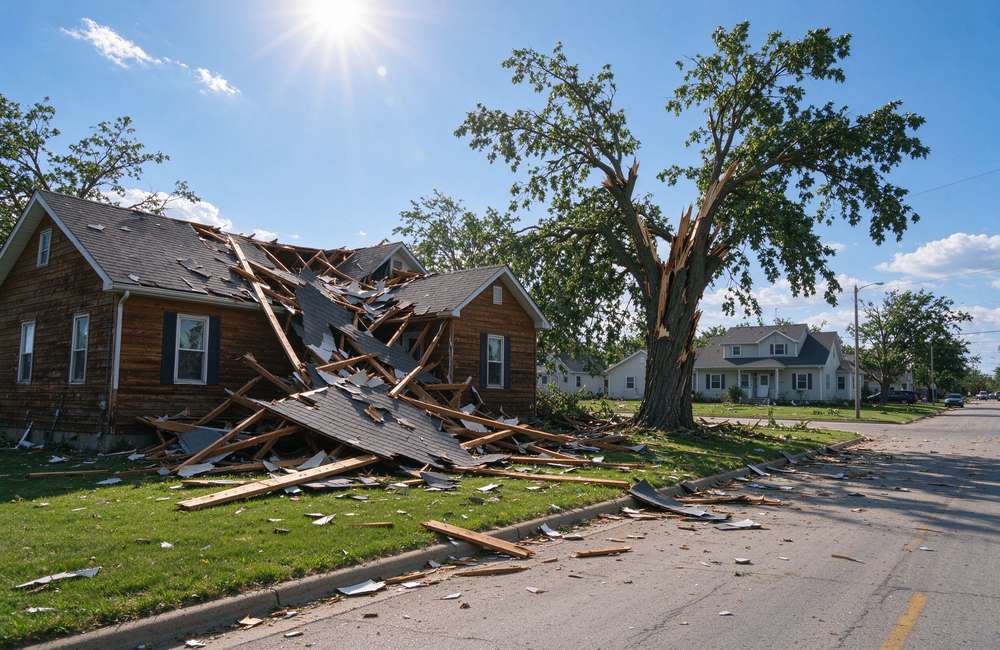
Tornado damaged wooden house with roof torn off, broken tree and debris scattered across residential street after storm.
Tornado season has predictable peaks, and smart programs order against that curve. Restock in early spring for the peak season, and add a second smaller order in late fall for maintenance items. Ordering against the curve avoids the two problems of peak season: exhausted inventory and doubled shipping times.
Manage stock with a simple FIFO system. Label every carton with the arrival month, stack new stock behind old stock and check expiry dates twice a year. Radio batteries and first aid items have finite shelf lives. Put one person in charge of the tornado stock and give them a printed checklist.
Keep a buffer for unexpected events: an extra 10 percent of blankets, batteries and tarps as surge capacity for a multi-state outbreak. Buffer stock is not waste; it is the difference between responding in hours and responding in days.

Emergency supply warehouse with shelves of bulk tornado relief supplies including blankets, hard hats and packed cartons, worker carrying supply box.
A stocked warehouse turns a tornado warning into a fast, organized response.
Order before March, before tornado season starts in April. For schools, community shelters and relief agencies, an early order means a complete tornado emergency kit with hard hats, weather radios and blankets can be checked and staged before the first severe weather watch arrives.
A clear response plan turns shelter supplies into action.

Tornado relief team briefing with coordinator and volunteers beside stacked hard hats and bundled relief blankets.
Tornadoes can happen at any time of day, but most hit in the late afternoon and early evening, when people are at home, at work or at school. They can also develop with almost no visible warning; dark storm clouds, heavy rain and hail can hide a tornado until it is right on top of you.
The 2013 Moore, Oklahoma tornado killed 24 people and destroyed more than 1,000 homes even with 16 minutes of warning.
The single most important piece of safety equipment for a tornado shelter is a hard hat. It protects the head from flying debris that can cause traumatic brain injury even if the shelter itself holds. Bright yellow or orange hard hats are easy to see in the dark, which helps rescuers find people in a damaged shelter.
For relief organizations running community shelters, schools or churches in Tornado Alley, your building is likely the safe space for hundreds of people. The right wholesale tornado emergency supplies mean that when the siren sounds, everyone can get to safety quickly, stay safe during the storm and respond immediately after it passes.
Summer response teams can extend the same stocking discipline to bulk extreme heat relief supplies.
Tornado damage is sudden and total, which is why preparation happens before the warning.
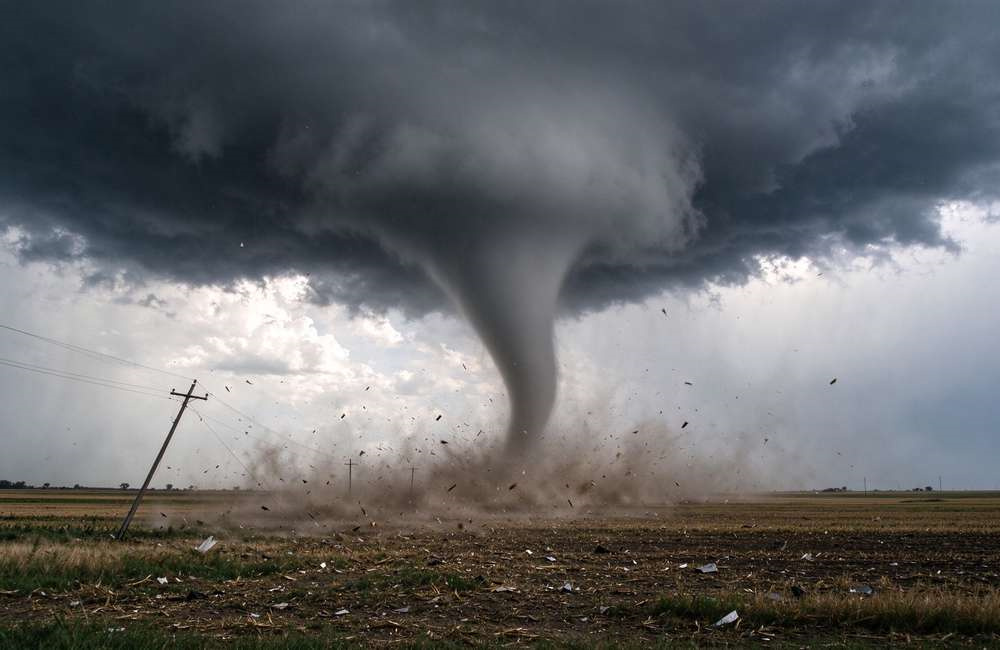
Massive tornado funnel cloud touching down across plains with debris and dust lifted high in storm winds.
Not all warnings are the same. Knowing the difference helps your team respond correctly.
Conditions are favorable for tornadoes to form in the next few hours. During a watch, you do not need to go to the basement yet, but you should stay informed, keep the weather radio on and make sure shelter supplies are ready.
For organizations, this is the time to remind staff and residents where the shelter is and do a quick headcount.
A tornado has been spotted on the ground or indicated by Doppler radar. This is the time to move to shelter immediately. Do not wait to see it with your own eyes; by the time you see it, it may be too late.
Get everyone to the lowest level of the building, in an interior room without windows, and stay there until the all-clear is sounded.
NOAA Weather Radio is the most reliable source of tornado alerts. These tornado warning safety tips cover radios, sirens and phone alerts. Phones can lose signal and TVs can lose power, but a battery-powered weather radio keeps working. Every shelter should have at least two weather radios with extra batteries stored in the shelter itself.
A tornado on the ground leaves minutes, not hours, to act.
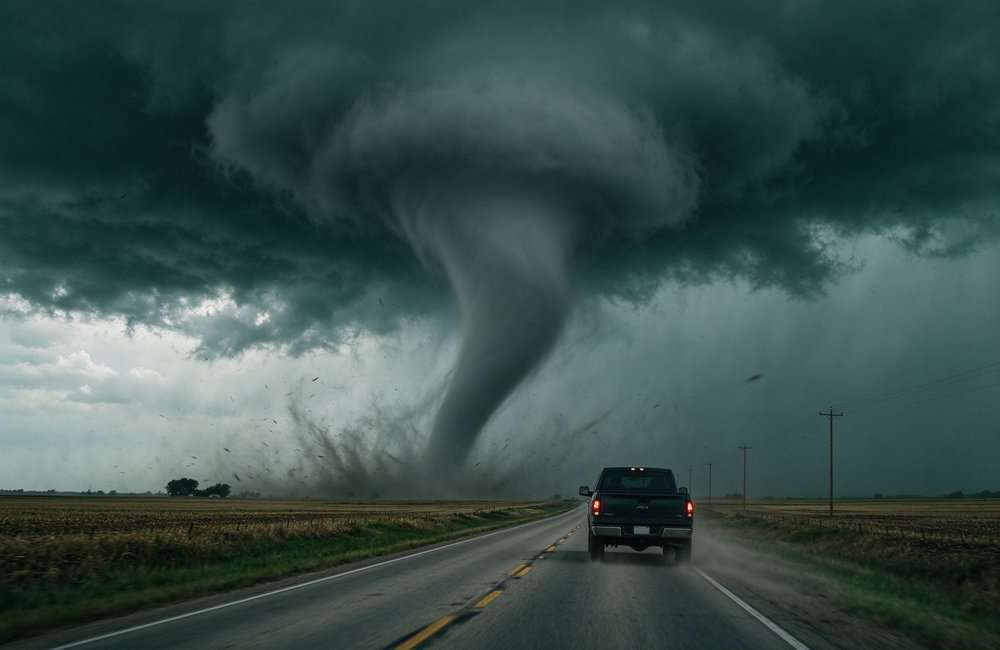
Large tornado funnel cloud approaching across plains with dark green storm sky and pickup truck on highway.
A tornado emergency kit for shelters is different from other emergency kits. Deciding what to pack in a tornado emergency kit starts with the room itself. Most tornado shelters are small interior rooms: basements, storm cellars or reinforced storm shelter safe rooms. A tornado shelter kit should match that tight space: compact, head-first and battery-based.
People may stay in them for 30 minutes to a few hours while the storm passes. The tornado emergency kit needs to keep people safe and comfortable during that time and support response after the storm.
This is the number one priority. Flying debris is the leading cause of injury and death during tornadoes. Every person in the shelter should have access to a hard hat.
When sourcing bulk hard hats for tornado shelters, look for hard hats meeting ANSI Z89.1 in bright yellow or orange, and store them on a rack right at the shelter entrance so people grab one as they run in.
Tornadoes knock out power for hours or days. The shelter will be dark and people need to stay calm. Battery-powered LED lanterns are better than flashlights because they light up the whole room without being held. Keep spares plus extra batteries. A weather radio is essential for updates from NOAA about when the all-clear will be sounded.
People will be scared and may stay in the shelter for a while. Keep extra blankets, water and snacks in the shelter itself. A bin of toys or books for children keeps them calm, which reduces panic among adults.
For larger shelters, keep a first aid kit inside the tornado emergency kit with bandages, antiseptic and pain relievers for minor injuries from falling debris. Building the right tornado emergency kit for your shelter means planning for both the storm and the hours after it.
This is why our tornado shelter emergency response supplies list pairs comfort items with post-storm tools in one compact bag.
After the tornado passes, the first few hours are critical. Have work gloves, a crowbar and a utility knife in the shelter; you may need to clear debris to get out. Keep a whistle for each person in case anyone is trapped under rubble and needs to signal rescuers.
Reflective vests help emergency responders see you in the dark and among debris.
When you buy bulk tornado supplies for a group site, the table below shows a practical stocking plan per 100 people for tornado shelters. Many agencies order bulk emergency kits for shelters to hit these quantities in one shipment.
Item
Use Case
Quantity per 100 People
compliant with relevant safety standards Hard Hat
Debris protection
100 units
LED Lantern (battery)
Shelter lighting
10 units
NOAA Weather Radio
Storm updates
2 units
Escape Whistle
Signaling trapped victims
100 units
Reflective Vest
Post-storm visibility
20 units
Emergency Blanket
Warmth in shelter
50 units
Quantities are planning guides for shelters serving 100 people; adjust by building size. Budgeting shelter supplies for tornado season starts with these numbers, and revisit them after every drill.
Blankets and sleeping bags keep shelter occupants warm during long waits.
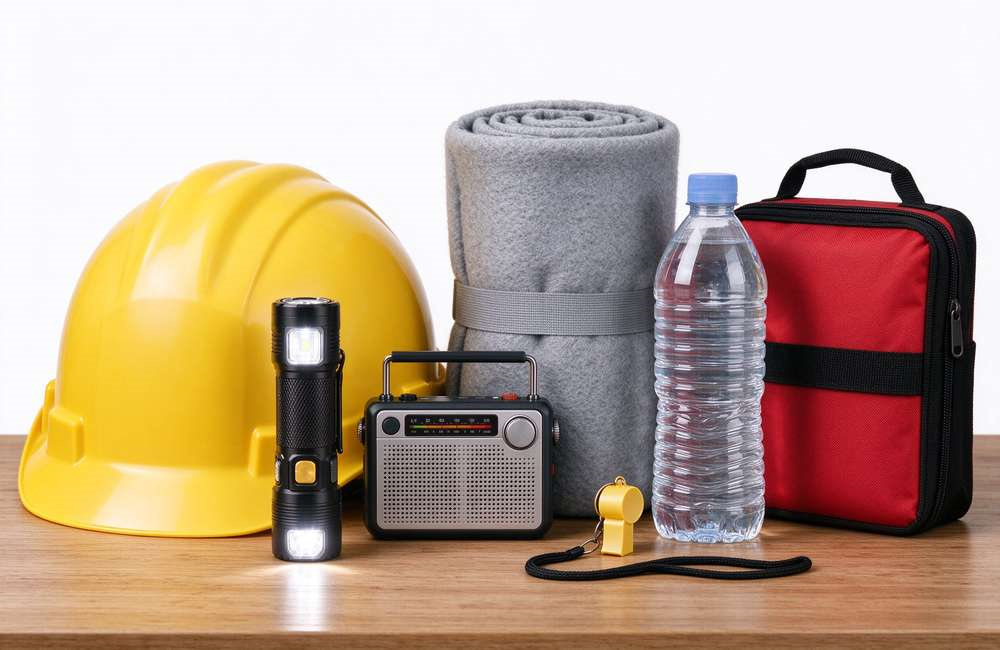
Tornado emergency kit contents with hard hat, LED flashlight, weather radio, blanket, whistle and bottled water arranged on wooden table.
When the tornado warning is issued, every second counts. A tornado survival kit kept inside the shelter room covers this critical window. The rule is simple: go low, get in, get covered.
Get to the basement, storm cellar or lowest floor of the building. Stay away from windows, doors and outside walls. If there is no basement, go to an interior room on the lowest floor: a closet, bathroom or hallway with no windows. Get under a sturdy piece of furniture, like a heavy table, to protect yourself from falling debris.
Helmets on, blankets ready, radio listening: the shelter routine that saves lives.
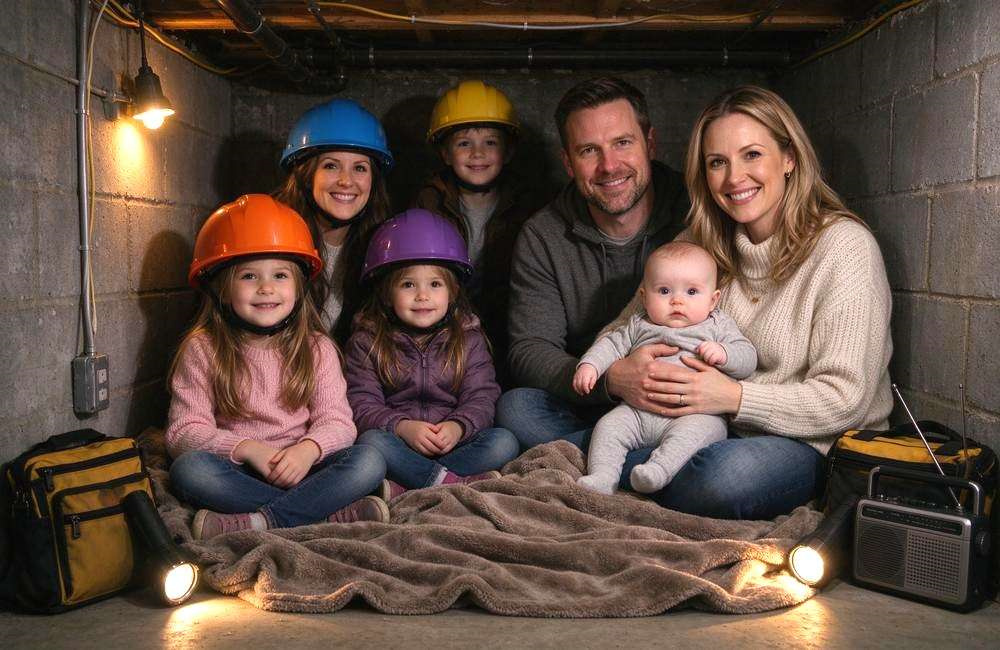
Family sheltering in basement during tornado wearing colored safety helmets and wrapped in warm blanket with emergency supplies nearby.
Put on your hard hat. Cover yourself with blankets, mattresses or sleeping bags. This protects you from flying debris. Protect your head and neck with your arms.
Once inside, follow the team protocol for who checks the shelter, who brings the radio and who closes doors and windows. Shelters run on practiced routines, not improvisation.
Listening for survivor signals is the first step of search and rescue.If you are in a car, do not try to outdrive the tornado; get out of the car, get into a nearby ditch or low spot and cover your head.
Do not leave the shelter just because the wind stops. The eye of the tornado can be by another, stronger gust. Wait for official word from NOAA or local emergency management that the warning has expired. When you do leave, watch for downed power lines, broken glass and sharp debris on the ground.
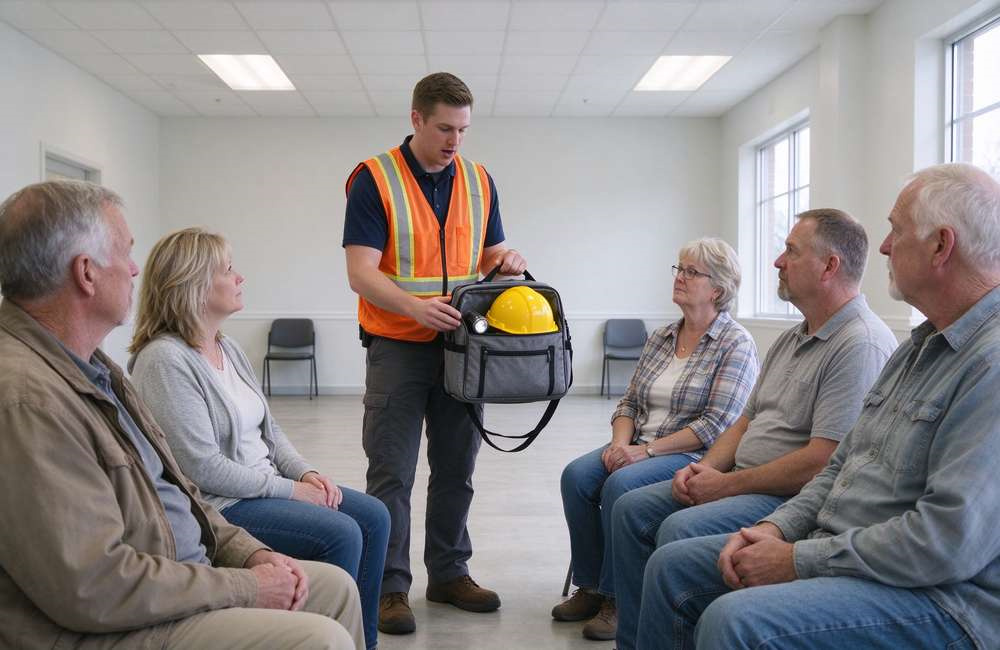
Volunteer briefing shelter residents on tornado emergency kit use with hard hat and flashlight displayed.
Once the all-clear is sounded, the recovery work begins. Pre-positioned tornado relief supplies move faster than any emergency call. For relief organizations, this is where bulk supplies really make a difference.
First, do a headcount. Make sure everyone who was in the shelter is accounted for. Check for injuries: head wounds, cuts from broken glass, bruises from debris.
Treat minor injuries on the spot; anyone with serious injuries needs immediate medical attention. For relief organizations, a pre-stocked tornado emergency kit makes the difference between a two-hour response and a two-day one.
Post-storm first aid begins with a headcount and quick injury checks.

Medical volunteer bandaging injured resident arm at tornado shelter first aid point with clean bandages.
Organized grid searches mark every searched building so no structure is checked twice. Rescue teams work in pairs, one listening, one signaling, and they rotate frequently because lifting debris is exhausting. Checking with a partner keeps both rescuers visible and accounted for.
Grid-pattern clearing keeps search teams coordinated and avoids double-checking the same building.
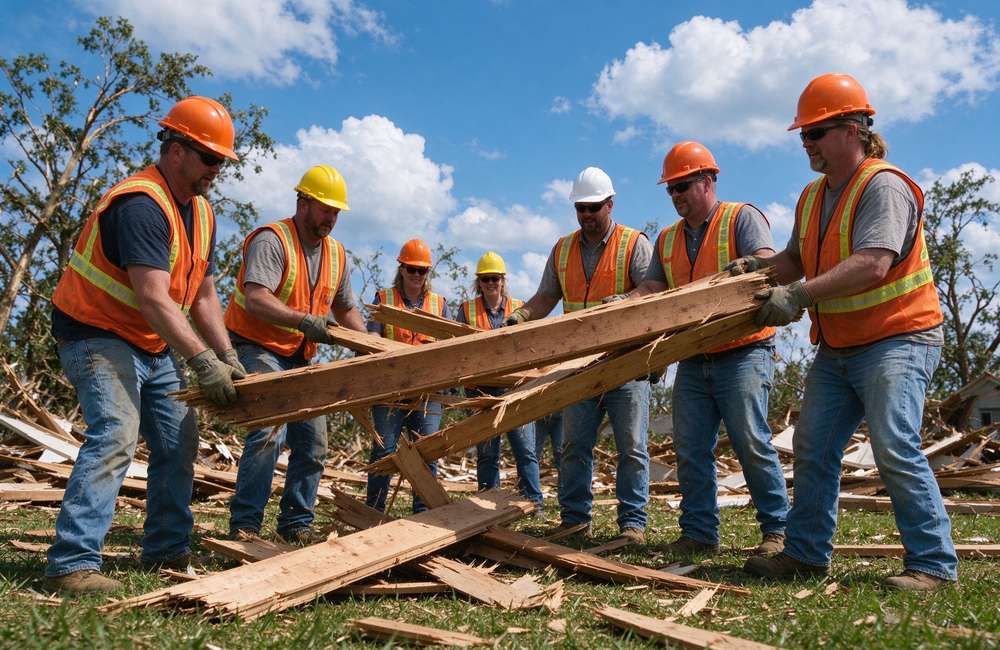
Volunteer team clearing wooden tornado debris and roof beams after severe storm to reopen access routes.
Mark every structure on a map as crews finish, then move as a line so gaps between teams stay visible. This discipline turns a scattered rescue effort into a predictable sweep, which matters when minutes count after a tornado.
Stretcher teams move casualties over uneven ground after the search is complete.
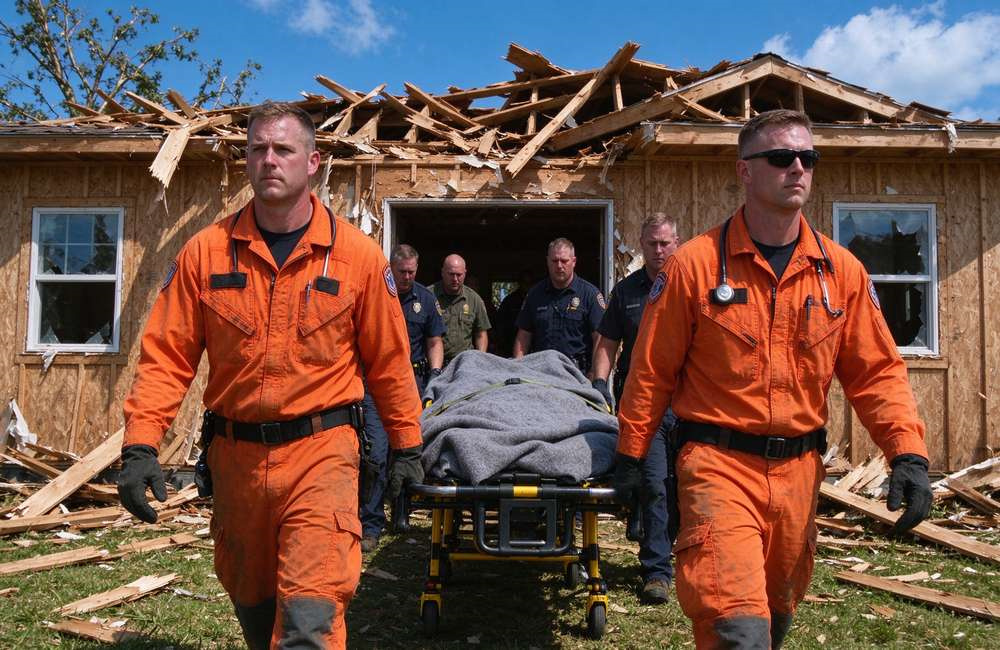
Rescue team carrying stretcher with covered survivor out of damaged wooden house after tornado search.
If the building is damaged, do not go back inside until it has been inspected by a structural engineer. Tornadoes can weaken walls and foundations, and buildings can collapse after the storm has passed. Turn off gas, electricity and water to prevent fires and gas leaks.
Structural inspection decides when a building is safe to re-enter.
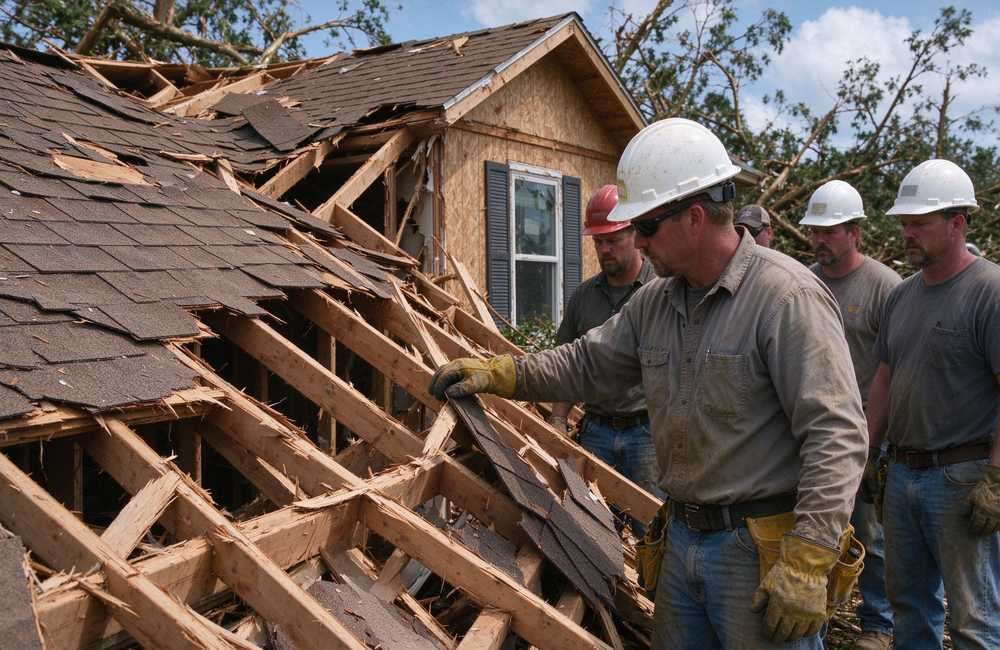
Building workers in white helmets inspecting torn-off roof and damaged rafters of wooden house after tornado strike.
For larger responses, your organization may be called on to distribute blankets, water and food to displaced families. That is why we pre-pack tornado shelter emergency response supplies that let you stand up a distribution point within hours.
Having bulk emergency blankets for disaster relief on hand means you can respond within hours, not days, when families need it most. Shelters, hydration stations and distribution points should all be pre-planned in the response protocol.
Pre-positioned shelter supplies receive displaced families fast.
In the first hours after a tornado, people arriving at a shelter need water, a cot and a warm blanket more than anything else. A staging area stocked with bottled water and bulk blankets lets volunteers hand out essentials without breaking the registration line.
Boil drinking water for one minute when tap water is compromised after a tornado.
If tap water is unsafe, boil it for one minute before drinking, cooking or brushing teeth. Boiling kills the bacteria and parasites that storms wash into wells and mains. Shelters serving hot meals should post the same rule: water that smells fine can still carry pathogens after a tornado.
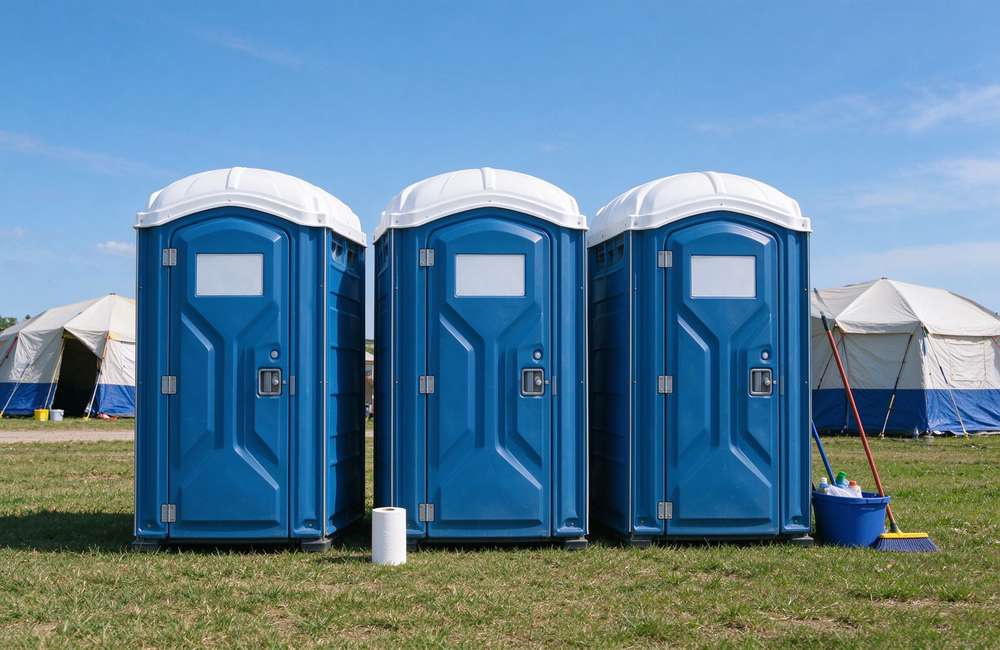
Portable toilets, hand-washing stations and drinking water points should sit in a visible line so families do not have to search. Planning these three zones ahead of the storm keeps a shelter calm instead of chaotic.
Clean water access is a priority in the first hours after a tornado.
Clean portable toilet units and sanitation points set up outside tornado shelter for displaced families.
Across shelters and communities, the same gaps appear again and again. Addressing these keeps your program safe.
Point 1: Hiding under an overpass. People think overpasses are safe. They are not. Overpasses create a wind tunnel that speeds up the tornado's winds, and you are exposed to flying debris. Get into a ditch or low spot instead.
Point 2: Opening windows to equalize pressure. This old myth says you should open windows during a tornado to let the pressure equalize. It does not help. Opening windows just lets more wind and debris in and wastes time you should use getting to shelter.
Point 3: Forgetting hard hats. Most shelters stock water and blankets, but almost nobody stocks hard hats. Flying debris is the main cause of tornado injuries. A compliant hard hat is the cheapest insurance a shelter can buy.
Point 4: Not practicing drills. People think they will know where to go when the siren sounds. In reality, when the alarm goes off people panic, freeze and lose their way. Practice tornado drills twice a year, every spring before tornado season starts.
Point 5: Shelter supplies stored far from the shelter. If blankets, helmets and radios are locked in an office across the building, they are useless during a warning. Store everything inside the shelter room itself.
Point 6: No post-storm communication plan. After the storm, phones may be dead. Have a plan for how the organization reports status: pre-arranged meeting points, runners or amateur radio.
A disciplined procurement process protects both the budget and the people your program serves. These tornado safety tips keep both staff and residents protected. Before signing any contract, confirm four things on paper: the certification or standard each item must meet, the test report issued by an independent laboratory, the country of origin and the delivery timeline.
A supplier who hesitates on any of these four is a red flag.
On delivery, run acceptance checks on a sample: open a hard hat carton and verify the suspension system, unfold an emergency blanket and check the fabric, test a two-way radio and confirm battery life. Keep acceptance results on file; they double as evidence for donor reports.
Finally, agree on replacement terms. Batteries, blankets and first aid items are consumables. A standing replacement agreement with your supplier keeps stock topped up without renegotiating every order.
Even well-stocked shelters lose ground when training lags. Three gaps appear again and again in tornado programs. First, staff shelter people but never practice the head-cover position, so children and adults alike drop to the floor without protecting their necks.
Second, headcounts are practiced during drills but not during real warnings, when confusion and noise make counting harder.
Third, shelters stock radios but nobody is assigned to monitor them, so the all-clear arrives on a device that was never switched on.
Close the gaps with three simple rules: rehearse the head-cover position at every drill, practice a headcount during a simulated power outage, and assign a named radio monitor for every shift. Storm-season drills for thunderstorm safety supplies follow the same headcount routine. Small, repeated actions train the reflexes that save lives when the siren sounds for real.
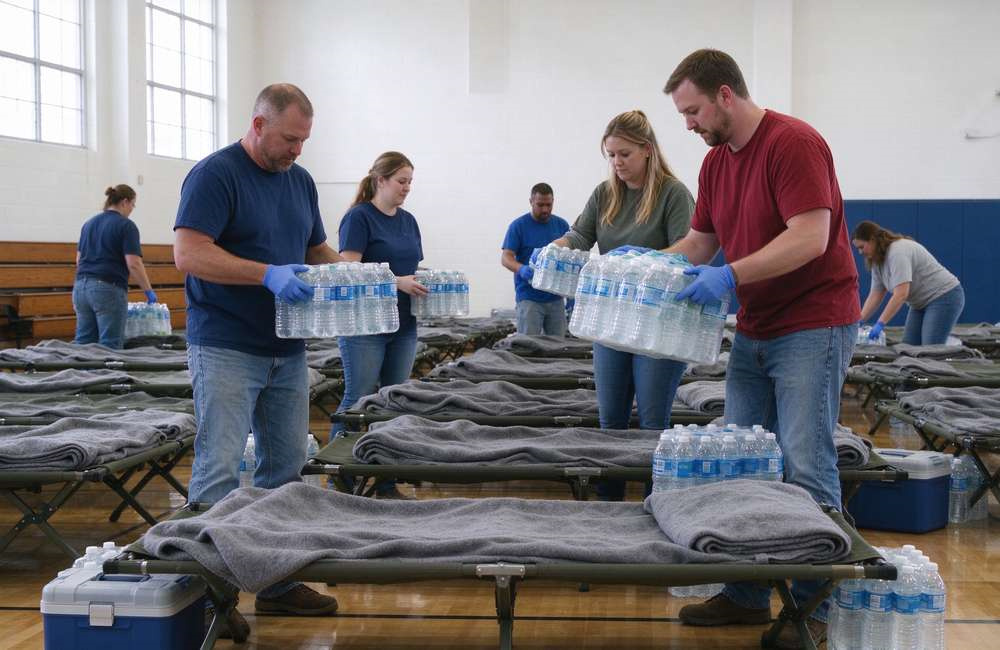
School gym converted to tornado shelter with cots blankets and bottled water supplies for displaced residents.
How much should you budget for tornado shelter supplies? The table below gives planning ranges by organization size.
Planning ranges for tornado shelter stock based on shelter population.
|
Organization Size |
Tornado Emergency Kit Cost |
What Is Included |
|
Small shelter (50 people) |
600 - 1,200 USD |
50 hard hats, 5 lanterns, 1 weather radio, 50 whistles, blankets |
|
Medium shelter (200 people) |
2,500 - 4,000 USD |
200 hard hats, 20 lanterns, 2 radios, 200 whistles, blankets, first aid |
|
Large community center (500+) |
6,000 - 9,000 USD |
500 hard hats, full shelter setup, post-storm response gear |
Costs assume wholesale bulk pricing; retail typically runs two to three times higher. Year-round shelters should also budget for bulk home fire emergency kit items for heating-season months, and re-confirm quotes each spring.
Order before March, before tornado season starts in April. When comparing quotes, check certification and test reports, not just price per unit. For current product options and program-sized pricing, wholesale tornado emergency kit supplies are confirmed per order, with samples available for qualified organizations.
Review the tornado emergency kit checklist below; it covers batteries, lanterns, radios and first aid refills.
Shelter safety equipment checklist for your tornado emergency kit. Verify each item before tornado season:
|
Equipment |
Quantity |
Purpose |
Check |
|
Hard hats |
1 per person |
Head protection |
Fit and straps |
|
LED lanterns |
10 per shelter |
Backup lighting |
Batteries fresh |
|
NOAA weather radio |
2 per shelter |
Warnings |
Battery test |
|
Escape whistles |
50 units |
Locating survivors |
Audible test |
Run a full check before season start; confirm order quantities per order. Walk each exit shelf, replace expired food and dead batteries, and log the inspection date on the bin before placing the restock.
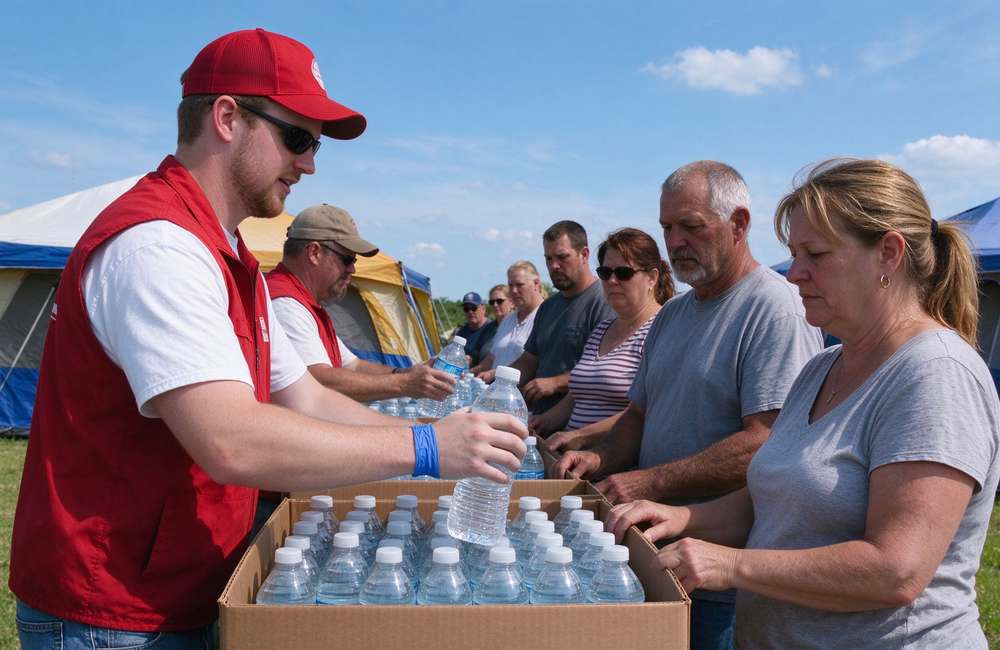
Volunteers distributing bottled water to residents outside tornado shelter after storm warning lift.
For procurement teams that need deeper technical grounding, the following official sources define the standards and data used throughout this guide:
These references are maintained by government bodies, so the information stays current. When your organization prepares grant documentation, citing these sources alongside acceptance test records strengthens the application.
A tornado safety program is a cycle of planning, stocking, training and review, not a one-time order. Programs that treat it as a cycle stay effective year after year, while those that treat it as a purchase fade after the first season. This final section shows how to keep a program alive.
Every successful program starts with one named owner. A single person accountable for tornado stock, training records and shelter checks makes the difference between a program that runs and one that drifts.
The owner should hold a printed role description: maintain helmet and radio counts, schedule seasonal battery checks, update training records and act as the point of contact for suppliers.
Ownership must survive staff turnover. Document the role in a handover file a successor can read and follow in an hour. Cross-train one backup owner per shift so coverage never depends on a single employee.
Programs improve when they measure. Track three numbers each season: percentage of staff who completed the annual drill, average time from warning to full shelter occupancy, and stock fill rate against the target list. Set a realistic target for each, review the numbers with the team and adjust the plan when targets are missed twice in a row.
Simple targets strengthen grant applications. Funders respond to concrete outcomes, not promises. A record showing shelter occupancy time dropping from 12 minutes to 4 over two seasons is a persuasive story told in numbers.
Set a fixed annual review month, ideally in winter before tornado season starts. In the review, compare the season's warnings and responses against training and stocking records, update the risk assessment and revise the supply list. Tornado risks change as buildings age, communities grow and warning systems evolve; the supply list should change with them.
An annual refresh catches drift. Radios sit unused, batteries age, helmets crack and the team forgets the shelter route. The review puts every item back on the checklist and every person back in practice. That is what separates a real program from a shelf of supplies.
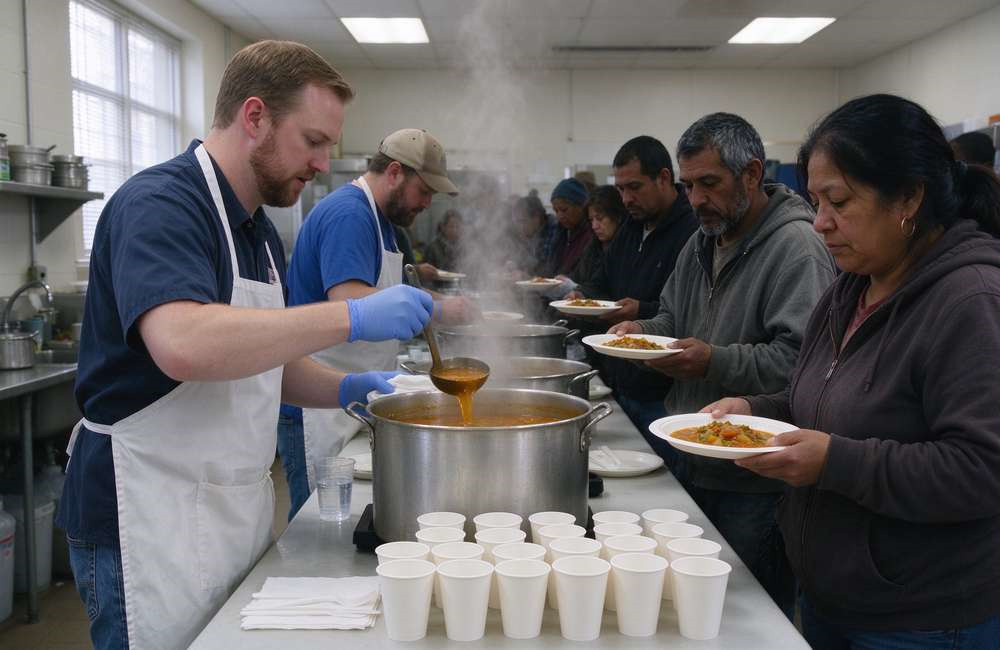
Boiling water for one minute makes it safe when tap water is compromised.
Different programs buy differently. A school, a community shelter and a first-response team have different risk profiles, and buying for a mismatched profile wastes budget and leaves people exposed. This section maps the three most common program types to the right supply mix.
Schools shelter children who cannot always follow instructions, so the priorities are head protection, clear drills and quick headcounts. For every 200 students plan: 220 helmets with a 10 percent spare, 10 battery-powered weather radios distributed across floors, laminated shelter maps in every classroom and a color-coded headcount board at the assembly point.
Run one unannounced drill per semester and time the headcount; if it takes more than 4 minutes, repeat the drill.
Teachers should be trained to recognize tornado warning sounds over classroom noise, because sirens may be inaudible during lessons. Assign each teacher a shelter buddy so coverage holds when someone is away. Sheltering practice should include the stay-put position: knees down, head covered, hands behind the neck.
Community shelters may hold hundreds of people for hours, so the priorities are sanitation, water and crowd management. For every 100 shelter residents plan: 100 blankets and sleeping bags, 5 portable toilets with supplies, 2 water stations with 200 gallons of storage, flashlights and radios, and color-coded entry and exit lanes to prevent congestion.
Post a shelter map that marks the water, toilet and first aid points before residents arrive.
Shelter staff should run a registration desk and a simple wristband system so everyone inside is accounted for. When sourcing bulk tornado supplies for shelters, request tiered quotes and confirm certification documents before committing. Medical volunteers should check on elderly residents and people with mobility needs first, because they are most at risk during a long shelter stay.
Keep quiet areas for families with young children so the shelter stays calm through the night.
First-response teams operate in the most dangerous phase, so the priorities are speed, coordination and personal protection. For every 10 responders plan: 12 helmets with spare suspension systems, 4 two-way radios with spare batteries, 10 headlamps, 2 bolt cutters and 2 pry bars, 2 stretchers and a compact trauma kit.
Stage the tornado emergency kit gear in labeled bins that match the deployment checklist, so a team can leave within minutes. Many response teams also keep one of our bulk tornado shelter emergency kits on each vehicle for roadside set-up.
Team briefings should assign roles before deployment: who searches, who treats, who communicates and who marks searched buildings. Rotate teams on long operations because fatigue causes the most errors in debris clearing. After every deployment, hold a debrief and record what worked and what broke, so the next response is faster.
Before you place an order for bulk tornado supplies, run this checklist once with your team. It takes ten minutes and prevents the most common sourcing gaps.
Pre-packed tornado shelter emergency response supplies cut prep work to almost zero, and orders placed against a checklist arrive complete, certified and on time. Orders placed on urgency arrive incomplete, uncertified and late — exactly when people are most exposed. The extra ten minutes before ordering saves weeks of response time during tornado season.
Before committing to a bulk order for tornado supplies wholesale, request samples and test them against the claims. Helmets: drop-test one from shoulder height, inspect the shell and suspension after impact and check the size range covers small and large heads.
Radios: run two radios for 48 hours on the same batteries, test the range at a quarter mile and confirm the weather-band reception indoors. Blankets: unfold one, check the fiber fill for cold-weather performance and test the thermal rating in a cold room if possible.
Ask three questions of every supplier: which independent laboratory issued the test report, what the MOQ is for the certification level you need, and what happens if a batch does not pass acceptance testing. Written answers protect your program. Verbal promises do not survive a peak-season rush.
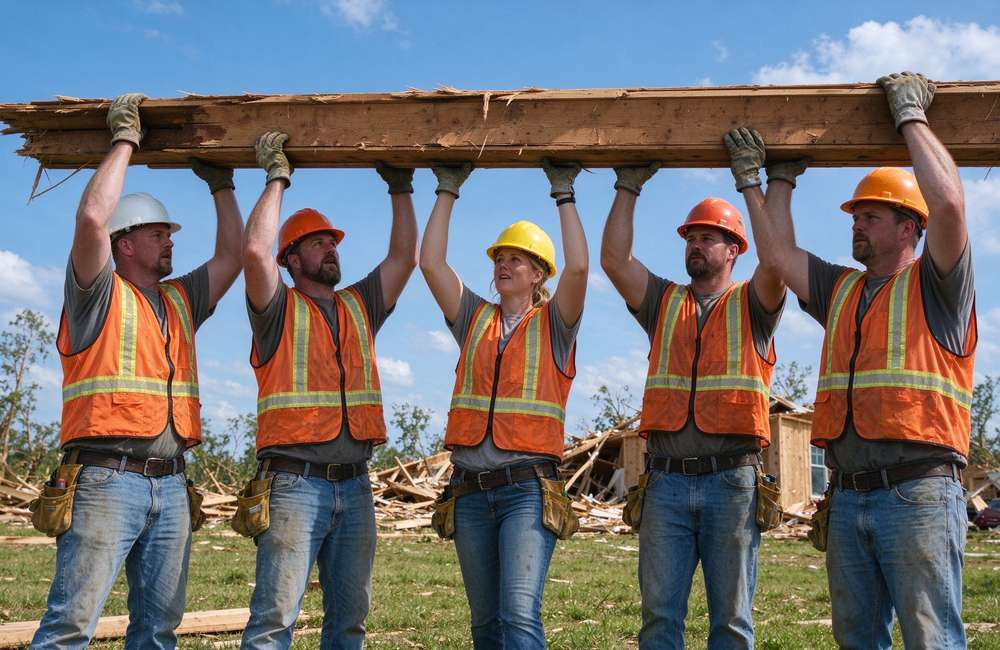
Rescue team lifting heavy wooden beam together during tornado debris removal at damaged residential site. Coordinated debris clearing gets paths open for medical and supply teams.
Buyers who understand the vocabulary negotiate better and reduce costly mismatches. These terms appear across tornado safety catalogs and quotes.
When a quote uses a term you do not recognize, ask the supplier to define it in writing before comparing prices. A term that cannot be explained is usually a specification that cannot be delivered.
The questions below are the ones procurement officers ask most often, with the answers that matter for ordering decisions.
Revisit this guide every winter: tornado warning systems and shelter standards evolve, and a program that reviews its assumptions yearly stays ahead of the season. Pair the review with the annual stock check, so planning and practice move together.
One more habit matters for rural programs: verify that your warning path reaches people who sleep without phones near their beds. A weather radio costs less than a single shelter repair, and it is the item that starts every effective response.
Shelter managers should also confirm that helmets fit the people who will use them. Stock both adult and child sizes, check the suspension systems each season, and replace any shell with cracks or impact marks before it is needed in a real warning.
Preparation is measured in the minutes before the warning, not in the hours after it. Shelves stocked, drills practiced and radios checked turn a tornado warning from a moment of fear into a sequence of known steps.
Program managers should also plan for the post-storm phase before the storm arrives: who documents damage, which supplier restocks fast and where temporary storage will be set up. A response that includes recovery is a complete response.
And when a warning expires, keep the team together for ten minutes: confirm every person is accounted for, walk the shelter once for forgotten items and reset the gear for the next use. Ending a response cleanly is part of being ready for the next one.
Tornado season varies by region, so calendar the seasonal review to your own peak months. A program that prepares for its local season instead of a national average responds faster when the real warning comes.
Final note for smaller programs: partner with the organization next door. Two programs sharing one shelter, one stock room and one drill calendar respond better than either could alone, at a fraction of the cost.
Check your tornado emergency kit twice a year, before each tornado season.
Tornadoes strike with almost no warning, and their impact falls heavily on the shelters, schools and rural towns in their path. Reviewing the numbers helps organizations budget the right storm shelter supplies before the season begins.
We work with relief organizations, school districts and municipal facilities that order tornado preparedness gear in bulk each spring. Having the right storm shelter supplies and tornado shelter emergency response supplies on site means crews can open a shelter the same afternoon a warning is issued.
Teams that refresh their tornado preparedness gear every season respond faster when a real warning arrives. Pre-staged comfort items also cut the time it takes to account for everyone once the storm passes.
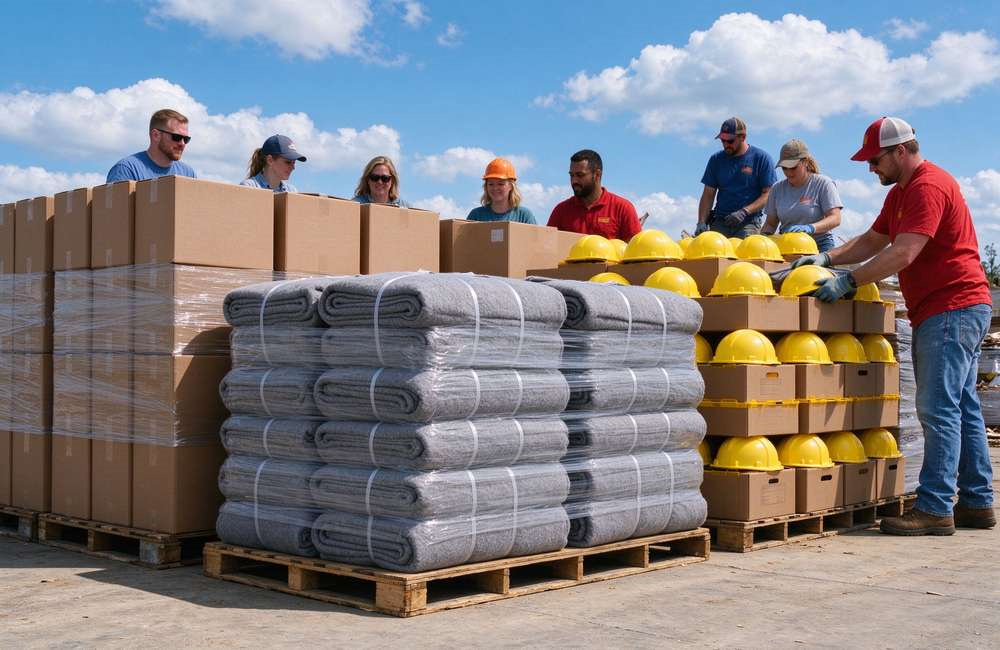
Tornado relief supplies staged in organized rows with blankets hard hats and water boxes for quick deployment. Pre-staged equipment lets teams deploy within minutes of the all-clear.
Not every site needs the same setup. Match the kit level to the people you shelter and the building you use. The table below compares three common program tiers.
|
Kit Level |
Best For |
Core Contents |
Notes |
|
Basic room kit |
Small safe room under 50 people |
Hard hats, whistles, one weather radio, blankets |
Covers the first hours in shelter |
|
Standard shelter kit |
School or community shelter up to 200 |
Adds LED lanterns, first aid kit, water, work gloves |
Our most ordered tier for tornado warning response supplies |
|
Full response package |
Municipal or multi-site program |
Adds stretchers, pry bars, portable toilets, bulk shelter kits |
Built around your headcount and floor plan |
Match the tier to your protected headcount and drill record, and start with a standard order before adding extra floors or sites. Run one drill at each new site before scaling the order further.
Tell us your maximum shelter headcount and we will recommend the right tier. Our bulk tornado shelter emergency kits are priced per program, and samples are available for qualified relief organizations.
Many buyers order a standard tier first and add bulk tornado shelter emergency kits for extra floors once the drill record improves. We can also split one order across several buildings so each site receives matching storm shelter supplies.
Your shelter gear stays ready all year with a few simple habits. A cared-for kit works on the first real warning, while neglected gear fails when it is needed most.
We supply all of these as bulk tornado relief supplies to schools, shelters and relief organizations. We also pack ready-to-deploy bulk tornado shelter emergency kits that arrive complete, certified and staged inside each shelter room. For orders over 200 sets we offer OEM and private label, with logo placement and terms confirmed per contract.

Volunteer inventory check of tornado shelter equipment with flashlights and radios before distribution. Seasonal equipment checks catch expired batteries and missing items before the siren.
The average lead time is 8 to 10 minutes, and it can be as little as 3 minutes for fast-forming tornadoes. That is why the shelter and supplies must be ready before the warning is issued; there is no time to gather supplies when the siren sounds.
Yes. Safety guidance estimates that about 60 percent of tornado-related injuries are head injuries from flying debris. An compliant with relevant safety standards hard hat can stop most small-to-medium debris that would otherwise cause traumatic brain injury.
A watch means conditions are right for tornadoes; stay informed and be ready. A warning means a tornado has been spotted; go to shelter immediately. When the warning sounds, do not wait; get to the lowest level right away.
Yes. Sample hard hats are sent to qualified relief organizations so you can test quality and comfort before placing a bulk order. Share your program details and we will confirm current sample terms.
MOQ varies by product and is confirmed per order. Mixed bulk orders combining hard hats, lanterns, whistles and blankets in one shipment are supported; tell us your shelter size for a quote.
Yes. We ship to relief organizations worldwide, including North America, Europe, the Middle East and Southeast Asia. Lead time is typically 2 to 4 weeks depending on location.
At least two, with spare batteries stored inside the shelter. Radios are the most reliable alert source when phones lose signal and power goes out. Test them monthly and replace batteries seasonally.
Bandages, antiseptic wipes, pain relievers, gauze, medical tape, scissors and disposable gloves. For debris injuries add a compact eye wash and splint materials. A well-stocked shelter room puts these within reach of everyone, and we restock first-aid inserts against your standing agreement. Review contents before each tornado season.
Yes. Hard hats, lanterns, whistles, blankets and tornado emergency kit bags can carry organization branding. Logo placement and minimum quantities are confirmed per order.
Twice a year, with one drill before tornado season starts in spring and one mid-season. Drills should include the full route, a headcount and a review of what could be improved.
The lowest level, in an interior room without windows, under a sturdy table or mattress. Stay away from windows, doors and outside walls. Stay covered until the all-clear is sounded.
Reflective emergency blankets retain body heat effectively in cold conditions for the duration of a typical shelter stay. For longer occupancy, use insulated sleeping bags or multiple layers of blankets.
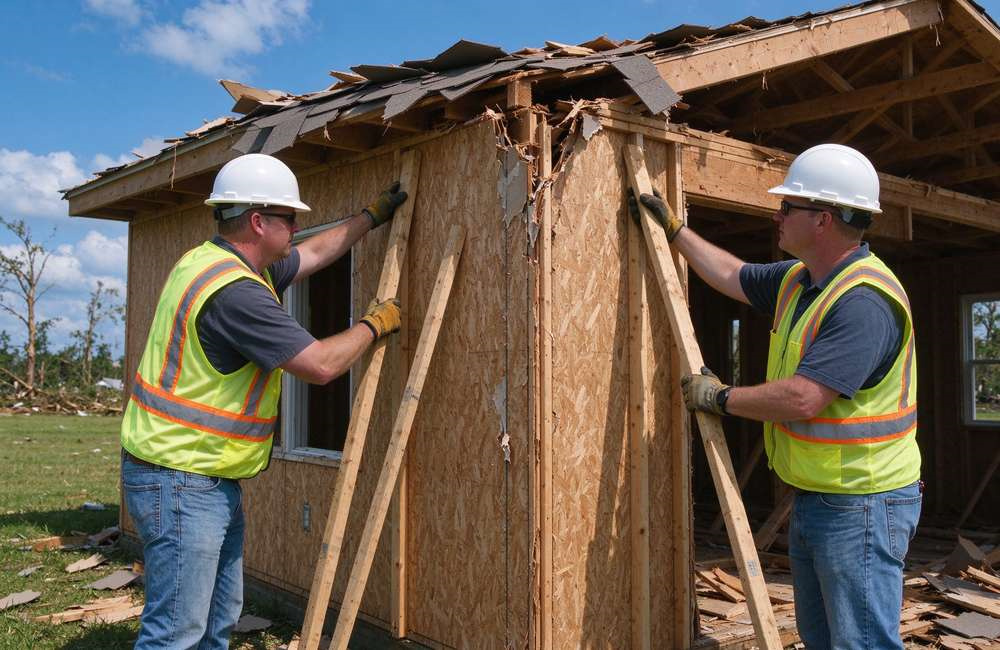
Building inspectors shoring damaged wooden house wall after tornado to secure structure for safe reconstruction. Shoring and stabilization are part of the post-storm response recovery plan.
Contact: info@yrftextile.com
 |

|
Pautan Mesra :
hak cipta © Custom Disaster - Relief Bedding: Tents, Sleeping Bags, Blankets Hak cipta terpelihara
pasukan profesional untuk perkhidmatan !