Kategori
Last updated: October 20, 2026 — UN Supplier Registration Guide
Becoming a United Nations supplier for relief blankets, tents and bedding follows a documented process: UNGM registration, product data sheets, compliance evidence and tender responses. This guide walks vendors through the requirements UNHCR and other UN agencies ask for, what to prepare before applying, and how to keep a vendor profile ready for tender opportunities.

UN supplier registration welcome briefing.
The supplier registration briefing in the photo is the first step for any factory entering humanitarian procurement: it explains which databases to join, which documents to prepare and which specifications to keep updated. Registration alone does not win orders, but it is the condition for receiving the tender notice that starts the bidding process.

Humanitarian warehouse with relief supply boxes.
Related guidance: WHO.
This guide explains how to become a UN supplier step by step. You will learn what UNGM is, how the UNHCR supplier portal works, what UN humanitarian tenders look for, and which documents and product standards you must prepare before you register. Each section ends with a practical action, so you can finish one step before moving to the next without getting lost in the process.

Completing UNHCR supplier portal registration.
The process is free, online and open to manufacturers of any size. Most relief suppliers start with UNGM registration, accept the UN supplier code of conduct, then respond to open UN humanitarian tenders for Africa across blankets, tents and hygiene items. If your factory already exports to government or aid buyers, most of the documents are ready, and the remaining work is only the online profile.

UN tender evaluation meeting.
A complete UN supplier registration file covers your company profile, product specifications, quality certificates and export capacity. UN agencies use this file to shortlist factories, verify compliance and invite them to bid on relief contracts. Keep this guide open while you complete the UNGM form, because the field names on the portal match the sections described here.
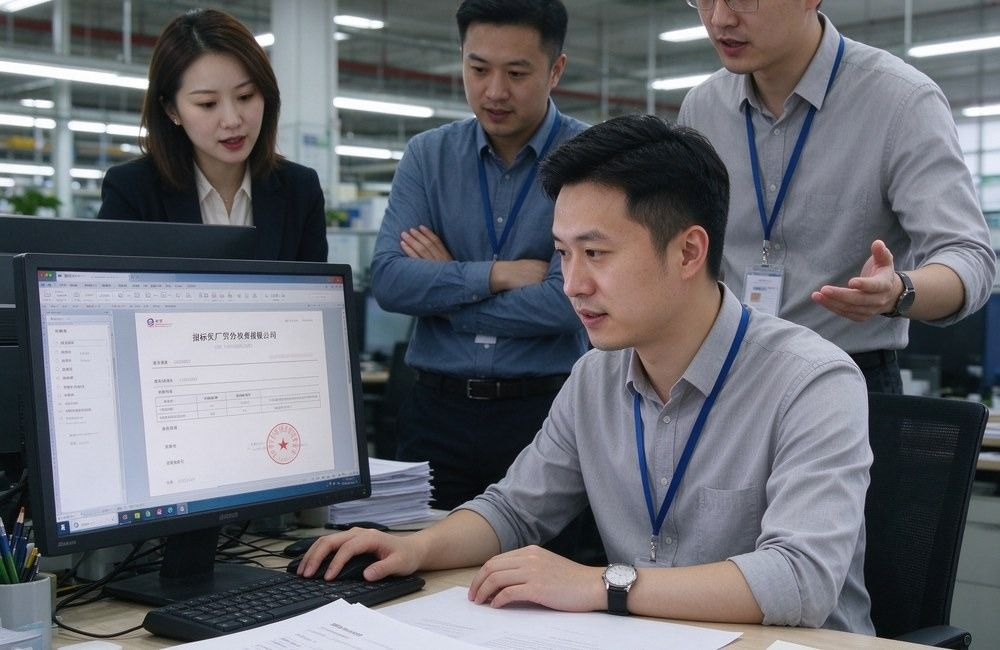
Suppliers who have completed UN supplier registration receive the notice directly and can prepare a bid with enough time to quote accurately. The tender notice on the screen carries the quantity, specification, delivery point and deadline, and every line becomes a line in the bid.
The supplier registration briefing in the photo is the first step for any factory entering humanitarian procurement: it explains which databases to join, which documents to prepare and which specifications to keep updated. Registration alone does not win orders, but it is the condition for receiving the tender notice that starts the bidding process.
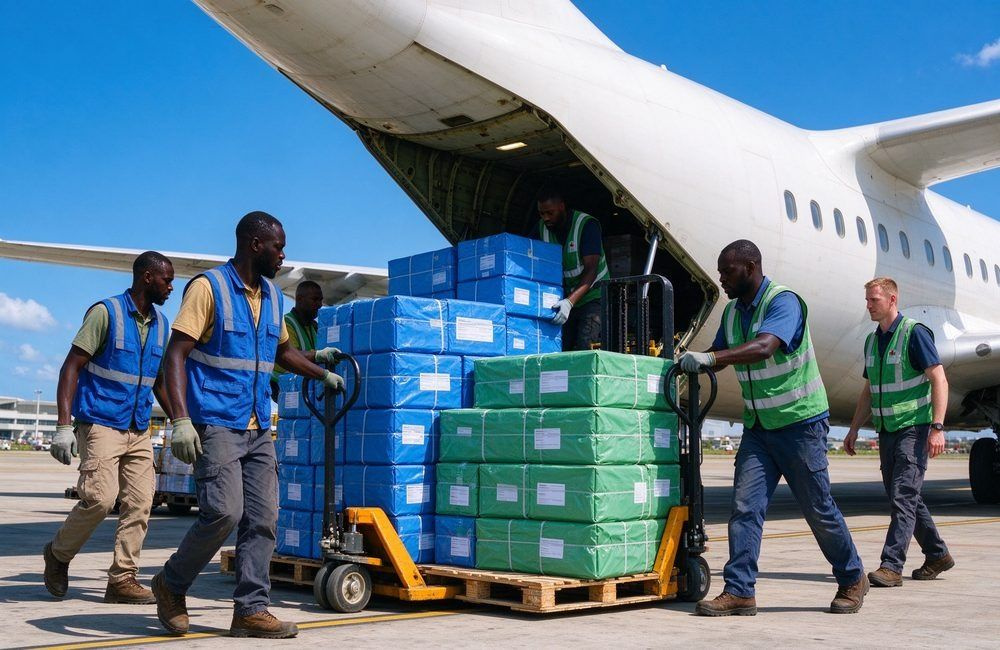
Air cargo loading of relief supplies.
Work through each step in order, keep every document updated, and submit your first UN supplier portal application within two weeks. The relief supply market is large, and registered factories receive tender notices automatically. Registration costs nothing, so the only real investment is the time you spend preparing documents that UN agencies will ask for anyway.
Bookmark the UNGM and UNHCR portals before you start and keep the readiness checklist as your working list.
Relief procurement runs all year, so there is no wrong season to register, and every month of an active profile adds tender alerts to your pipeline.
How UN agencies buy relief goods
UNGM and supplier registration
UNHCR supplier portal step by step
What UN tenders look for
Product categories UN agencies procure
Compliance and documentation
Quality standards in UN supply
Pricing and framework agreements
Common mistakes in UN bids
Getting ready to register
Frequently Asked Questions
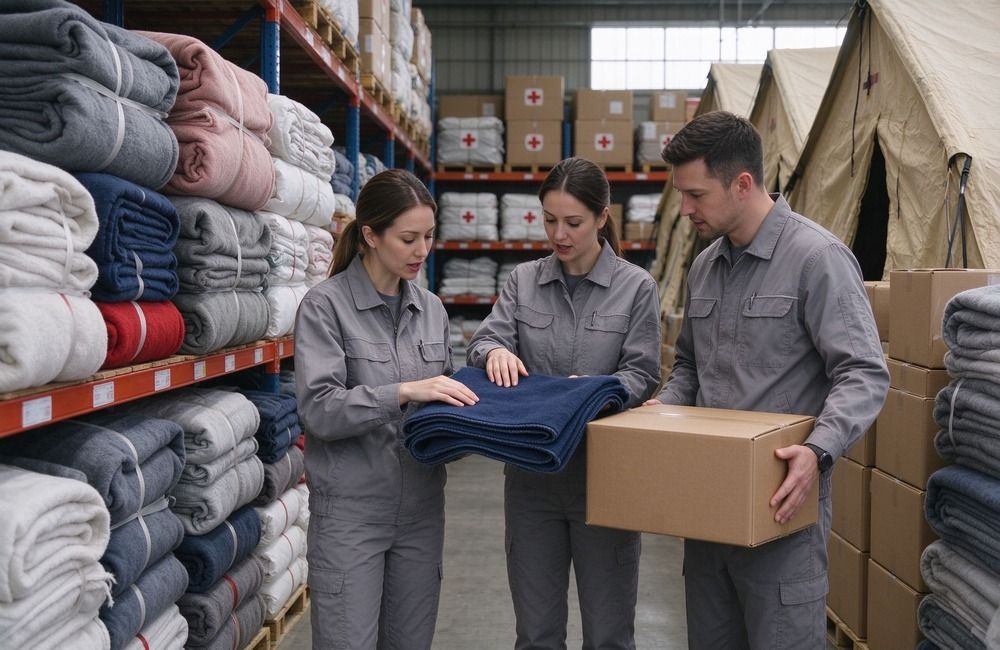
Procurement team reviewing blanket samples.
UN agencies buy relief goods through a standard procurement cycle that starts with a published tender and ends with a contract award. Every UN humanitarian tender is announced on the UN Global Marketplace, also known as UNGM, so suppliers can find opportunities without paying an agent or broker.
Each UN agency manages its own supplier database, yet the evaluation logic is similar. A tender team checks whether the bidder is registered, whether the product matches the specification, and whether the factory can deliver on time to the target country in Africa.
UN procurement for Africa covers flood relief blankets, emergency tents, mosquito nets, hygiene kits and shelter materials. UN supplier registration is the entry point that lets your factory appear in these agency databases and receive relevant tender invitations.
When a UN agency needs goods, it publishes a notice on UNGM with the quantity, specification, delivery point and deadline. Suppliers who have completed UN supplier registration receive the notice directly and can prepare a bid with enough time to quote accurately.
After the deadline, the evaluation team scores each bid against technical, delivery and price criteria. The winning supplier signs a contract or a framework agreement, and the goods are inspected before shipment to the field.
For relief goods suppliers, the practical starting point is the same every time: complete UNGM registration, confirm your product categories, then monitor UN humanitarian tenders for Africa twice a week.
UN procurement volumes are published in agency annual reports, and relief blankets and shelter materials are among the most repeated categories for Africa. Suppliers who follow the publication calendar can time their capacity and raw material buying to the tenders, instead of reacting after a notice appears.
|
Step |
What happens |
Supplier action |
|
Tender published |
UN agency posts quantity and specification on UNGM |
Check UNGM bidding notices daily |
|
Registration check |
Agency verifies supplier profile and documents |
Keep UN supplier registration file complete |
|
Bid submitted |
Supplier sends technical and price offer |
Quote from the factory, not from an agent |
|
Evaluation |
Team scores technical, delivery and price |
Match the specification exactly |
|
Contract awarded |
Winner signs order or framework agreement |
Confirm packing and lead time in writing |
The cycle above repeats throughout the year. Most UN humanitarian tenders for Africa close within four to six weeks, so registered suppliers can plan production capacity around the tender calendar. Keep a copy of this flow chart in the export office, because every step maps to a field or document on the UNGM portal.
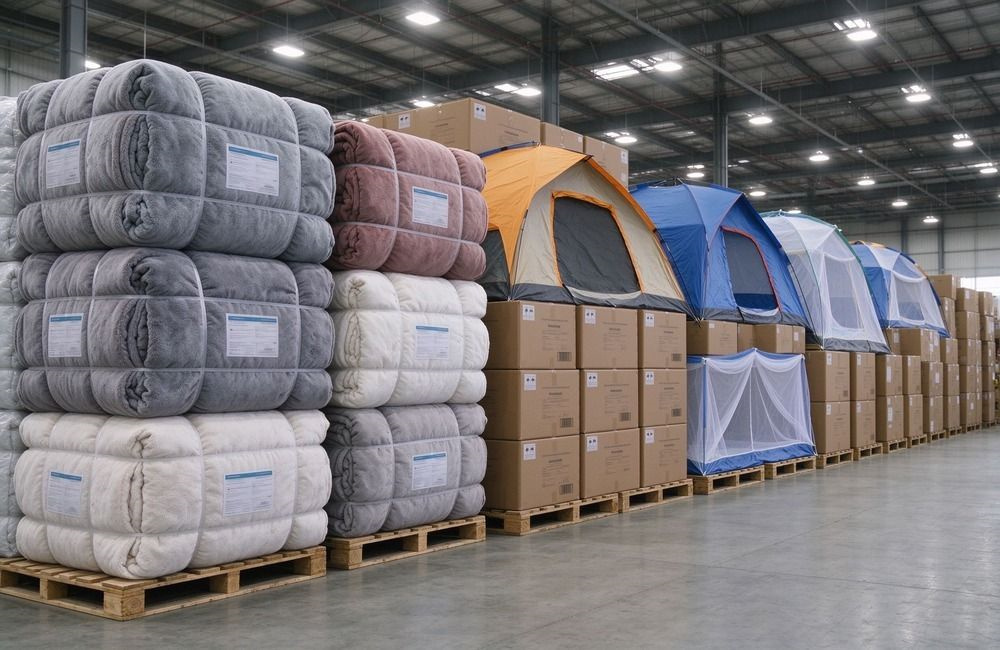
Relief goods stacked in a bright warehouse.
UNGM, or the United Nations Global Marketplace, is the official portal where UN agencies publish tenders and manage their supplier base. UN supplier registration on UNGM is completely free, and it is the single most useful step for a manufacturer entering the relief market.
Registration is level based. At the basic level, a supplier creates a profile with company details, contact information and product categories. Higher levels add financial documents, quality certificates and past performance references that agencies check during evaluation.
The UNGM registration process is entirely online. You create an account, complete the company profile, select your product categories, and upload the supporting documents that UN agencies require for relief goods such as blankets and tents.
A complete UNGM registration suppliers profile includes the legal company name, factory address, bank details, product list and export experience. UN agencies verify these fields when they evaluate bids, so accuracy matters from the first day.
Suppliers registered on UNGM receive email alerts for new tenders in their categories. This removes the need to browse agency websites manually and keeps your pipeline full throughout the procurement year.
UNGM also stores your supplier performance record. Late deliveries or failed inspections are noted on the profile, while on-time shipments strengthen your score for future UN humanitarian tenders in Africa.
Do not confuse UNGM registration with bidding. The portal is the database and notice board; the bid itself is submitted through the tender notice instructions. Both steps are free and both use the same company file, so register once and keep the profile current.
A basic profile is enough to receive alerts, while a Level 2 profile with financial statements and quality certificates passes the compliance gate of most UN humanitarian tenders. Upgrade step by step as your export business grows.
UNGM account security is part of the registration file. Use an official company email, keep the password with the export team, and update the contact person whenever staff change, because tender alerts and agency messages go to that contact. Registering once makes you an approved supplier for UN agencies, and the profile stays active until your company details change.

Checking UNGM tender alerts in the office.
UNHCR, the UN Refugee Agency, runs its own supplier portal for shelter and relief goods. The UNHCR supplier portal step by step process is similar to UNGM, but UNHCR focuses on items used in refugee camps and displacement sites across Africa.
First, visit the UNHCR supplier portal and create a company account. You will enter the legal name, country of registration, contact person and the product categories you supply, such as blankets, tents or mosquito nets.
Second, complete the company profile with factory details, annual production capacity and export markets. UNHCR buyers use this information to judge whether your factory can fulfil a relief order for Africa.
Third, upload supporting documents. UNHCR requires proof of registration, quality certificates, and a sample list with specifications. The portal accepts the same UN supplier registration documents used on UNGM, so one digital file serves both systems.
Fourth, wait for the registration review. UNHCR validates the profile and documents, then activates the supplier in its database. Most suppliers receive confirmation within a few weeks after submission.
Once active, you receive UNHCR tender invitations and can view open requirements in your categories. The UNHCR supplier portal also tracks your performance on past orders, so every delivery affects your future invitations.
The UNHCR how to become a supplier page explains the full process in the agency's own words. Keep the portal profile updated, because UNHCR buyers search it when they build bid lists for shelter programs in refugee operations.
UNHCR emergency procurement is faster than standard bidding. During a refugee influx, the agency may buy from pre-approved suppliers through shorter procedures, which is why an active UNHCR supplier portal profile matters even when no tender is open.

European procurement team reviewing samples.
UN humanitarian tenders are scored on three main groups: technical compliance, delivery capability and price. The technical group checks that your product matches the specification, from GSM weight to packing method for ocean freight.
Delivery capability covers production lead time, export experience and logistics. UN agencies for Africa prefer factories that can ship to Mombasa, Dar es Salaam or Douala within the window stated in the notice.
Price is evaluated only after technical and delivery scores pass the threshold. This means a low price cannot rescue a product that fails the specification, and quality is never traded for a cheaper bid.
UN tenders also check your UNGM registration level and UN supplier code of conduct acceptance. Bidders without a complete profile are often excluded before the evaluation starts, so documentation is a gate, not a bonus.
For relief blankets, the evaluation team compares GSM, size, edge finish and packing against the tender specification. Minor mismatches such as a different weight or colour are common reasons for rejection.
Transparency matters in UN procurement. UN tenders publish the evaluation method in the notice, so you can see exactly which documents and tests will be used before you prepare your bid.
The evaluation score is recorded on your supplier file. Even a losing bid can build your record, because the agency sees your complete submission and may invite you to the next opportunity in the same category.
A bid package usually contains the signed offer letter, the technical specification response, the price schedule, the delivery plan and the supporting certificates. Prepare these five parts for every tender, because evaluators score them as separate sections.
Criteria
What is checked
Typical weight
Technical
Specification match, samples, quality certificates
40-50%
Delivery
Lead time, export logistics, packing for ocean freight
25-35%
Price
Unit cost compared with the budget estimate
20-30%
The table above reflects how UN humanitarian tenders are commonly weighted. Read each notice carefully, because the agency publishes the exact criteria and weights for that specific tender. Use the weight table when you read a notice, and mark the technical section as the first priority in your bid preparation.
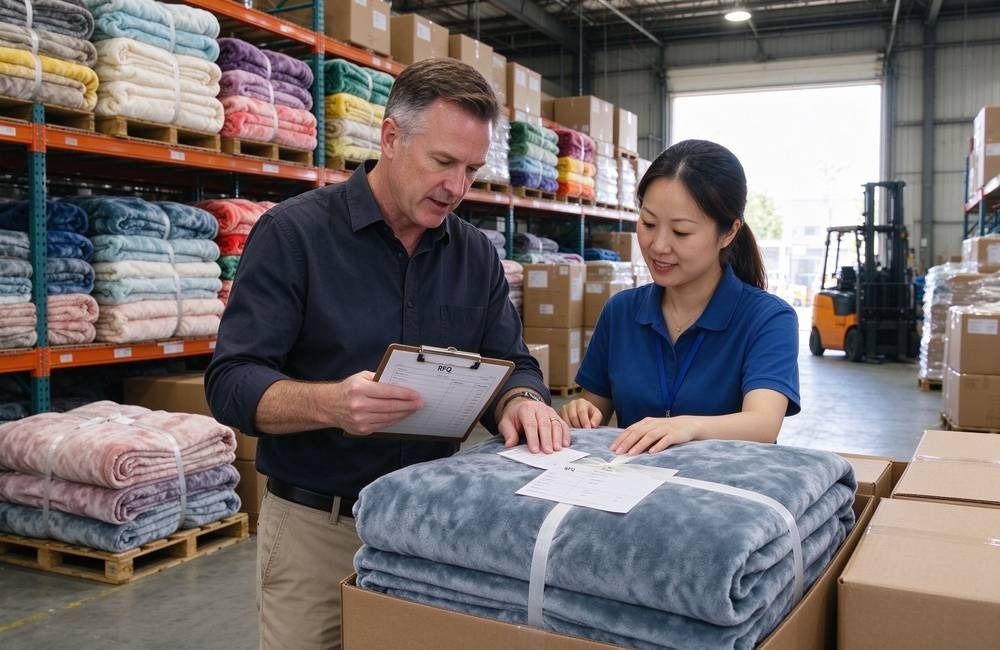
Reviewing RFQ and compliance documents.
UN agencies procure a wide range of relief goods for Africa, and the product categories are published on UNGM. For textile suppliers, the core categories are blankets, bedding, tents, mosquito nets and hygiene kits.

Relief kit: blankets, tent, net and hygiene items.
Blankets are bought by the bale for flood and cold-weather relief, with specifications covering GSM, size and flame or wash standards. Emergency tents are procured for displaced families, and mosquito nets are sourced for malaria prevention programs.
Hygiene kits combine soap, towels, sanitary items and water treatment products. UN agencies buy these in bulk and require detailed packing lists for customs clearance at the destination port.
When you register, select every category you can supply. UNGM sends tender alerts only for the categories in your profile, so a narrow profile means fewer UN humanitarian tenders in your inbox.
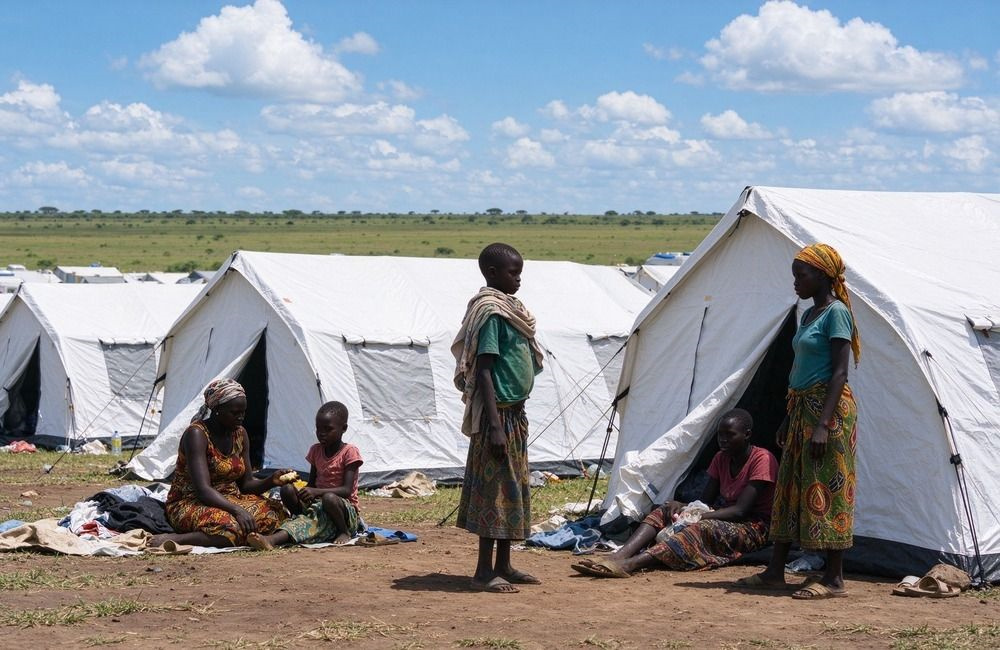
Emergency tents in a displacement camp.
Your product list should match your factory's real output. Overstating categories leads to invitations you cannot fulfil, while an accurate list builds a trustworthy supplier record that agencies rely on.
UN agencies also procure responder gear and protective clothing for their field teams. If you manufacture these items, add them to your UNGM profile as separate product categories with their own specifications.
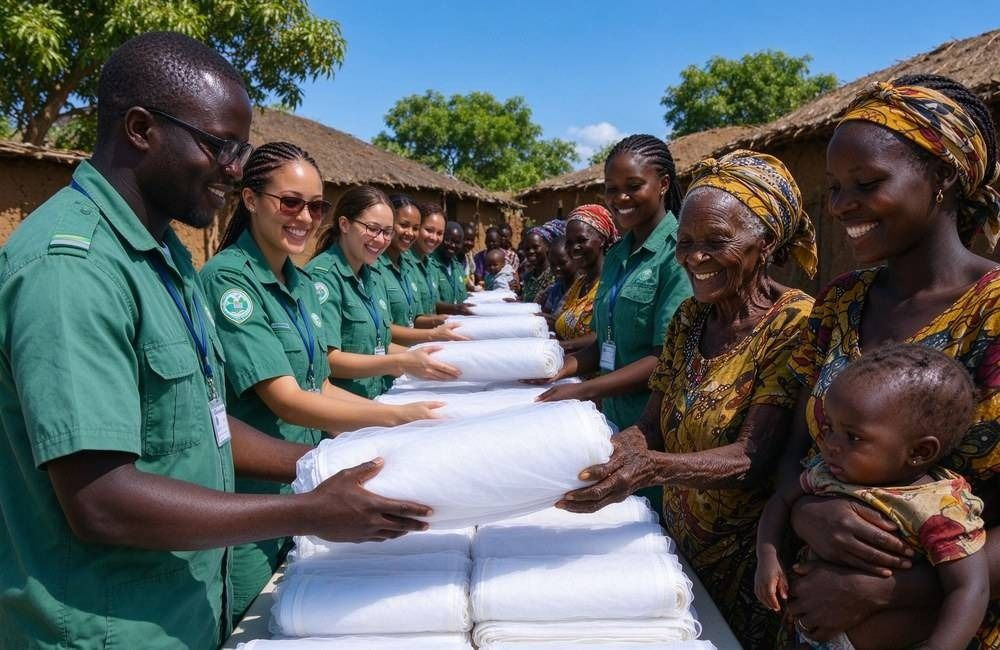
Distributing mosquito nets at a camp.
Each category has a typical document set. Blankets need sample reports and test certificates, tents need waterproof tests, and nets need the approved treatment documentation. Prepare these files per category before bidding.
Category specifications change between tenders, so re-read the notice for every opportunity. A blanket tender may ask for a higher GSM or a different packing unit than the previous one in the same year.
Packing and marking matter in UN supply. Agencies state the carton size, bale weight and label text, and the inspection checks these against the notice, so confirm the packing details with your factory before quoting.
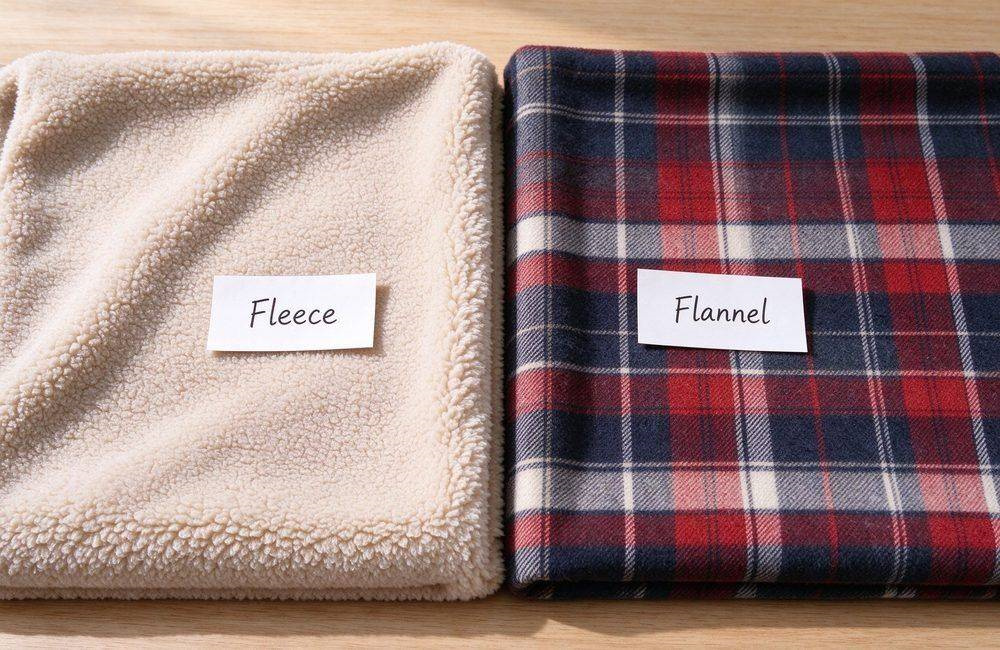
Fleece vs flannel blanket fabric comparison.
The UN supplier code of conduct sets minimum standards for ethics, labour, environment and anti-corruption. Every supplier registered on UNGM accepts this code as part of the registration process.
UN agencies verify compliance documents before awarding contracts. For a factory, this means proof of business registration, tax status, quality system and, where required, environmental or labour certificates.
The document list is standard across most UN agencies. Prepare it once in digital form and keep it updated, because you will upload the same file to UNGM, the UNHCR supplier portal and tender submissions.
Compliance also covers product safety. Blankets must meet flammability and fibre-content rules, nets must carry the approved treatment, and hygiene items must have the correct labels and material safety data where applicable.
Documentation quality affects evaluation scores. Scanned, translated or incomplete files are a frequent cause of exclusion, so check every upload before the tender deadline closes.
UN agencies publish their supplier requirements openly. Review the UN supplier code of conduct before you register, and update your documents whenever your factory changes address, name or legal structure.
Tax and banking compliance is part of the file. UN agencies verify your tax registration and bank details for payment, and errors in the bank account or tax number can delay payment long after the goods are delivered.
|
Document |
Purpose |
Update frequency |
|
Business registration |
Proves legal entity and factory ownership |
On any change |
|
Quality certificates |
Shows production and inspection standards |
At renewal |
|
Financial statements |
Demonstrates capacity for large orders |
Annually |
|
Product test reports |
Confirms specification and safety |
Per product batch |
|
Export and tax documents |
Supports customs clearance and pricing |
Annually |
Build this checklist into a single digital folder. When a UN humanitarian tender opens, you can submit the complete compliance file within hours instead of weeks. Print the checklist and tick the files one by one, because an unsigned or expired document is the most common cause of rejection.
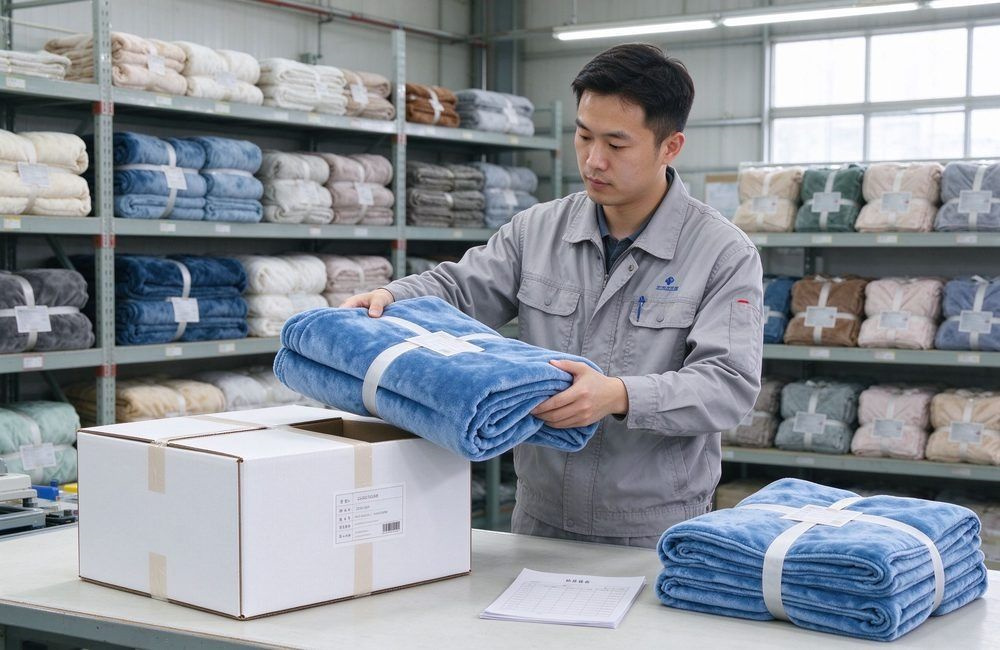
Sample verified against export carton.
UN supply quality standards for relief goods are stricter than typical commercial orders, because the items protect people in emergencies. Blankets, tents and nets are inspected against written specifications and sampling plans.
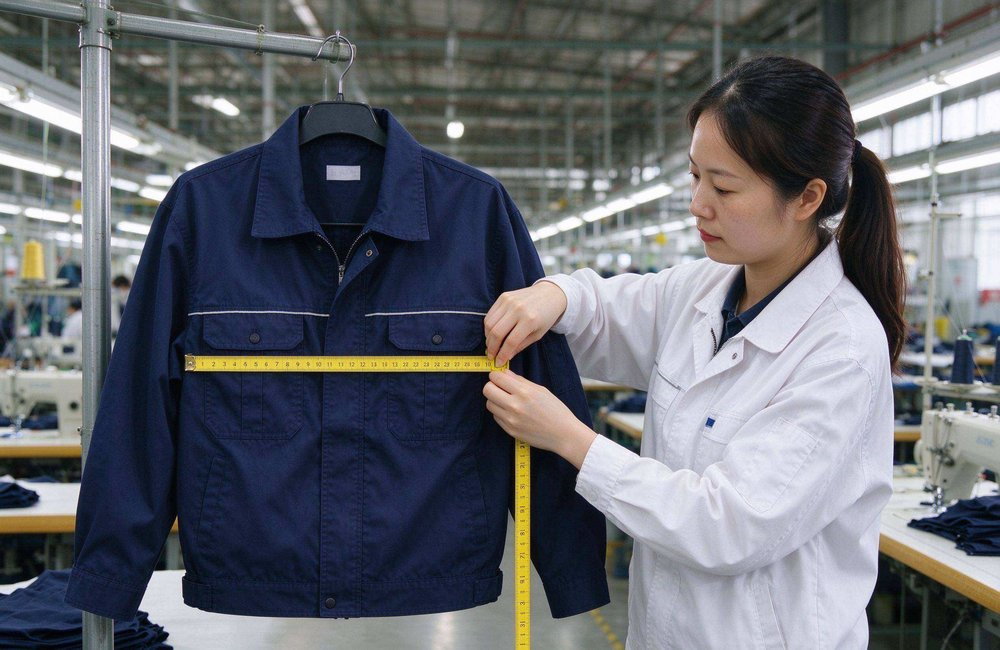
Measuring blanket size in the workshop.
Most UN contracts use pre-shipment inspection. An independent inspector visits the factory, checks the product against the specification, and issues a report before the goods leave the warehouse.
The inspection covers dimensions, weight, fabric quality, stitching, packing and marking. For blankets, the inspector verifies GSM and size on a random sample from the production batch.
UN agencies also review your in-house quality system. ISO certificates and documented inspection procedures strengthen your bid, while inconsistent quality is one of the fastest ways to lose a tender.
If your factory uses in-house inspectors, the UNHCR supplier portal review checks whether your quality records match the samples submitted. Keep production and inspection records in order for every batch.
Product quality standards are published in each tender. Read the quality section before quoting, because a factory that cannot meet the standard should not waste time on that bid.
Sampling plans are transparent. UN agencies state how many units will be checked and what defect rate is accepted, so your factory can control quality to the required level before inspection.
Sample sealing is common in UN contracts. The agency approves a sealed sample before mass production, and the inspector compares the bulk delivery with that sample, so keep the approved sample and its report in your quality records.
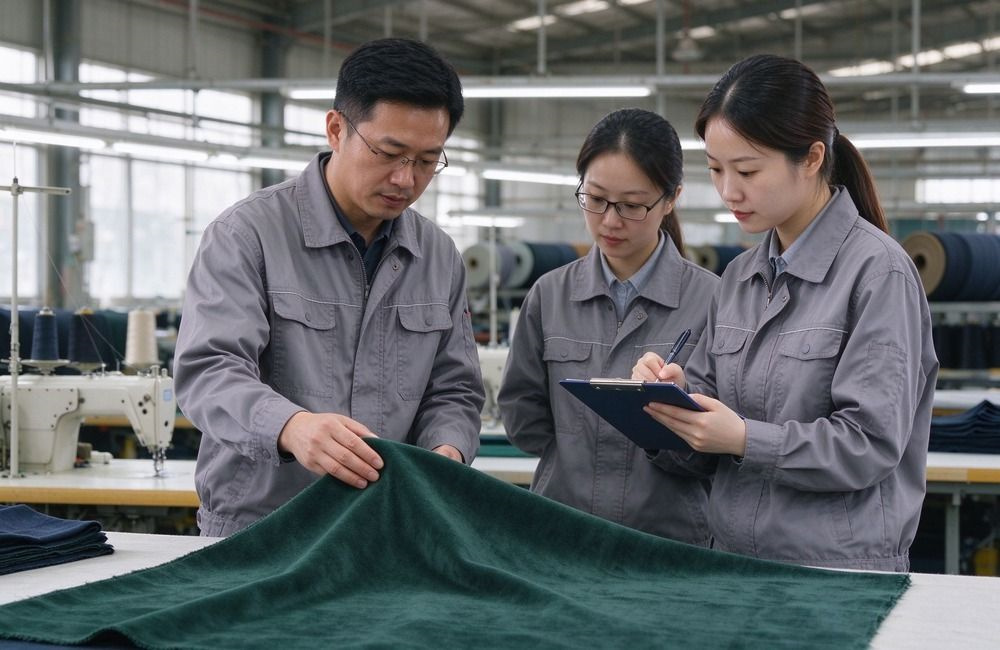
Checking edge stitching and seam density.
UN pricing is transparent and competitive. Agencies publish budget estimates or evaluation weights, and suppliers compete on unit price after meeting technical and delivery requirements.
A framework agreement is a pre-approved contract that lets a UN agency order goods repeatedly at fixed terms. For relief suppliers, a UNGM frame agreement relief goods deal means steady volume without re-bidding every order.
Framework agreements are usually awarded for two to three years. The supplier commits to capacity, lead time and price stability, and the agency commits to a minimum purchase volume where possible.
To win a framework agreement, your bid must show consistent quality across multiple tenders and a competitive price for the full period. Suppliers with existing UN delivery records have a clear advantage.
Pricing should be based on real production cost plus logistics. UN agencies compare quoted prices across bidders, so an unrealistic low price raises questions about quality and capacity.
Read the framework agreement terms carefully, including price adjustment clauses and penalty conditions for late delivery. A stable, honest price is safer than a low price you cannot sustain.
Framework agreements suit core categories with predictable demand, while one-off tenders let you enter new product lines. Combine both strategies to build a balanced UN relief portfolio.
When you bid on a framework agreement, state your unit price for the full period and confirm that raw material cost changes are handled through the published adjustment clause, not through silent price changes.
Quote in the trade term the tender specifies. FOB, CFR and CIF prices differ in freight and insurance, and quoting the wrong term is a common reason for price disqualification, so state the term clearly in the price schedule.
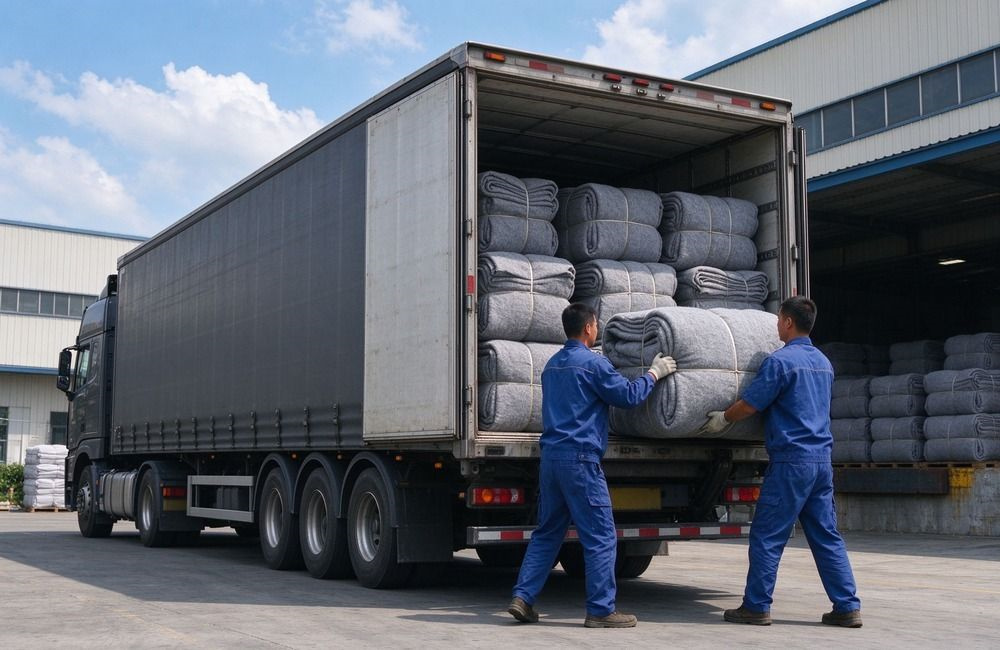
Relief truck departing for field distribution.
The UN bid mistakes avoid list starts with late submissions. UN humanitarian tenders have strict deadlines, and a bid received after the cut-off is rejected without review, whatever the reason.
The second common mistake is specification mismatch. Bidding with a different GSM, size or packing than the notice requires almost always loses the evaluation, no matter how competitive the price.
The third mistake is incomplete documentation. Missing quality certificates, outdated registration or unclear translations force the evaluator to exclude the bid during the compliance check.
The fourth mistake is overpromising delivery. If your factory cannot ship to the destination port within the stated lead time, the delivery score drops and the bid fails even with a strong product.
The fifth mistake is ignoring the UN supplier code of conduct. Past performance issues, compliance gaps or incorrect declarations appear in your UNGM record and reduce future opportunities.
A sixth mistake is bidding on categories outside your registered profile. UN agencies check the profile against the notice, and an unlisted category makes the bid ineligible from the start.
Avoid these errors by creating a bid checklist: confirm the deadline, match the specification exactly, attach the complete document file, verify the lead time, and re-read the code of conduct before you submit.
Use the clarification window. UN notices usually allow questions before the deadline, and agencies publish answers for all bidders, so ask about unclear specifications early instead of guessing in the bid.
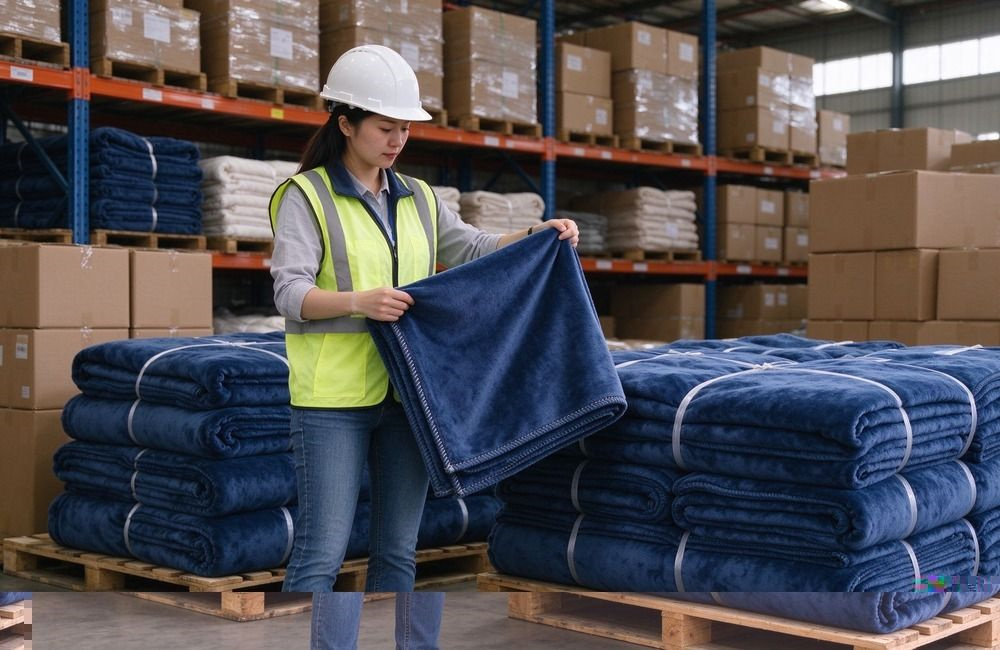
Inspecting blankets against a packing list.
The how to become UN supplier checklist starts before you open the UNGM portal. Gather your business registration, quality certificates, product list and financial documents in one folder.
Next, confirm your product categories match real factory output. UN agencies for Africa buy blankets, tents, nets and hygiene items in bulk, so a textile factory should register those categories first.
Open your UNGM account and complete the basic profile the same day. The form is short, and the account gives you access to UNGM bidding notices immediately.
Then upgrade your profile with financial statements and quality certificates. A Level 2 profile passes the compliance check in most UN humanitarian tenders for Africa.
Register on the UNHCR supplier portal with the same documents, and set a calendar reminder to check UNGM bidding notices twice a week.
Finally, prepare a sample file with specifications and test reports. UN agencies request samples during evaluation, and factories with samples ready respond faster and win more often.
The relief supply market is open to manufacturers worldwide. Complete UN supplier registration this month, and your factory will appear in the databases that UN buyers search every day.
Set a one-month timeline: week one for documents, week two for UNGM and UNHCR profiles, week three for samples and reports, and week four for the first tender application. A fixed calendar keeps the registration moving.
|
Item |
Status |
Owner |
|
Business registration file |
Ready / missing |
Company |
|
Product categories on UNGM |
Done / pending |
Sales team |
|
Quality certificates |
Current / expired |
Quality team |
|
Sample file with reports |
Prepared / to prepare |
Export team |
|
Bank and export documents |
Ready / missing |
Finance |
Use the checklist above in your next team meeting. Every completed item moves your factory one step closer to winning a UN contract. Review the checklist with the production manager, because the status column depends on factory capacity, not only on the sales team.
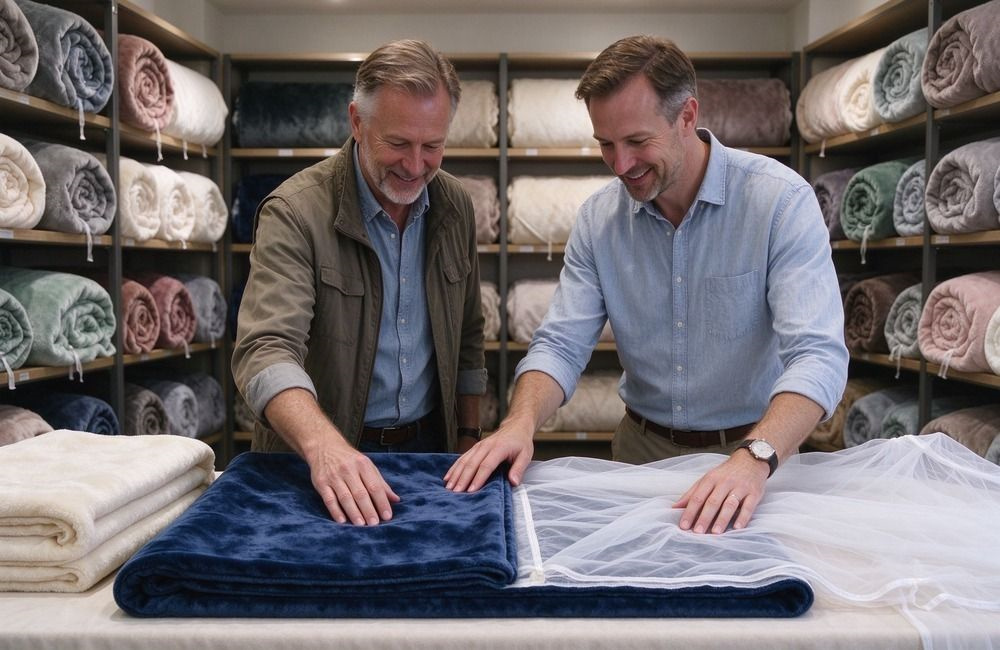
Sample room with blanket fabric rolls.
Register on UNGM, the UN Global Marketplace, with your company profile and product categories. UN supplier registration is free and online. Add your business registration, quality certificates and financial documents to reach Level 2, then register on the UNHCR supplier portal with the same file. Once the profiles are active, you receive tender alerts and can bid on UN humanitarian tenders for Africa. Keep every document current, because agencies verify the file before they shortlist suppliers for relief contracts, and an outdated certificate is one of the most common reasons a profile is rejected. Compare the registration deadline with the tender calendar, and complete the file at least two weeks before the first bid you want to enter. Ask the UNGM helpdesk for a confirmation receipt after each submission, because the receipt is your proof that the profile reached the agency database.
UNGM, or the United Nations Global Marketplace, is the official portal where UN agencies publish tenders and manage supplier records. UNGM registration suppliers receive tender alerts, store their documents in one place, and appear in agency databases. Without a UNGM profile, a manufacturer cannot be shortlisted for most UN contracts, so UNGM registration is the first step in the how to become UN supplier process. The portal is free, and the basic profile takes about one hour to complete. Higher levels add financial statements and certificates that help you qualify for larger relief tenders. Once your profile is active, add new certificates as they are issued, because the agency database reads the current file at evaluation time. Set the alert language to English in the portal settings, because most UN notices for Africa are published in English and alerts in other languages arrive later.
The UNHCR supplier portal is the UN Refugee Agency's own registration system for shelter and relief goods. You create an account, complete the company profile, upload documents and select product categories such as blankets, tents and mosquito nets. UNHCR reviews the file and activates the supplier, after which you receive tender invitations and can view open requirements in your categories. Keep the profile updated with capacity and certificates, because UNHCR buyers search it when they build bid lists for shelter programs in Africa. The review usually takes a few weeks, so register before a tender deadline rather than during one. If UNHCR asks for additional documents, reply through the portal and keep the confirmation, because incomplete follow-up can suspend the profile. Keep the same legal entity name on the UNGM and UNHCR profiles, because a name mismatch between the two systems blocks the review process.
UN agencies procure blankets, bedding, emergency tents, mosquito nets, hygiene kits and responder clothing for Africa. The product categories are published on UNGM, and each category has its own specification, from blanket GSM and tent waterproof rating to net treatment and kit contents. Register the categories your factory actually supplies so the tender alerts match your production capacity. Each category also needs its own document set, including sample reports, test certificates and packing lists. A focused profile with accurate categories builds a stronger supplier record than a long list that the factory cannot fulfil. Use the category list published by UNHCR and WFP to check demand before you expand production, so new capacity matches real tender volume. For hygiene kits, list the component count and weight per kit in the profile, because agencies search by kit composition when they build orders.
The standard file covers business registration, quality certificates, financial statements, product test reports and export documents. UNGM and the UNHCR supplier portal ask for the same basic documents, so prepare them once in digital form. The UN supplier code of conduct is accepted during registration, and you should update every document when your company details change. A complete, current file passes the compliance gate in most UN humanitarian tenders for Africa without extra correspondence. Keep a master folder with the latest version of each file and a renewal calendar for certificates. Certificates with a validity date should be renewed in the month they expire, and the renewed copy uploaded before the old one lapses. Store the file in PDF format with a clear file name such as business-registration-2026.pdf, because agencies open these files faster than scanned photos.
The UN supplier code of conduct sets minimum standards for ethics, labour, environment and anti-corruption that every UN supplier must accept. It covers fair working conditions, environmental responsibility, no bribery and no involvement in conflict-related trade. Accepting the code is part of UN supplier registration, and violations appear in your UNGM supplier performance record. Review the code before you register, and make sure your factory practices match the standards the code describes. If your factory cannot meet a standard today, fix the gap first, because UN agencies check compliance claims during evaluation and inspection. Ask the UNGM helpdesk about borderline cases, because accepting the code is a declaration that affects every future bid you submit. The code applies to your subcontractors too, so confirm that your fabric and packing suppliers follow the same labour and environment standards.
UN humanitarian tenders score bidders on technical compliance, delivery capability and price. The technical group checks specification match and quality certificates, the delivery group covers lead time and export logistics, and price is compared after technical and delivery thresholds are passed. The notice publishes the evaluation weights, so read them before preparing your bid. A complete profile, accurate documents and an honest lead time give you the strongest chance in the evaluation. Do not guess the criteria, because each tender publishes its own weights and required documents. Weight the three groups against your factory strength, and invest in the group where your score is weakest before the next tender. If your factory is ISO certified, upload the certificate to both profiles, because it is the fastest way to pass the quality gate in evaluation.
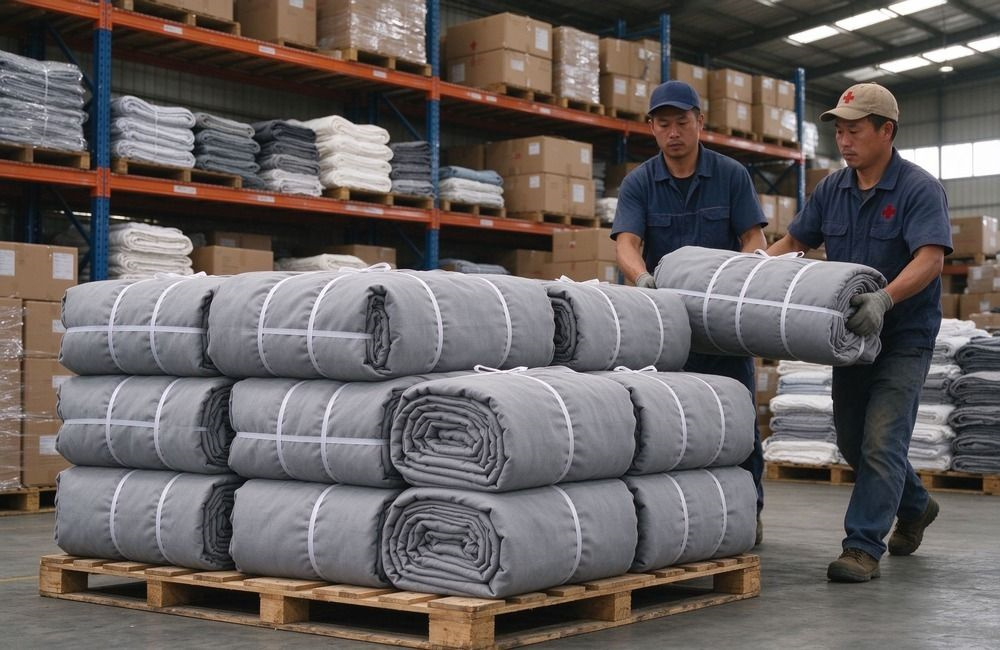
Compressed bales for UN contract delivery.
A framework agreement is a pre-approved contract that lets a UN agency order goods repeatedly at fixed terms over two to three years. It suits core categories such as blankets and tents with stable demand. Suppliers bid once, and the agency issues purchase orders against the agreement, which reduces re-bidding and gives the factory predictable volume. To win one, show consistent quality across tenders and offer a stable price for the full agreement period. Read the price adjustment and penalty clauses before signing, because they control how cost changes and late deliveries are handled. Framework agreements are published as notices on UNGM, so set a saved search for the word framework in your category. Save a template of your framework bid, because the document structure repeats and a template cuts the preparation time for the next notice.
The basic UNGM profile takes about one hour to complete online. Level 1 and Level 2 upgrades take longer because financial statements and quality certificates must be prepared and uploaded. UNHCR supplier portal review usually takes a few weeks. Start early, because some UN humanitarian tenders require a complete profile before the bid deadline. Plan at least one month from starting the form to being fully active on both portals, and use the waiting time to prepare samples and product test reports for the first tender. Some agencies also accept pre-registration for emergency call-off orders, which shortens the response time when a crisis begins. Emergency call-off orders are usually small but urgent, so keep a small buffer of finished goods in your warehouse to respond quickly.
Yes. UN supplier registration is open to manufacturers of any size, and UNGM is free. Small factories can start with a basic profile and one product category, then upgrade as capacity grows. UN agencies evaluate capacity and delivery capability for each tender, so a small factory with strong documents and honest lead times can win relief orders. Focus on one category first, deliver it well, and use the performance record to expand into more categories. Do not overstate capacity, because the agency checks your factory size against the order quantity during evaluation. Register one product line first and treat the first contract as a reference order, because the delivery record opens larger categories later. Ask the agency for feedback after a losing bid, because some agencies reply with the score breakdown and that report improves the next submission.
The most common UN bid mistakes avoid items are late submissions, specification mismatches, incomplete documentation, overpromised lead times and compliance gaps. Each of these removes the bid during evaluation regardless of price. Create a bid checklist covering the deadline, specification, document file, lead time and the UN supplier code of conduct before you submit. Check the list twice, because a small omission such as a missing stamp or an outdated certificate can cost a complete relief contract. When in doubt, contact the agency through the notice before the deadline. Keep a copy of the completed checklist with the bid file, so you can prove the checks were done if the agency questions the submission. Keep the checklist on paper next to the bid file, because evaluators sometimes call to verify that the checks were completed before submission.
Open UN humanitarian tenders are published on UNGM bidding notices. Log in, set your product categories, and the portal sends email alerts for new opportunities. UNHCR and other agencies also announce requirements on their supplier portals. Checking UNGM twice a week keeps your pipeline full without paying for tender subscription services. When a notice matches your category, read the full specification before deciding whether to prepare a bid, and note the document list and delivery terms in your bid checklist. Bookmark the UNGM notice page on your phone and scan it during the week, because the mobile view shows the newest notices first. Set a weekly reminder to scan the notice list, because the mobile page loads faster than the full desktop portal on a field visit.
No. UNGM registration is free for all suppliers. The UN Global Marketplace does not charge for creating a profile, receiving tender alerts or submitting bids. Be cautious of third parties that ask for payment to register you with the UN, because the official process is online and free on UNGM and the UNHCR supplier portal. If an agency asks for money, it is not an official UN process, and you should verify the request through the official portal. Report suspicious payment demands to the UNGM helpdesk rather than paying. Forward any payment request to the UNGM helpdesk before paying, and never share bank passwords with third-party agents. Share the official UNGM helpdesk link with your export team, because all fee questions should be answered from that page, not from an agent.
UN agencies verify quality through pre-shipment inspection, sample review and documented quality systems. An independent inspector checks dimensions, GSM, stitching, packing and marking against the specification before shipment. Your in-house inspection records and certificates strengthen the bid, and any mismatch between samples and bulk delivery is recorded in your supplier performance file. Maintain batch records, because agencies can request production and inspection documentation at any time during the contract period. Keep the inspection report with the shipment documents, because customs and the agency may both request it at the destination. Keep one set of pre-shipment reports in the archive for three years, because agencies may request historical quality evidence for new tenders.
UN agencies often bundle relief items into kits, so a supplier that can cover blankets plus related items gains a practical advantage. Even when items are tendered separately, complete documentation and consistent quality across categories strengthen a registration.
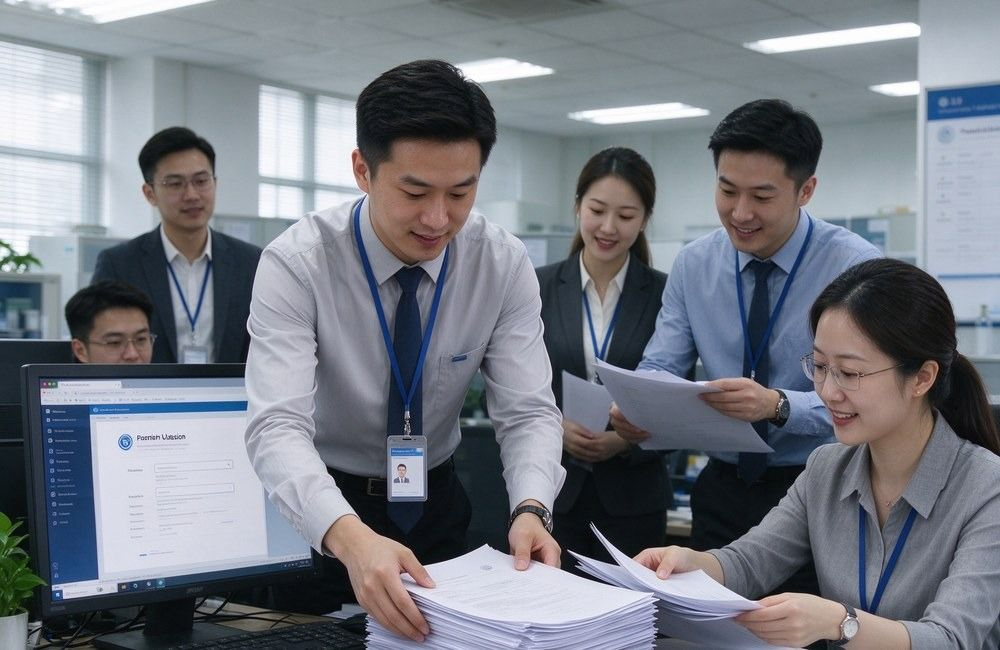
UNGM registration, product data sheets, compliance evidence and tender responses are the four parts of a UN supplier profile. Keeping the file complete before the notice appears is what turns a registration into a bid, because the notice window is usually too short to gather documents.
 |

|
Pautan Mesra :
hak cipta © Custom Disaster - Relief Bedding: Tents, Sleeping Bags, Blankets Hak cipta terpelihara
pasukan profesional untuk perkhidmatan !