Kategori
Last updated: November 25, 2026 · Flu emergency kit essentials
A flu emergency kit keeps a sick week short and a household safe. The flu emergency kit essentials are face masks, hand sanitizer, thermometers, blankets and recovery supplies, following one checklist so home, school and office stay ready when the season peaks.
This masks sanitizer and recovery guide covers kit essentials, home isolation, storage rotation and supplier confirmation for every season.
 |

|
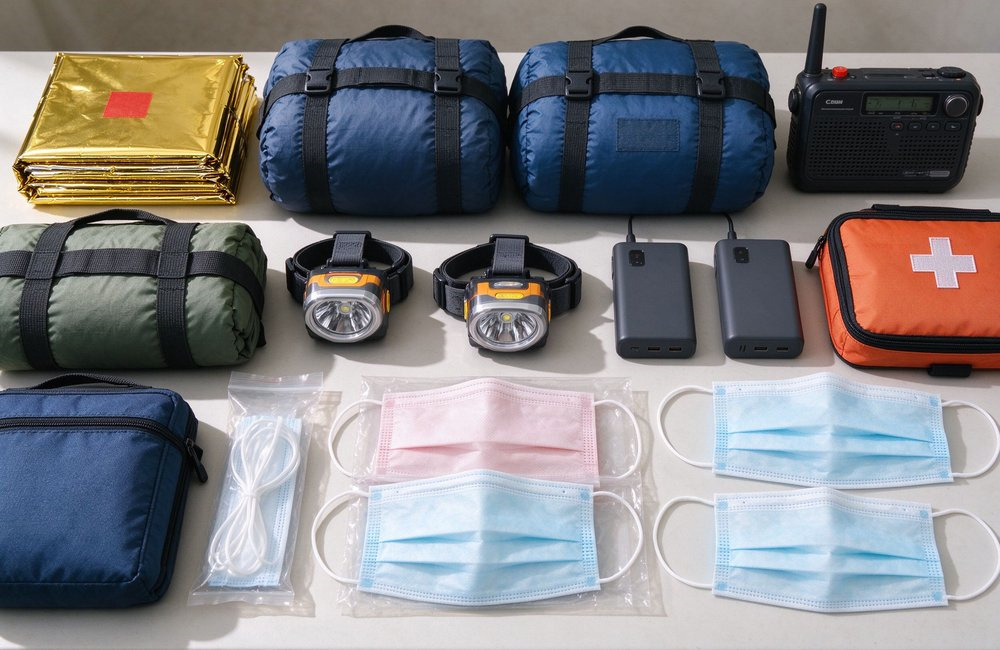
The flu season arrives every year, and the flu emergency kit answers it with the same layers: masks and sanitizer for prevention, a thermometer and first aid for monitoring, blankets for comfort, and a power backup for communication.
Stock the kit before the first case, not after the second, because the pharmacy line and the shared cup both appear on the same sick evening.
A spare pack of face masks sits at the front door, the sanitizer bottle stands next to the door handle, and the thermometer lives in the same drawer as the fever medication, so the family does not search for tools while someone is already shivering under a blanket.
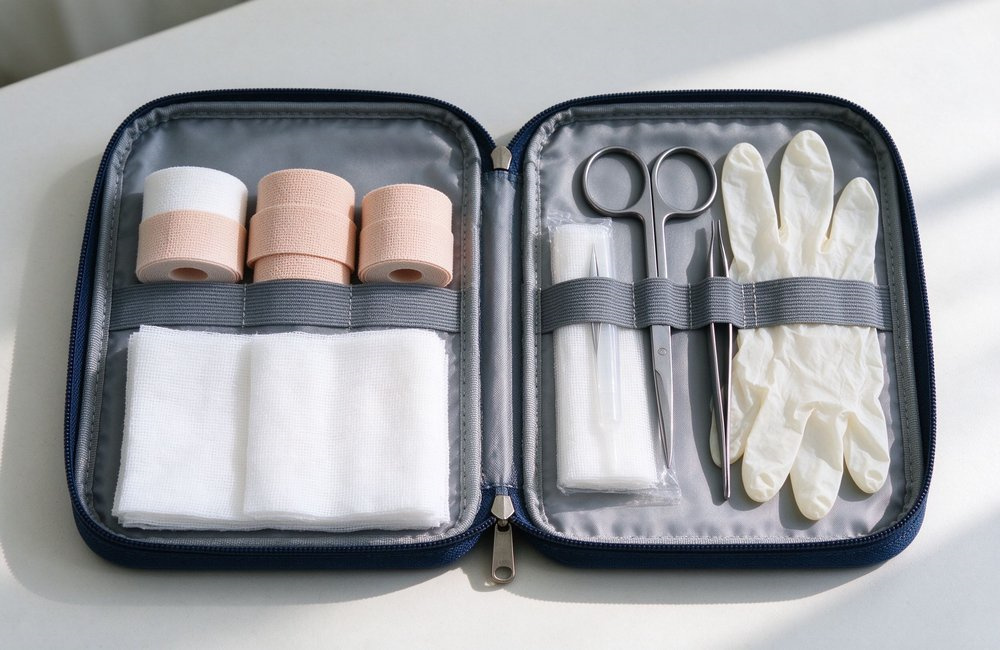
Open flu first aid kit with masks, antiseptic wipes, thermometer and medicine bottles, flu kit essentials arranged for the home flu emergency kit
The sections follow the care journey: why the kit matters, the essentials, comfort and recovery, home isolation, communication, school and office versions, confirmation points, storage and rotation, and supplier checks.
The order matters because each layer answers a different hour of the sick week: prevention at the door, monitoring on the first evening, comfort through the chills, isolation once the case is confirmed, and power backup for the storm that always seems to arrive with the fever.
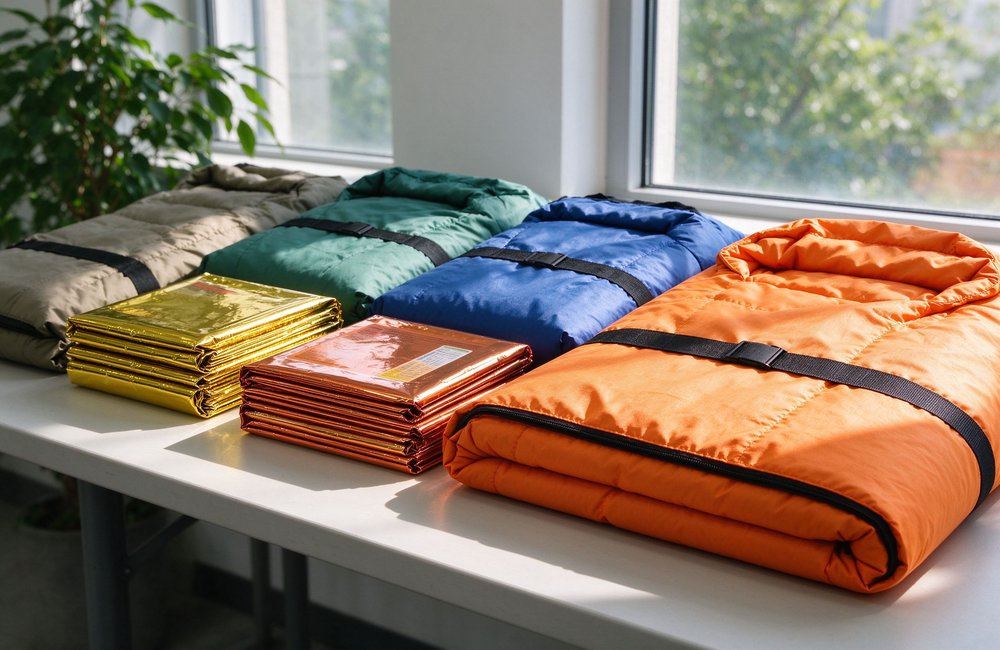
Bulk emergency blankets and sleeping bags in multiple colors stacked for the flu season, thermal blankets ready for bulk emergency blankets orders
The guide serves a household, a school and an office the same way: stock the essentials, prepare an isolation corner, rotate the dates, and confirm the order details with the factory before the season peaks.
A household of four, a classroom of thirty and an office floor of forty run the same layers at different volumes, and the supplier question stays the same in every version: confirm the sample, confirm the documents, confirm the delivery date before the season peaks.
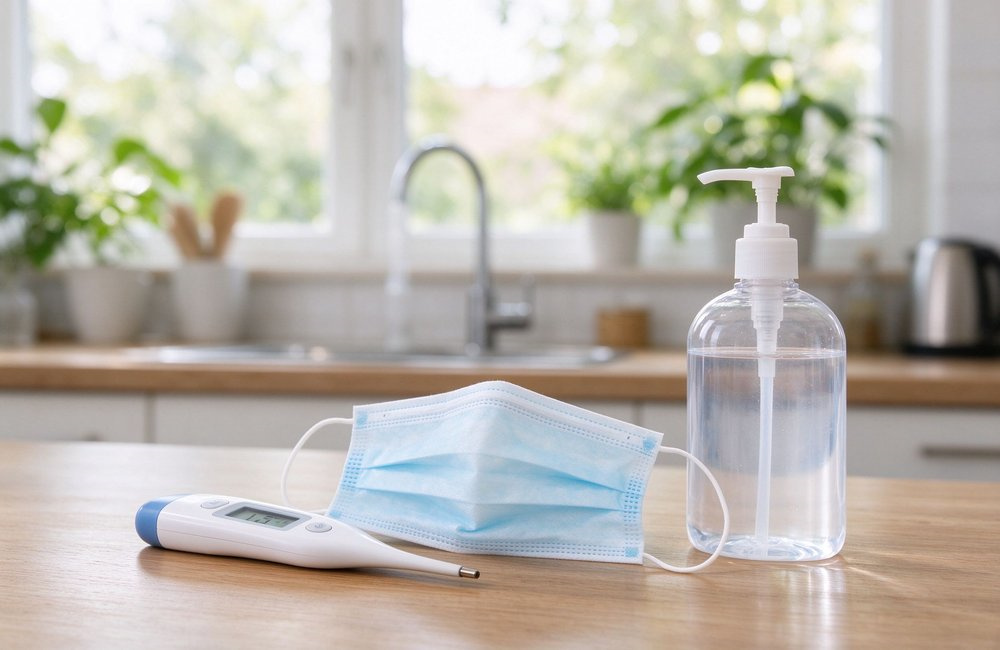
Thermometer, face masks and hand sanitizer bottles on a kitchen counter, flu kit essentials for home isolation and flu season preparedness
By the end you will know what belongs in a flu kit, how many face masks a household needs, how to store and rotate supplies, and what documents to confirm with a flu kit supplier for bulk emergency blankets orders.
The same checklist also covers the seasonal restock and the supplier confirmation, because a flu kit that is half-used from last winter and un-rotated since spring fails the care week long before the masks run out.
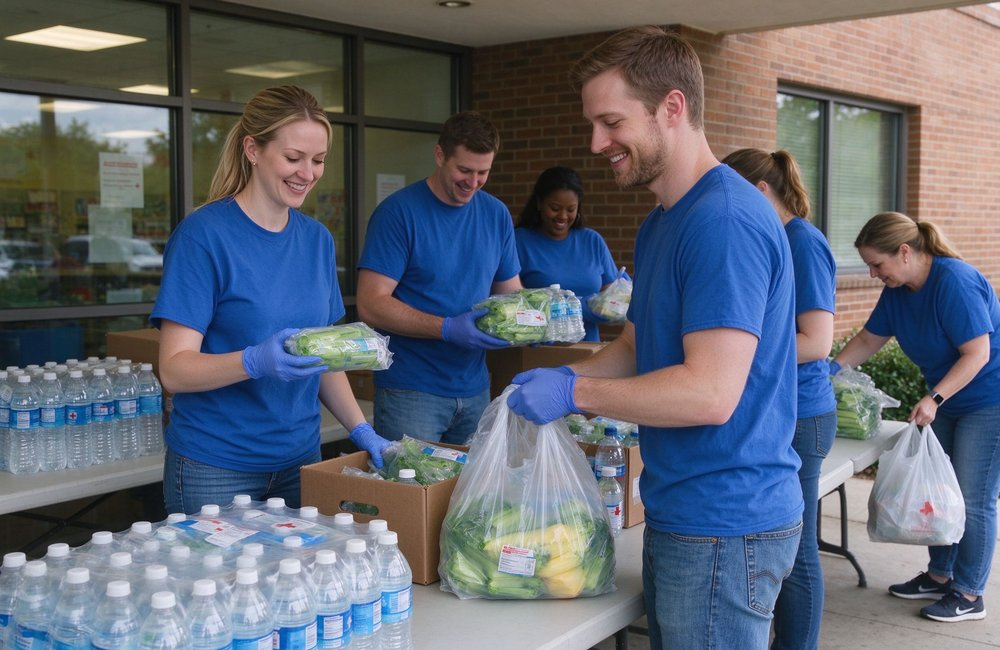
Volunteers distributing flu emergency kits with blankets and masks at a community point, relief supplies for the flu season response
A flu emergency kit shortens the sick week and protects the people around it. When one family member catches the flu, the kit provides the masks, sanitizer, thermometer and blankets that keep the rest of the household safe and the patient comfortable.
The kit is not a medicine cabinet in a box; it is a care routine in a box.
Masks and sanitizer slow the spread, the thermometer and first aid track the fever, blankets and drinks hold the comfort, and the radio and power bank keep the household connected when the flu week meets a power week.
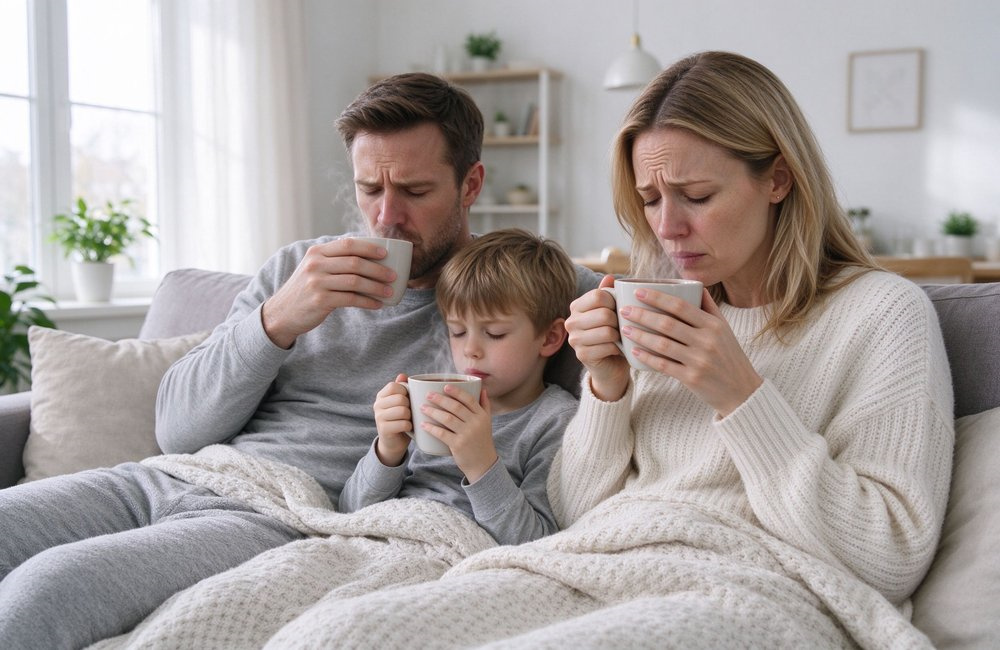
A flu season emergency kit placed in a family home, blankets and supplies stored near the sofa for the flu emergency kit checklist
Flu spreads through droplets when a sick person coughs or sneezes, and through surfaces the droplets touch. Face masks block the droplets, hand sanitizer kills the virus on hands, and ventilation clears the air, so the kit covers all three routes at once.
Droplets travel about two meters from a cough, and they land on handles, cups and screens that the healthy hand touches next.
The mask catches the droplets, the sanitizer breaks the surface chain, and open windows dilute the air, so the three routes are blocked with three different supplies from the same flu emergency kit.
The same three routes guide the isolation routine: the mask at the door, the sanitizer at the handle and the window open twice a day, so the household practices the same prevention the kit supplies.
A stocked kit removes the errand trip: no pharmacy run at midnight, no shared cup because the clean ones are upstairs. Supplies within reach mean rest starts earlier, hydration is steady, and the household returns to normal faster.
The stocked kit also removes the decision fatigue: nobody argues about whose turn it is to go out, because the supplies are already on the shelf.
The sick person starts the routine within the first hour, the caregiver follows the printed steps, and the household calendar loses only the days the flu genuinely takes.

A comparison chart showing flu and cold symptoms side by side, key differences for the flu emergency kit and flu season preparedness
The basics are the five layers every flu kit carries: masks, sanitizer, thermometer, first aid and hydration. The list below is the working core, and the quantities are sized for a family of four for one season.
The quantities follow the season: one box of masks per person plus a spare box for the caregiver, one sanitizer bottle per door, one thermometer per kit, one first aid pouch with dated medication, and two water jugs that are refilled each morning so hydration does not depend on a trip to the kitchen.
Layer
Core items
Quantity
Check
Prevention
Masks, sanitizer
1 box + 1 spare
Seasonal
Monitoring
Thermometer, first aid
1 kit
Dates on lid
Comfort
Blankets, food, drinks
1 per bed
Seasonal
Isolation
Masks, sanitizer, towels
1 corner
Per care week
Power
Radio, power bank
1 set
Seasonal
The table above maps the five layers to the quantities: the columns show the layer, the core items, the quantity and the check cycle. Buyers turn the same columns into a flu emergency kit supplies order, and the quantities scale from a family of four to a classroom of thirty.
Face masks bulk orders cover the household plus one spare pack, hand sanitizer sits at every door, the thermometer goes in the kit lid, first aid covers fever medication and throat lozenges, and water jugs keep hydration close to the bed.
Face masks bulk orders cover the whole household plus the school bag and the office drawer, because the mask travels with the person who needs it.
The thermometer goes back in the kit lid after every reading, so the next reading does not start with a search, and the sanitizer stays visible at the door where hands meet the shared cup.
The mask protects others from the sick person, the sanitizer protects the healthy from shared surfaces, and the thermometer tracks the fever curve. These three are the monitoring core: they tell the family whether rest is working or a doctor is needed.
First aid for the flu means fever management, throat care and wound basics, not antibiotics. Keep the medication list with the kit, note the expiry dates, and keep two water jugs filled so the patient drinks without leaving the bed.
First aid for the flu means comfort and monitoring, not prescription guesses: fever medication for the adult dose, lozenges for the throat, electrolyte drinks for hydration, and the thermometer readings recorded twice a day on the note pad in the kit lid.
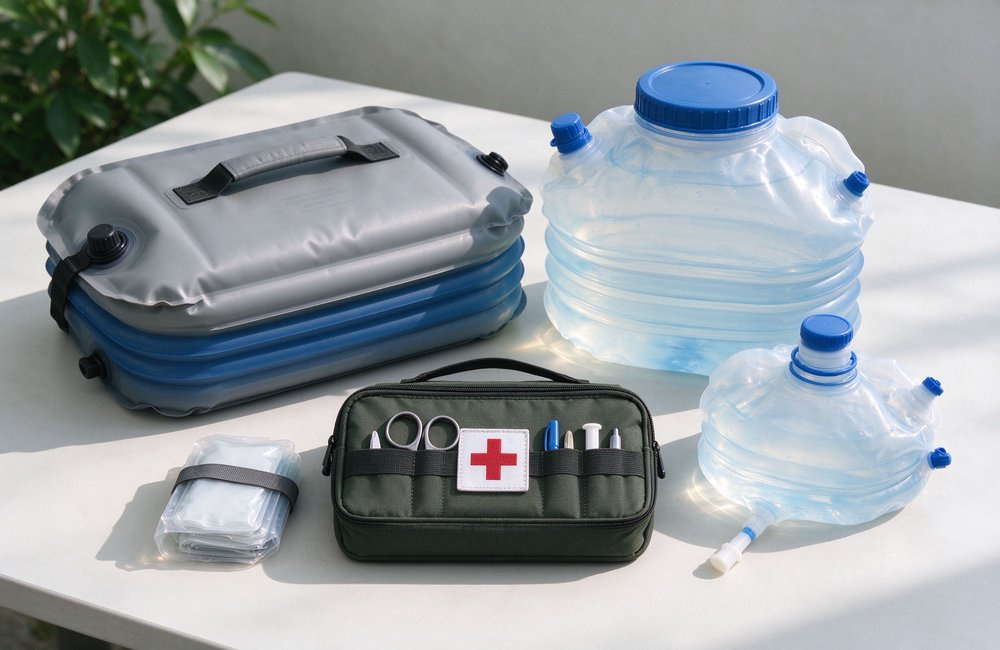
Foldable water jug next to a first aid kit with masks and wipes, flu kit essentials for hydration and home isolation supplies
Recovery is a comfort job: warmth, rest, fluids and gentle food. The flu recovery supplies layer turns a bare sickroom into a place where the body can heal.
The comfort layer is what makes the difference between a miserable week and a manageable one: a warm blanket for the chills, a light food tray for the appetite swings, and a rolled second blanket for the person who sleeps on the sofa to keep the rest of the household away from the isolation corner.
Bulk emergency blankets cover the patient and the spare bed, because fever brings chills and the temperature changes through the night. A second blanket stays rolled at the door for the healthy family member who sleeps in shifts.
The blankets roll small for storage and come out first in the care routine, before the medication and the food tray.
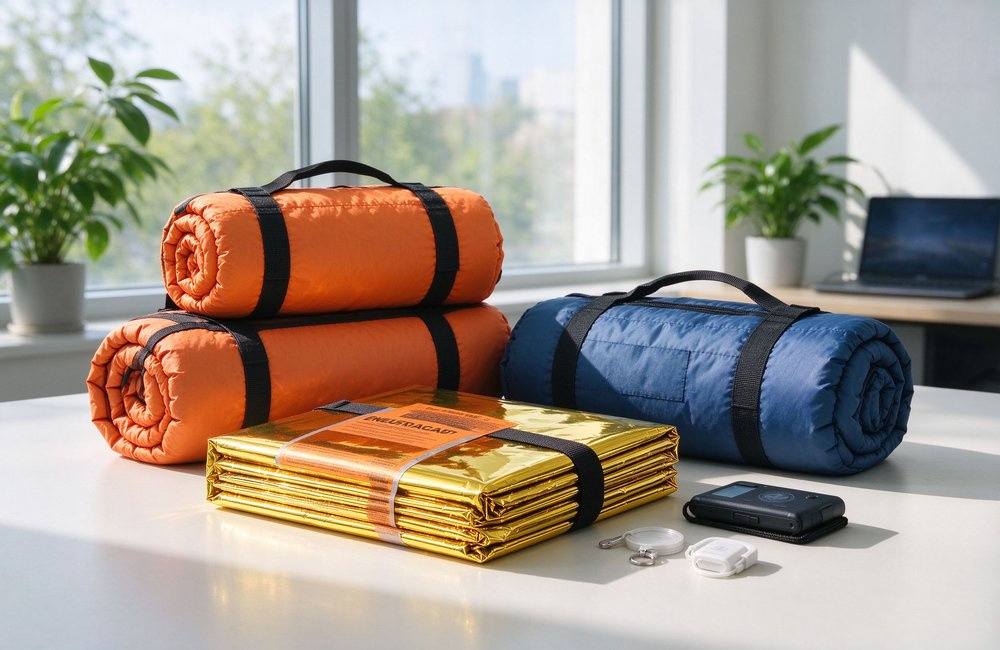
Thermal emergency blankets and a sleeping bag rolled together, bulk emergency blankets packed for flu recovery and shelter use at home
Soups, crackers, tea and electrolyte drinks sit in the kit with the cups and the tray. Easy food reduces the effort of eating during a fever, and drinks prevent the dehydration that slows recovery.
Soups and crackers travel on a tray that keeps the cup stable, tea holds the warmth, and electrolyte drinks replace what the fever burns.
The tray is part of the kit, not an afterthought, because a patient who does not have to stand up drinks more and recovers faster.

A child resting in bed with recovery supplies and a blanket beside them, flu recovery supplies for home isolation and family care
Thermometer readings twice a day, tissues within reach, lozenges for the throat and a notebook for medication times keep the recovery track. The elderly and children recover on the same plan with closer monitoring.
The notebook also holds the medication times, so the caregiver does not double-dose in the middle of the night.
Children are checked more often than adults, the elderly are checked with the same rhythm, and the notes are the record the doctor asks for on the phone.
The child and the elderly follow the same recovery plan with closer monitoring: the child is checked more often during the fever curve, and the elderly sleep with an extra blanket because the chills last longer.
Both recover in the same room, with the same supplies and the same care card on the kit lid.
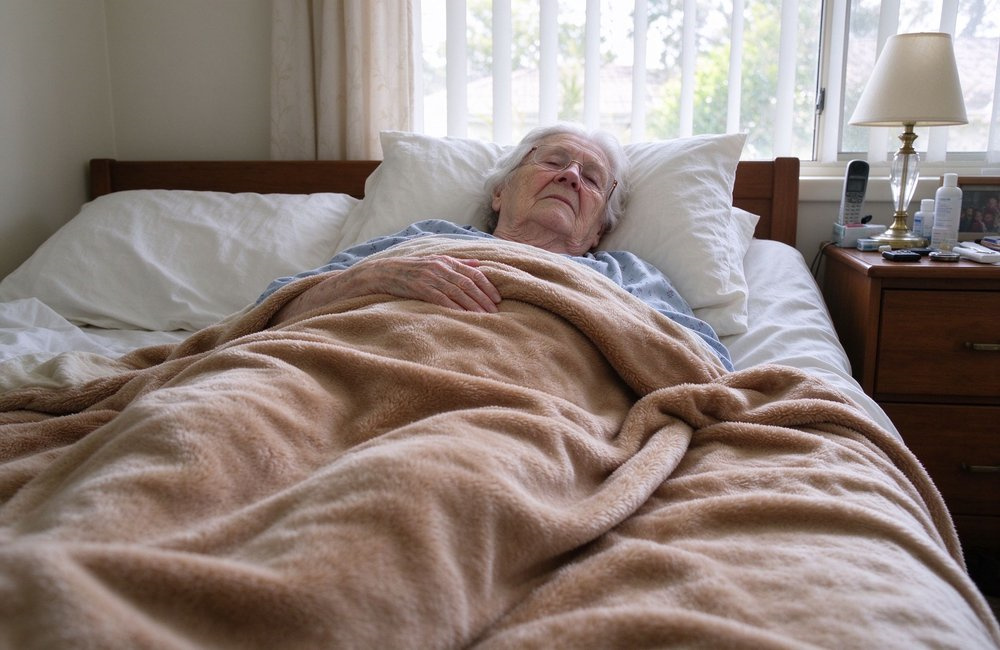
An elderly person resting under a thick thermal blanket during flu recovery, comfort supplies for the flu emergency kit and home care
Isolation is the part of the flu kit that protects everyone else. One room, one bathroom and a clear surface routine keep the virus from walking through the house with the caregiver.
Isolation is also the part that protects the healthy side of the house: the isolation corner has its own masks, its own towels and its own trash bag, and the caregiver follows the same mask-and-sanitize step every time the door opens, so the virus stays in the room.
The isolation corner holds: masks for anyone entering, sanitizer at the door, a trash bag for used tissues, separate towels and a pitcher of water. Ventilation twice a day clears the air while the patient stays warm.
Ventilation twice a day clears the air while the patient stays under the blanket, and the window opens for ten minutes while the door stays closed.
The fresh air routine is written on the isolation card, because a stuffy room slows recovery as much as a cold draft does.

A family opening a window for ventilation during home isolation, fresh air routine for the flu emergency kit and home isolation supplies
Disinfectant wipes clean the shared surfaces once a day: door handles, light switches, counters and the bathroom. The same supplies clean the sickroom last, so the healthy side of the house stays ahead of the virus.
Disinfectant wipes clean the shared surfaces once a day and the sickroom last, so the caregiver never carries the virus from the sick side to the healthy side.
The same wipes handle the door handles, the light switches, the counters and the bathroom, and the used wipes go into the isolation trash bag.
The wipes and the trash bag are restocked with the seasonal rotation, and the isolation card lists the cleaning order so the caregiver never skips the sickroom at the end of the day.

Healthcare workers in masks caring for flu patients, medical support for home isolation and the flu emergency kit response plan
The flu week can land during a storm week, so the kit carries the tools that keep the household in touch: a hand-crank radio, power banks and a printed contact list for the doctor and pharmacy.
The power layer is checked with the seasonal restock, not after an outage, because the storm that knocks the grid down arrives without warning and the flu patient cannot travel to fetch the radio.
The hand-crank radio delivers weather and health announcements without grid power, and charged power banks keep phones alive for calls and telehealth. Both are checked with the seasonal restock, not only after an outage.
The power banks charge the phone for the telehealth call and the school notification, and the printed contact list works when the phone dies. The three tools together keep the household informed, connected and reachable through the whole sick week.
Print the doctor, pharmacy, school and workplace numbers, and keep a charged phone at the isolation door. The printed list works when the phone dies, and the telehealth number works when travel is not safe.
Keep the printed list in the kit lid and one copy on the fridge, and update the numbers with the seasonal restock.
The telehealth number sits next to the doctor number, because the flu week is not the time to learn the phone tree of the local clinic.
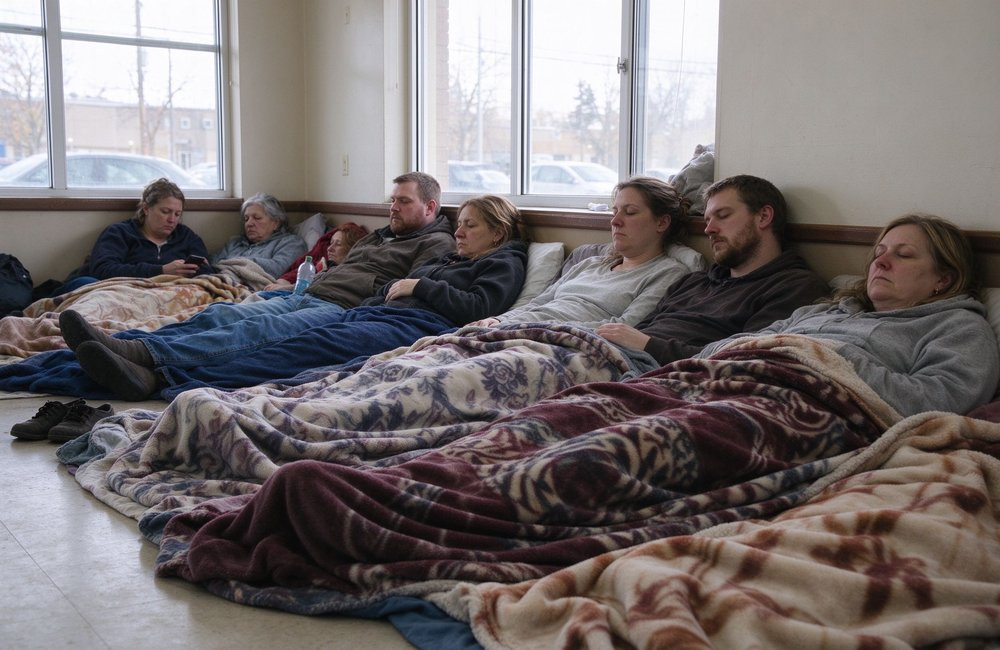
A bright community shelter with beds and blankets ready for flu season recovery, bulk emergency blankets for the community response
Schools and offices run the same layers at a different scale: prevention at the door, monitoring in the room, and isolation for the person who feels unwell before they travel home.
The scale difference is the only difference: a classroom checks its kit with the term calendar, an office checks it with the building calendar, and both follow the same confirmation checklist before the season peaks.
The quarterly walk refreshes both kits together, because the school and the office serve the same families and the same season.
A classroom flu kit holds masks, sanitizer, tissues, a thermometer and a first aid pouch. The teacher checks it with the term calendar, because the season peaks when the school year is in full swing.
The classroom kit is checked with the term calendar, because the flu season peaks when the school year is in full swing and the shared supplies run faster in a room of thirty children than in a house of four.
An office kit covers the floor: masks at reception, sanitizer at every meeting room door, spare blankets for the wellness room and a thermometer in the first aid cabinet. The building manager stocks it before the winter quarter.
The building manager stocks the floor kit before the winter quarter, confirms the dates at the quarterly walk, and replaces what the season used, so the office floor starts every peak with a full wellness room and a clear reception.
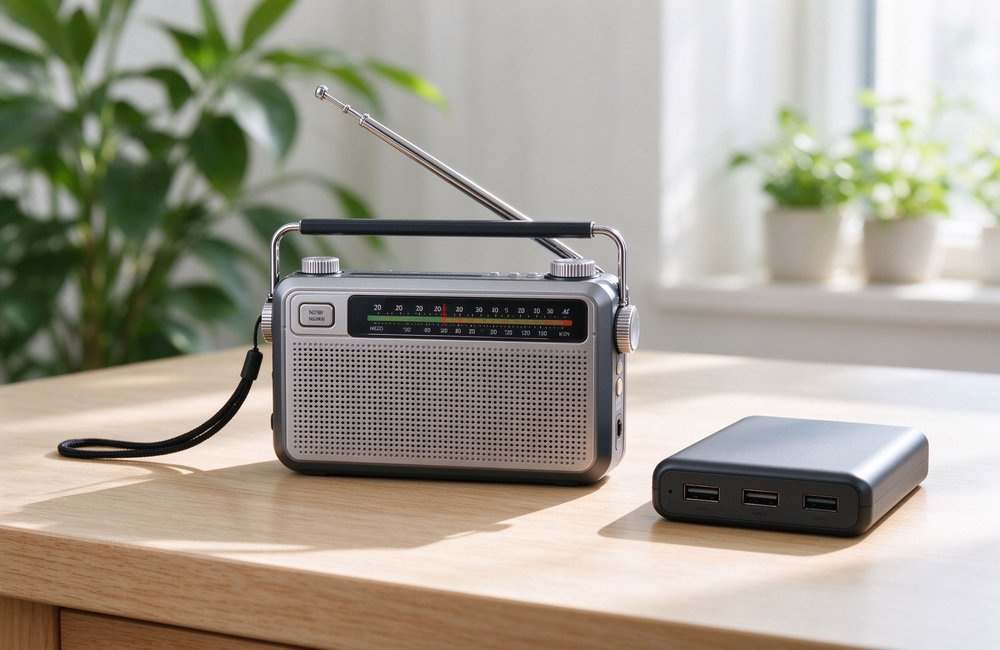
Hand crank radio and power bank on a table, emergency power backup for the flu kit and communication during the flu season
A flu kit fails when the quantities do not match the household or the workplace. The confirmation checklist below is the ten-minute check every buyer runs before ordering and every family runs before the season.
The ten-minute check covers the five layers, the dates on the lid and the contact list, and the same check runs twice a year with the seasonal restock, so the kit stays matched to the household and the workplace.
Confirm the kit covers: masks per person plus spares, sanitizer at every door, a thermometer, first aid with dated medication, blankets per bed, water jugs, a power backup and the printed contact list. Count one season of use, not one week.
The count is one season of use, not one week, because a care week consumes one box of masks and one bottle of sanitizer, and the spare pack covers the second case that arrives before the first one clears.
Size by head count and care needs: children need smaller masks and closer monitoring, the elderly need extra blankets and a plan for medication, and a shift-working family needs two isolation corners. The size changes, the checklist does not.
The sizing rule is simple: one mask box per person, one blanket per bed, one thermometer per kit and one isolation corner per household, then add the spares that make the kit usable instead of merely stocked.
The checklist also carries the spare quantities: one extra mask box, one extra sanitizer bottle and one extra blanket, because the second case usually arrives before the first one clears, and the spare box is the difference between a managed week and a second errand run.
Storage keeps the kit ready and rotation keeps it honest. The flu emergency kit follows the same rule as every other kit: check the dates, replace the used items, and log what the season consumed.
Storage also keeps the kit findable: the bin sits in the hall closet, the label faces out, the dates face the reader, and the caregiver knows exactly where the mask box sits at two in the morning.
Masks, sanitizer, medication and lozenges carry expiry dates. Rotate them with the seasonal restock: use the old stock first, replace it with fresh, and mark the dates on the lid. The rotation log is the proof the kit was ready.
The rotation rule is first-in-first-out: the old stock goes to the front of the drawer, the fresh stock goes behind it, and the dates are marked on the lid so the seasonal restock does not have to empty the bin to check them.
Restock twice a year: before the autumn peak and after the winter wave. The autumn restock refreshes the dates and the winter restock replaces what the season used, and both restocks update the contact list and the medication doses, so the kit starts every peak full and current.
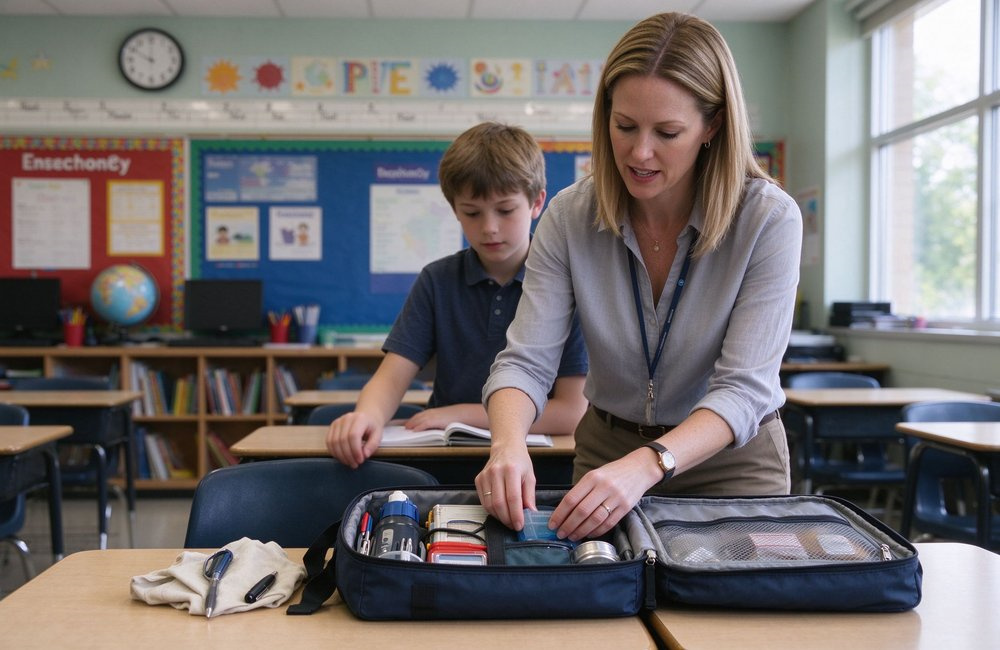
A teacher checking a classroom flu kit with masks and sanitizer, flu kit for schools and office preparedness in one box
The supplier confirms the same things the buyer checks: materials, quantities, documentation and delivery. The questions below turn a catalog order into a confirmed contract.
The supplier conversation is the same conversation the buyer runs for every kit: what is in the box, what the documents say, and what the sample proves. The answers are written down and filed with the order, not remembered.
Order step
What to confirm
Document
Receiving
Sample
Mask grade, blanket count
Sample record
Keep as reference
Bulk run
Packing list, volumes
Packing list
Match sample
Certificates
Applicable certificates
Declaration
File with order
Delivery
Cart count, condition
Delivery note
Inspect every cart
The table above is the supplier confirmation list: the columns show the order step, what to confirm, the document and the receiving check. Schools and offices use the same columns when they order face masks bulk, hand sanitizer wholesale and bulk emergency blankets.
Ask the factory for a packing list, material declarations and applicable certificates before the bulk run. Confirm the face masks bulk order grade, the hand sanitizer wholesale volume and the bulk emergency blankets count, and keep the sample as the receiving reference.
The sample stays on the shelf as the receiving reference, and every delivered cart is compared against it before the lot is accepted, because the sample is the only honest proof that the bulk run matches the order.
The comparison covers the mask grade, the blanket count and the sanitizer volume, so the bulk order arrives exactly as the sample proved.
Health guidance follows the same official baseline each season. The NWS general emergency preparedness guidance frames how households and workplaces build a ready plan, and the Red Cross survival kit supplies checklist lists the baseline pandemic preparedness supplies every care kit should hold.
Use the same Red Cross emergency survival kit supplies checklist with this flu emergency kit essentials list when you scale supplies to a school or office.
Certification language is written, not assumed: check the documents, do not fill the gaps from memory. The packing list, the material declaration and the applicable certificates travel with the order, and the sample matches the delivered cart before the lot is accepted.
The declaration is read and filed, the packing list is counted against the cart, and the applicable certificates are matched to the products, so the buyer does not repeat a certification that the document does not state.
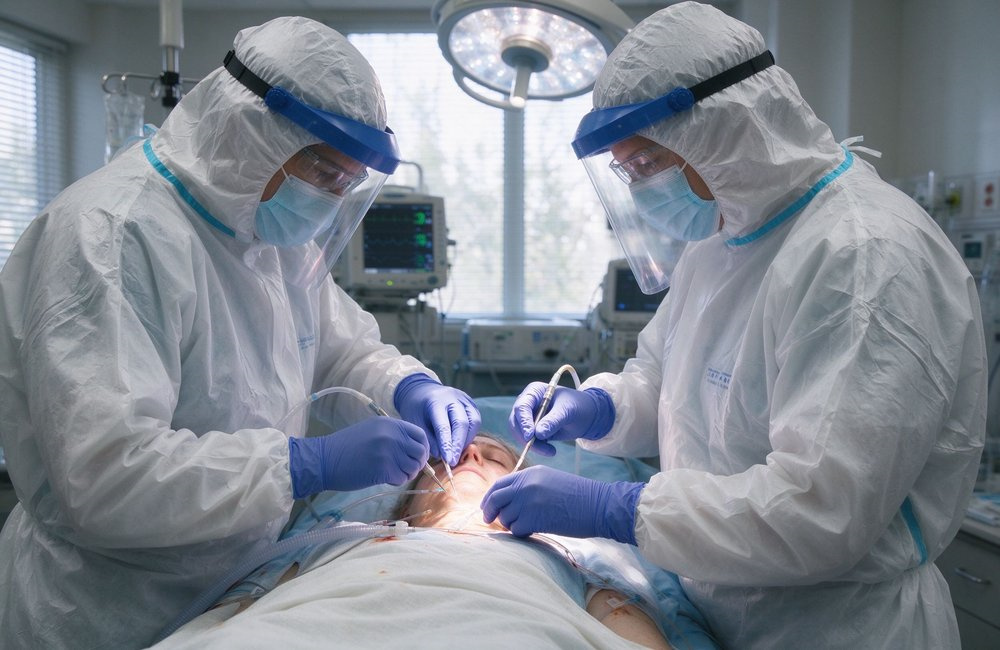
A medical team in PPE gowns, masks and gloves during an isolation drill, infection control for the flu emergency kit supplies
Flu arrives every year, and a stocked flu emergency kit essentials list shortens the sick week instead of starting it with a midnight pharmacy run.
Getting the flu emergency kit essentials right before the peak is the single biggest time-saver.
The flu emergency kit essentials stay the same every season, so one flu emergency kit essentials checklist serves home, school and office buyers.
Our masks sanitizer and recovery guide and bulk flu response supplies help buyers close these gaps before the first case.
Schools bring home germs fast. Families need masks, sanitizer, a thermometer and blankets sized to the head count as part of their illness hygiene kit and epidemic preparedness kit.
Classrooms share cups and desks. We supply bench-level kits with masks and sanitizer at the door, scaled to thirty children per room.
Open-plan offices spread illness quickly. We supply reception masks, meeting-room sanitizer and a wellness-room blanket set for each floor as part of the office illness hygiene kit.
Clinics and relief points need consistent epidemic preparedness kit sets with packing lists and samples, plus bulk respiratory protection supplies for staff and bulk respiratory protection supplies for waiting areas. Each relief-point epidemic preparedness kit is restocked before each season.
Pharmacy shelves empty fast. Stock masks and sanitizer before the autumn peak, not after the first case at home.
Masks run out first. Keep one spare box in the isolation corner so the caregiver does not carry the supply through the house.
Phones die during a sick week. Print the doctor, pharmacy and telehealth numbers and keep them in the kit lid.
Medication and sanitizer expire. Rotate the kit twice a year with the seasonal restock and note the dates on the lid.
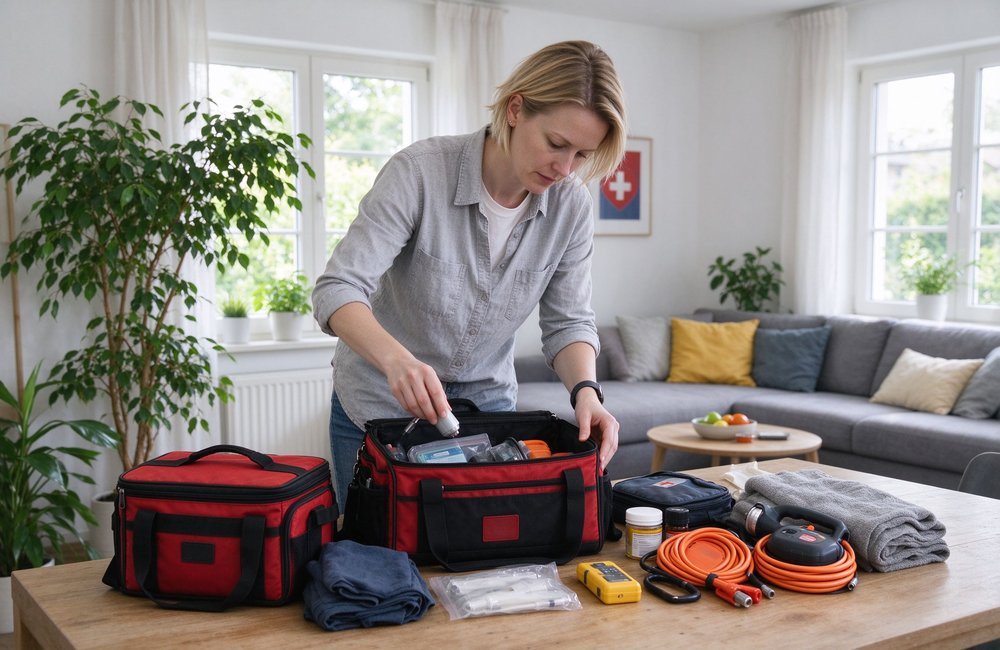
A person organizing flu kit supplies into labeled containers, thermometer, masks and blankets ready for the flu emergency kit checklist
Choose the kit by setting and head count. The table below matches each kit to its use.
|
Kit setting |
Best for |
Core contents |
Typical buyer |
|
Home kit |
Families, one season |
Masks, sanitizer, thermometer, blankets |
Households |
|
Classroom kit |
Schools and daycares |
Masks, sanitizer, tissues, first aid pouch |
Schools |
|
Office kit |
Workplaces |
Reception masks, meeting sanitizer, wellness blanket |
Offices |
|
Bulk response kit |
Clinics, relief points |
Scaled PPE, hydration, private-label bags |
Institutions |
Pair the kit with bulk respiratory protection supplies matched to the setting, and order the same set for every room so routines stay consistent. We supply these bulk respiratory protection supplies at any scale.
Use this quick rotation table alongside the kit choice.
|
Season task |
Action |
Timing |
|
Pre-peak restock |
Refresh masks, sanitizer, meds |
Before autumn |
|
Mid-season check |
Count used items, note dates |
Once a month |
|
Post-wave reset |
Replace used stock, update contacts |
After winter wave |
Run these restock, check and reset tasks on the seasonal calendar, so the face masks, sanitizer and blankets start every flu peak full and the dates on the lid are always fresh for the care week.
Basic care keeps the kit ready for the next wave.
We supply all of the above as bulk flu response supplies and pandemic preparedness supplies for wholesale and OEM. Each epidemic preparedness kit is built to the same checklist.
The same flu emergency kit essentials list applies to every epidemic preparedness kit order, and every epidemic preparedness kit ships with packing lists and samples.
Orders over 200 sets can be private-labeled; MOQ and lead time are per contract.
Every order follows the same flu emergency kit essentials checklist, so buyers get consistent contents at home, school and office.
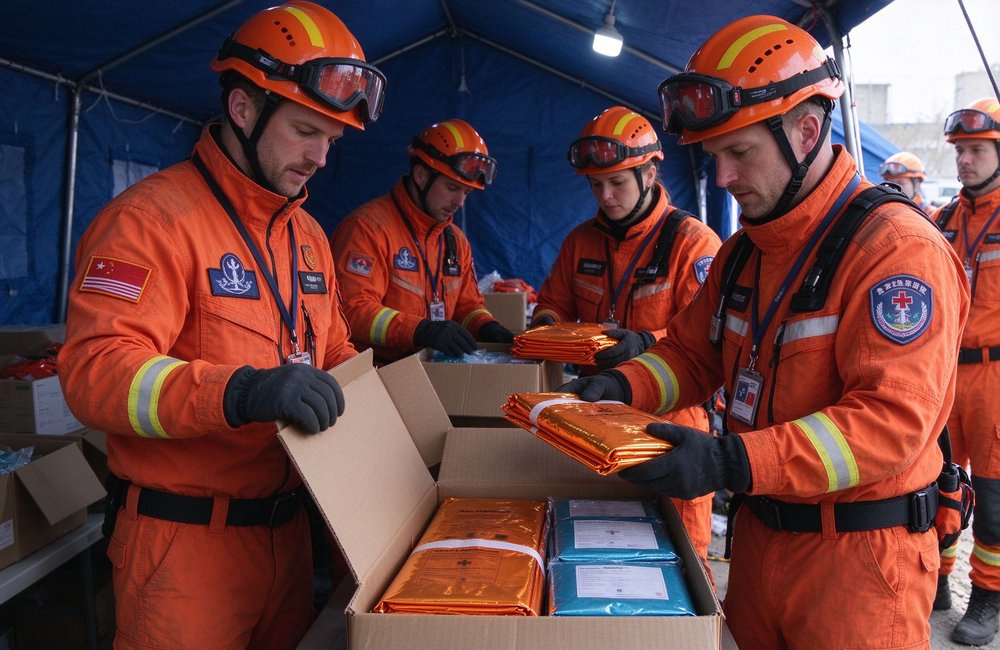
Workers unboxing and delivering bulk emergency blankets and flu kits, supplier check for the flu kit supplier and bulk orders
Face masks, hand sanitizer, a thermometer, first aid supplies, blankets, water jugs, a power backup and a printed contact list, sized to the household or workplace. The same layers cover a family of four and a classroom of thirty, with the quantities scaled to the head count.
One box per person plus one spare box, because masks are replaced after each use during the care week and the sick person uses the most. Keep the spare box in the isolation corner, so the caregiver does not carry the mask supply through the house.
At every door and near shared surfaces, so hands are cleaned before touching handles, cups and the thermometer. The door handle and the light switch get the same wipe twice a day, because the virus travels on the surfaces the healthy hand touches first.
In a labeled bin with the dates on the lid, away from heat and sunlight, with the medication list and the expiry log inside. The bin label lists the five layers, so the caregiver checks the whole kit without opening every box.
Twice a year with the seasonal restock: refresh the dates before the autumn peak and replace what the winter wave used. The same rotation refreshes the medication doses and the contact list, because the season changes both.
Yes. Thermal blankets hold body heat during chills, stay light for transport, and a second blanket protects the spare bed and the caregiver shift. Keep one blanket rolled at the isolation door for the person who sleeps in shifts.
Fever medication, throat lozenges, tissues, antiseptic wipes and a thermometer, with the medication expiry dates noted on the lid. Record each dose and each reading in the note pad, so the doctor sees the whole fever curve on the phone.
Yes. Classrooms need bench-level kits with masks and sanitizer at the door, and office floors need reception masks, meeting room sanitizer and a wellness room blanket set. Both kits follow the same confirmation checklist before the season peaks.
One room with a mask, sanitizer, tissues, separate towels, a water pitcher and ventilation twice a day, cleaned last after shared surfaces. The isolation card prints the routine, so the caregiver follows the same steps every time the door opens.
Before the autumn peak and after the winter wave, so the kit starts every peak full and the dates are fresh for the care week. The dates are the proof the kit was ready when the first case arrived.
A packing list, material declarations and applicable certificates, with one assembled sample as the receiving reference for the bulk order. The documents are filed with the order, because the inspection and the audit review the same folder.
Yes. Schools and offices order face masks bulk, hand sanitizer wholesale and bulk emergency blankets with the same confirmation checklist and the same sample reference. The sample stays on the shelf as the receiving reference, and every delivered cart is compared against it.

A recovered family walking in a park in sunlight after the flu season, recovery planning linked to the flu emergency kit supplies
The flu emergency kit is one layer in a complete preparedness plan. Pair it with the universal emergency kit checklist, which covers water, food, first aid and lighting for every season, and keep the flu-specific layers on top.
The universal checklist holds the water, food, first aid and lighting that every emergency needs, and the flu kit adds masks, sanitizer, blankets and the isolation routine, so the two boxes answer a flu week and a storm week from the same shelf.
Review the flu kit twice a year with the seasonal restock: check the dates, replace the used items, and confirm the contact list. The same review rhythm refreshes the universal kit, so the whole preparedness plan stays ready.
The same review rhythm refreshes the universal kit, so the whole preparedness plan stays ready when the flu week and the storm week arrive in the same season.
The quarterly walk checks the dates on both kits, replaces the used items and confirms the contact list, so the preparedness plan stays current across the whole season and the household never enters a peak with a half-used kit.
Pautan Mesra :
hak cipta © Custom Disaster - Relief Bedding: Tents, Sleeping Bags, Blankets Hak cipta terpelihara
pasukan profesional untuk perkhidmatan !