Kategori
Carbon monoxide (CO) poisoning kills more than 400 Americans every year and sends tens of thousands to emergency rooms, yet it is one of the most preventable household emergencies. Relief organizations staging CO poisoning emergency supplies — detectors, ventilation gear, warmth alternatives, and education materials — can reduce winter deaths by 50% or more. This guide covers what frontline responders actually need, what to stock in bulk, and how to build a distribution program that reaches the highest-risk households.
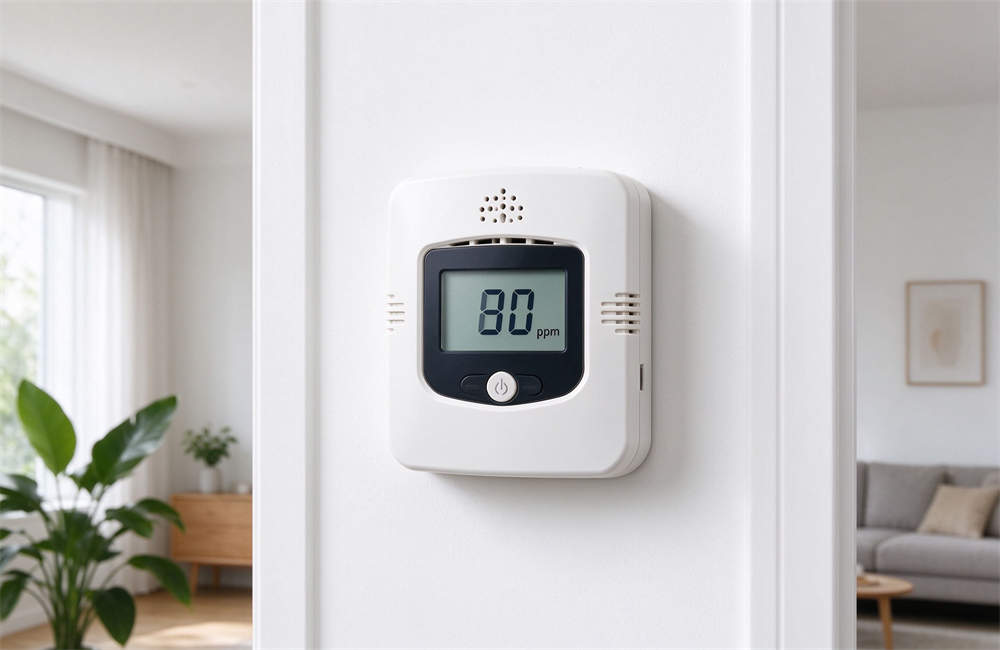
Digital CO alarm detector with ppm display.
CO is called the silent killer because you can't see it, smell it, or taste it. It builds up in enclosed spaces when fuel-burning appliances — furnaces, generators, space heaters, gas stoves — don't vent properly. The CDC estimates that more than 50,000 Americans go to the ER every year for accidental CO exposure, and winter is the peak season: families seal up their houses against the cold, run unvented heaters, and start generators in the garage when the power goes out.

Family staying warm under blankets, no combustion needed.
For relief organizations, CO poisoning is different from most disasters. There's no flood, no fire, no headline event. It's a slow, silent exposure that happens one household at a time. That makes it harder to respond to — you can't see the damage on the evening news. But it's also one of the easiest disasters to prevent with a cheap alarm and a simple conversation. Building a CO prevention program means combining detection, safe warmth, and education into one winter outreach effort.
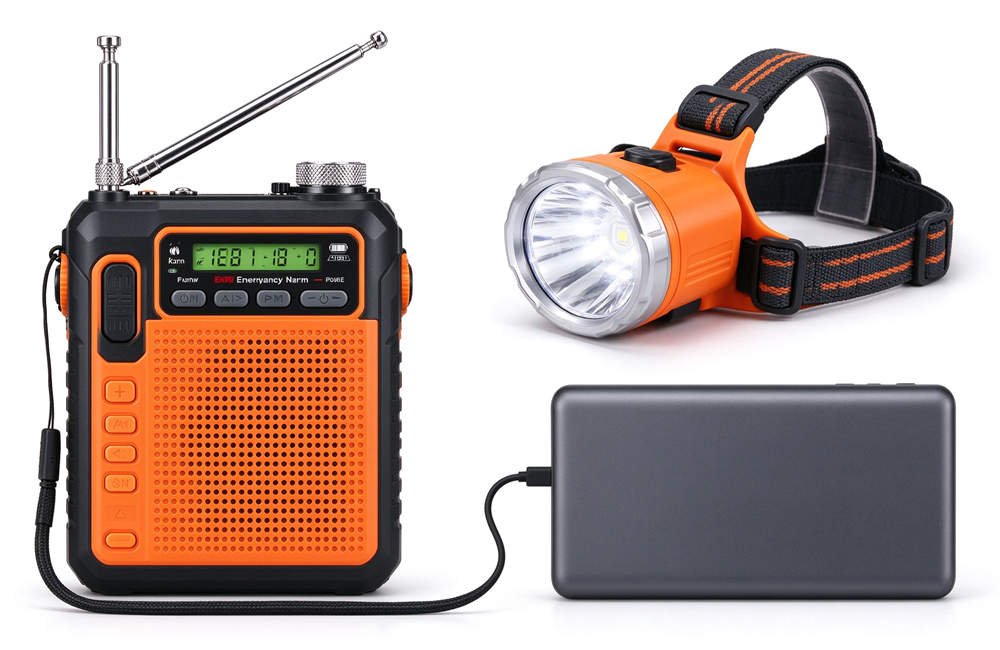
Emergency radio, headlamp, power bank off-grid gear.
On this page
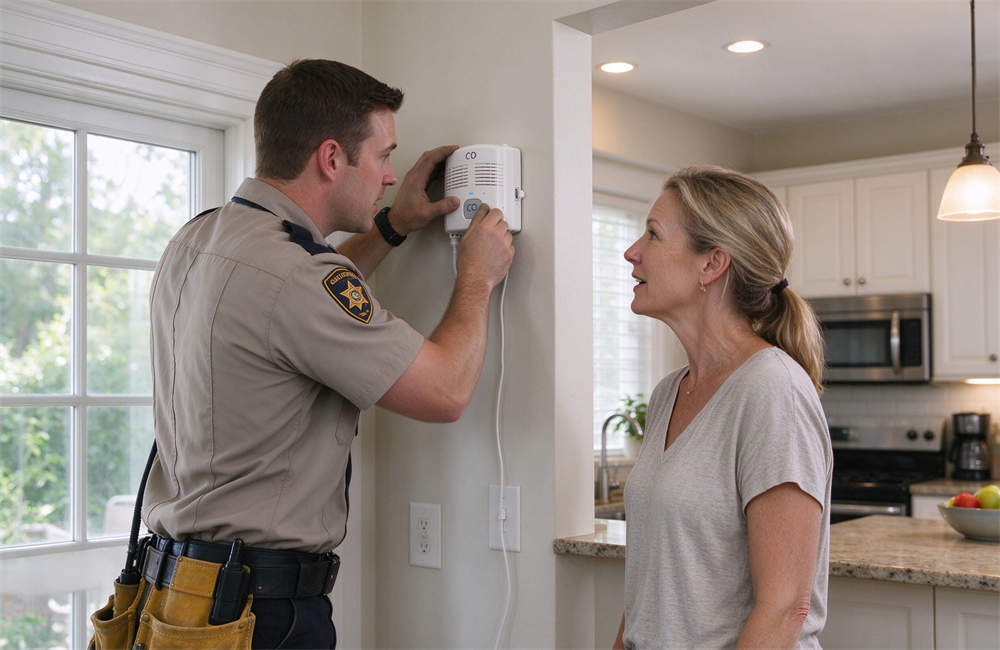
Worker installing CO alarm for a homeowner.
CO poisoning is a year-round problem, but winter is the worst. When temperatures drop, households seal windows, turn on unvented space heaters, and — when the power goes out — run generators in garages, basements, and even inside homes. The EPA publishes a CO prevention guide that every relief organization should be familiar with, because the messages are simple, and they save lives.
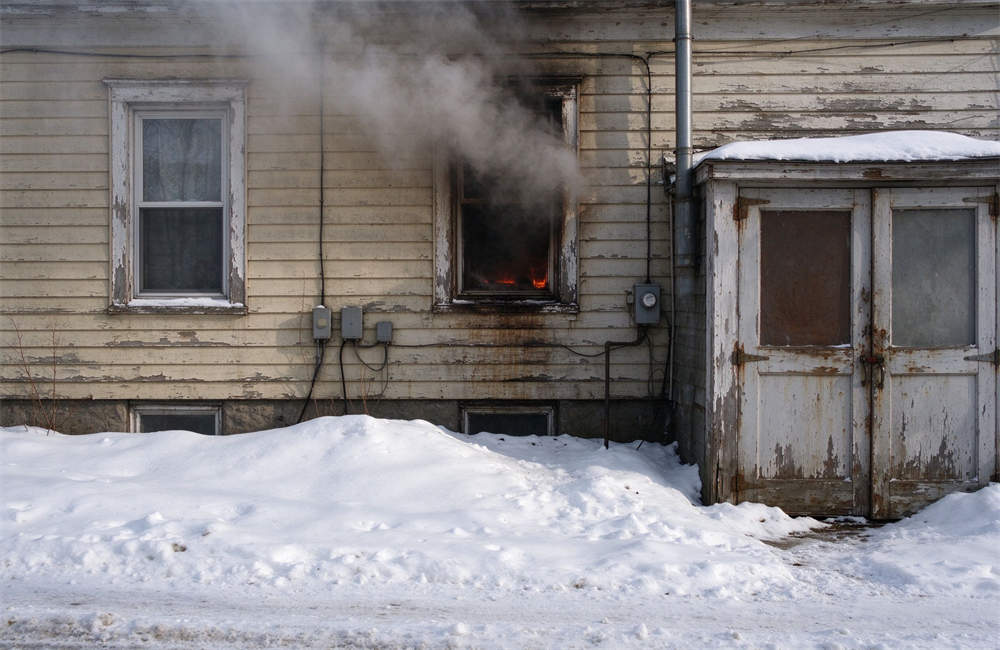
Dangerous heating: smoke from window in winter.
The most dangerous thing about CO is that the symptoms mimic flu: headache, nausea, dizziness, fatigue. People go to bed feeling sick and don't wake up. By the time a family realizes something is wrong, it's often too late. The single most effective intervention is a $25 battery-powered CO detector outside each bedroom. Every door-to-door program that installs detectors in high-risk homes saves lives.
For relief organizations, the opportunity is clear. You're already going into homes for other reasons — winter warmth checks, post-storm visits, fire safety inspections. Adding a CO detector check and a short conversation costs almost nothing, and it's the difference between a routine visit and a life saved. We supply carbon monoxide emergency supplies and winter emergency supplies wholesale for exactly these programs.
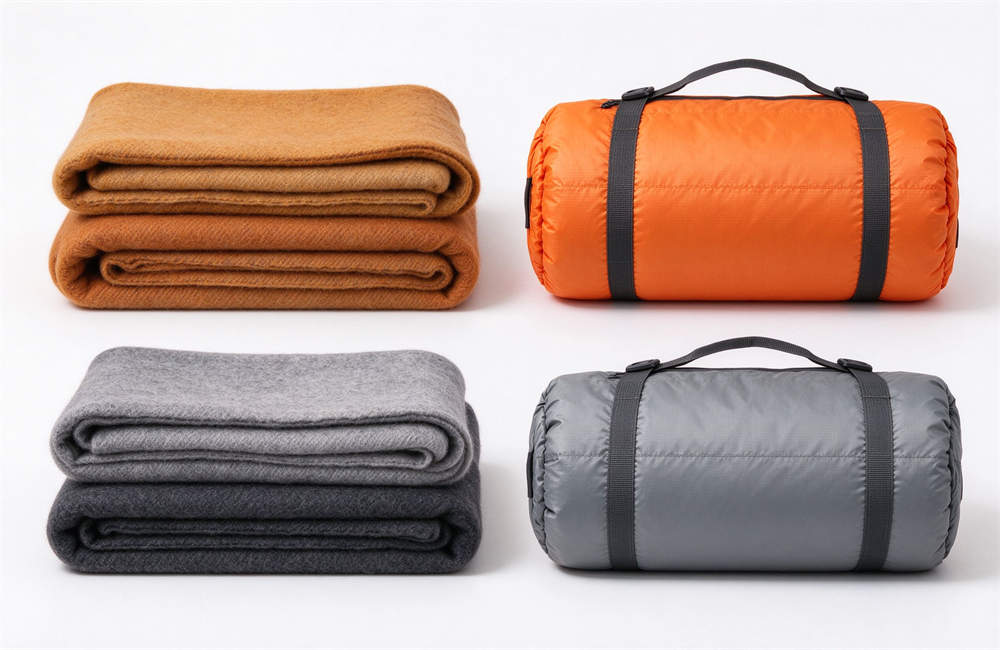
Wool blankets and sleeping bags: safe warmth alternatives.
Not every household needs the same level of intervention. The riskiest homes share a set of characteristics that relief workers should learn to spot:
|
Risk Factor |
Why It Matters |
What You Do |
|
Unvented gas space heater |
Burns oxygen, emits CO directly into room |
Install detector, educate on ventilation |
|
Generator used during outages |
Run in garage/basement, CO seeps into home |
Educate on 20-foot rule, post warning signs |
|
Older furnace not inspected |
Heat exchanger cracks, CO leaks into ductwork |
Refer to furnace inspection program |
|
Cooking with gas stove/oven for heat |
Common in winter, extremely dangerous |
Educate, provide safe heaters, install detector |
|
Household with elderly or children |
More vulnerable to CO effects at lower doses |
Prioritize detector installation |
|
Multi-unit housing with shared vents |
CO from one unit can drift into others |
Building-wide detection program |
The National Heart, Lung, and Blood Institute notes that children, older adults, and people with heart or respiratory conditions are more affected by CO at lower concentrations. That means a household with a 75-year-old and a toddler is a much higher priority for CO prevention program distribution than a young, healthy household — even if the appliance setup looks similar.
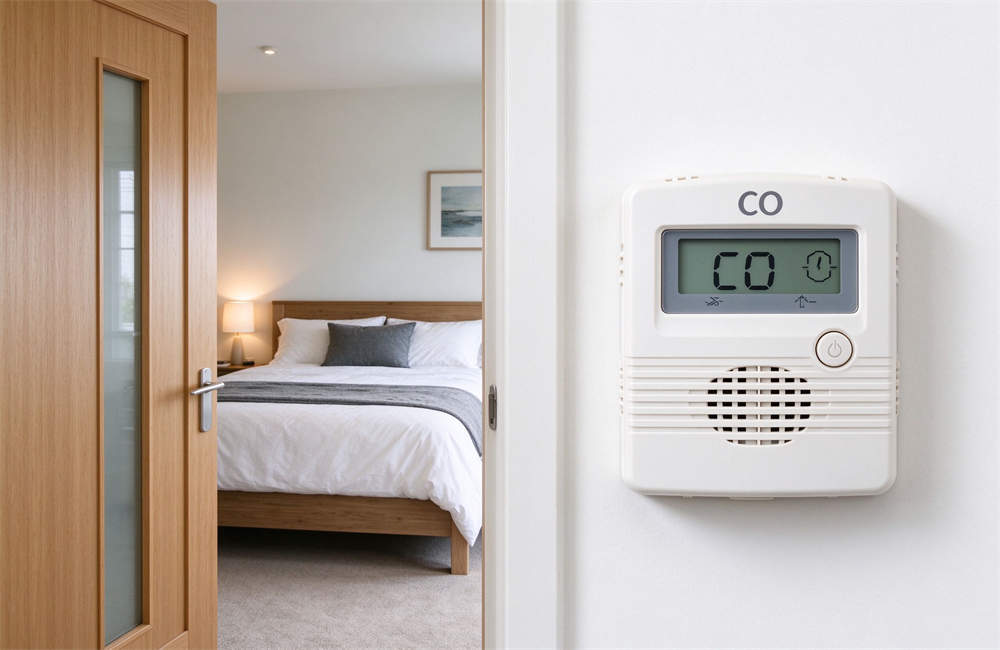
CO alarm mounted by bedroom door.
The CO detector is the single most important item in your stockpile. For relief distribution programs, we recommend certified units with these key features:
For relief distribution programs, look for these features:
10-year sealed battery. You don't want to come back next year to find the battery died. A sealed 10-year battery means the detector works out of the box and doesn't need maintenance for a decade.
Digital display. A detector that shows the actual CO level (in parts per million) is far more useful than one that only beeps. Relief workers can see the reading, talk to the family about it, and decide whether to ventilate or call the fire department.
Interconnected option (where possible). In larger homes or multi-family units, interconnected detectors alarm all at once — if one goes off, every unit beeps. That matters when someone is sleeping in a bedroom down the hall.
UL / EN50291 certification. Certified detectors meet independent safety standards. We provide full certification documentation with every order, so your procurement team has everything they need for audits and compliance.
We work with partner manufacturers to supply certified bulk CO detectors in carton quantities (24 or 50 per carton), with the sealed 10-year battery and digital display that relief programs need. We also supply the safe warmth alternatives — wool blankets, emergency sleeping bags, hand-crank radios, and LED headlamps — that reduce the need for dangerous combustion heaters in the first place.
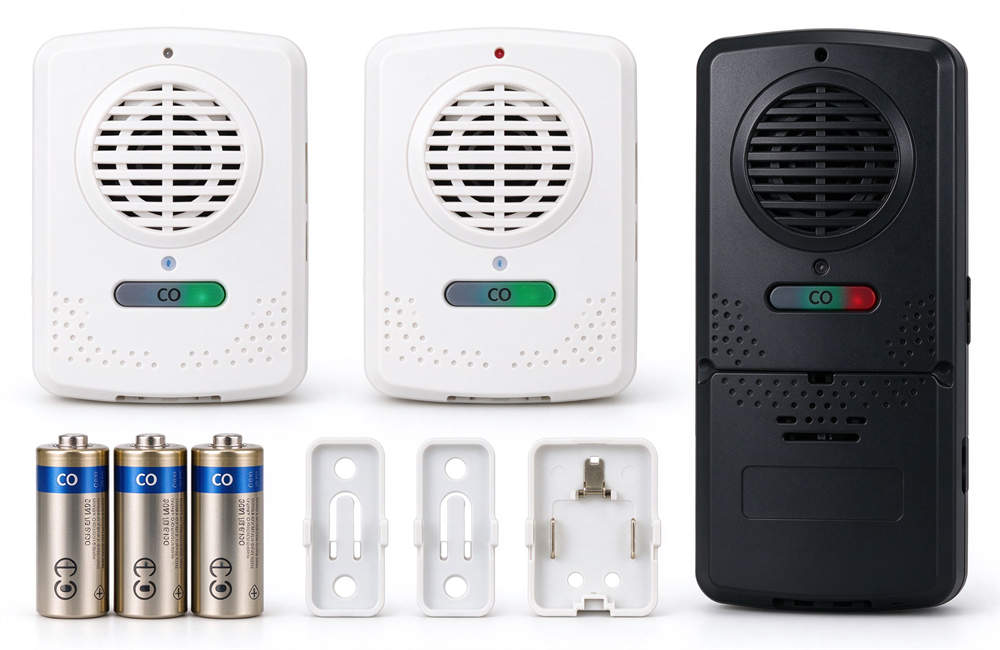
CO alarm family: multiple models and accessories.
A studio or one-bedroom needs at least one detector outside the sleeping area. A 2-3 bedroom home needs two — one outside each sleeping wing. A multi-level home needs one per floor. If there's an attached garage, add one extra between the garage and the house.
Mount detectors at shoulder height (CO mixes with air, so ceiling mounting isn't required — unlike smoke detectors). Keep them at least 15 feet from fuel-burning appliances to avoid nuisance alarms.
When a detector shows a reading, responders need to know what the number means. This table from CDC guidelines helps:
|
CO Level |
Symptoms |
Action |
|
0–50 ppm |
No symptoms, 8-hour exposure limit |
Normal indoor air, ventilate |
|
50–100 ppm |
Mild headache after 1–2 hours |
Ventilate now, find the source |
|
100–200 ppm |
Headache, dizziness after 1–2 hours |
Evacuate, call fire department |
|
200–400 ppm |
Severe headache, nausea after 45 min |
Emergency — get out immediately |
|
400+ ppm |
Life-threatening within 1–2 hours |
Call 911, do not re-enter |
The digital display matters here: a detector that only beeps doesn't tell you whether it's a 50 ppm nuisance or a 400 ppm emergency. A display lets responders make that call on the spot. We only supply certified CO detectors with display for this reason — the extra $5 per unit is worth it when you're doing door-to-door installs.
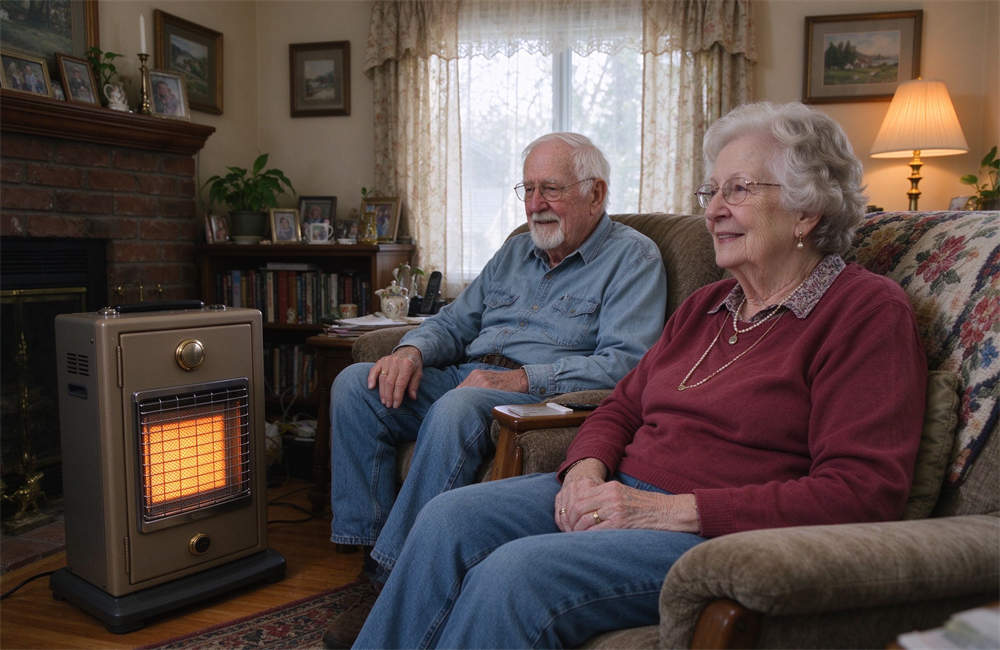
Elderly couple staying warm safely at home.
When CO is detected, the first response is fresh air. Relief workers going into high-risk homes should carry basic ventilation gear that helps them clear a space quickly and safely:
Portable window fans. A 20-inch box fan in a window, blowing outward, clears a living room in minutes. For higher-level incidents, a high-velocity industrial fan moves more air. We stock both sizes.
N95 / P100 respirators (with CO cartridges where needed). Standard N95 doesn't filter CO — but for short entry to open windows and shut off appliances, a half-face respirator with the right cartridges gives responders a few minutes of safe work time. For longer entries, SCBA is required — but that's fire department territory, not relief worker territory.
CO meter / ambient air monitor. A handheld CO meter lets responders measure levels as they enter, confirm the space is clear before family re-entry, and document readings for the record. We supply these in small quantities for program coordinators, not for every volunteer.
Every volunteer team gets two 20-inch box fans for clearing rooms. The program coordinator has one high-velocity industrial fan per county. Only the team lead carries a handheld CO meter and a half-face respirator — most volunteers install detectors and talk to families, they don't enter high-CO spaces.
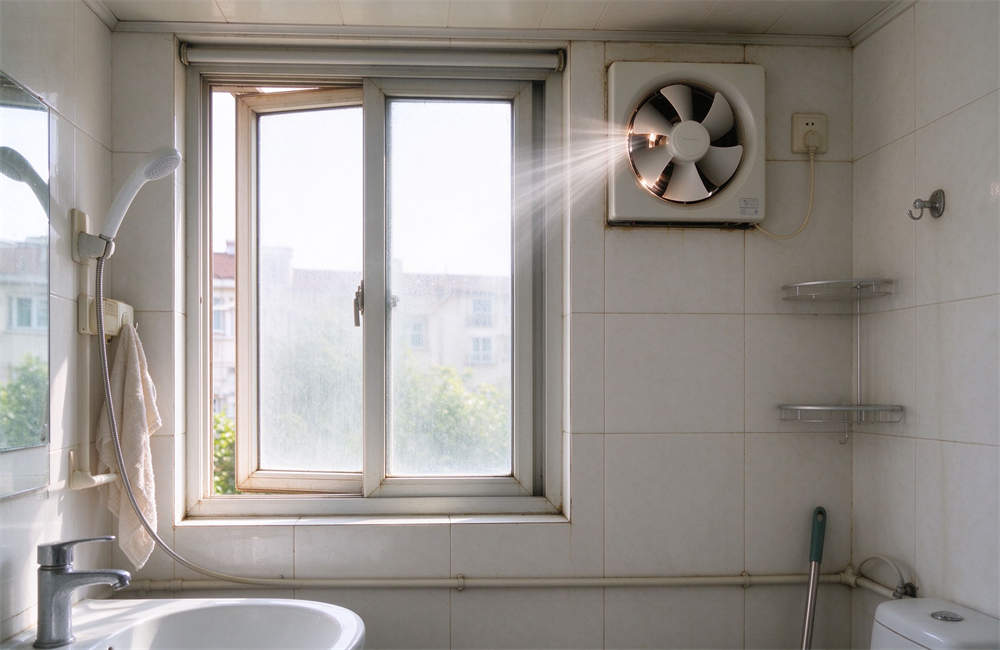
Window open for ventilation, exhaust fan running.
The reason people run dangerous heaters and generators in the winter is simple: they're cold. If you want to prevent CO poisoning, you have to offer a safe alternative. Relief programs that hand out detectors without addressing the warmth need are treating the symptom, not the cause. These emergency heating alternatives are the foundation of any effective CO prevention program.
Safe warmth alternatives to stock in bulk:
Wool blankets and emergency sleeping bags. A thick wool blanket in a cold bedroom doesn't burn any fuel, doesn't emit any CO, and keeps people warm through the night. We supply 3.5lb wool blankets and emergency sleeping bags in carton quantities for winter warmth programs — the safest CO-safe warmth alternatives available.
Safe electric heaters (when power is on). When the grid is working, a sealed electric space heater is safe — no combustion, no CO. For households that can safely use electric heat, these are a good alternative to unvented gas heaters.
Weatherization supplies. Plastic window kits, door sweeps, and weatherstripping keep the heat in without burning any fuel. They're cheap, they last years, and they reduce the need for dangerous heating in the first place.
For households with no power at all, the equation is harder. You can't run an electric heater. But a thick wool blanket, a sleeping bag, and a hot water bottle (warmed on a camp stove used outside) are still safer than an unvented gas heater in a closed bedroom.
When you're counseling a household about safe warmth, it helps to lay out the risk side by side. An unvented gas heater has high CO risk — it emits CO directly into the room, and while it doesn't need power, the risk is severe. An electric space heater has zero CO risk because there's no combustion, but it needs power. A wool blanket plus sleeping bag has zero CO risk, needs no power, and is the lowest-cost safest option.
The message for households is simple: the safest way to stay warm in a power outage is to add layers, not add combustion. A 3.5lb wool blanket over a sleeping bag keeps most people warm down to freezing temperatures. We supply these in carton quantities exactly for this conversation — when a family says "we're cold," you hand them a blanket instead of a heater.
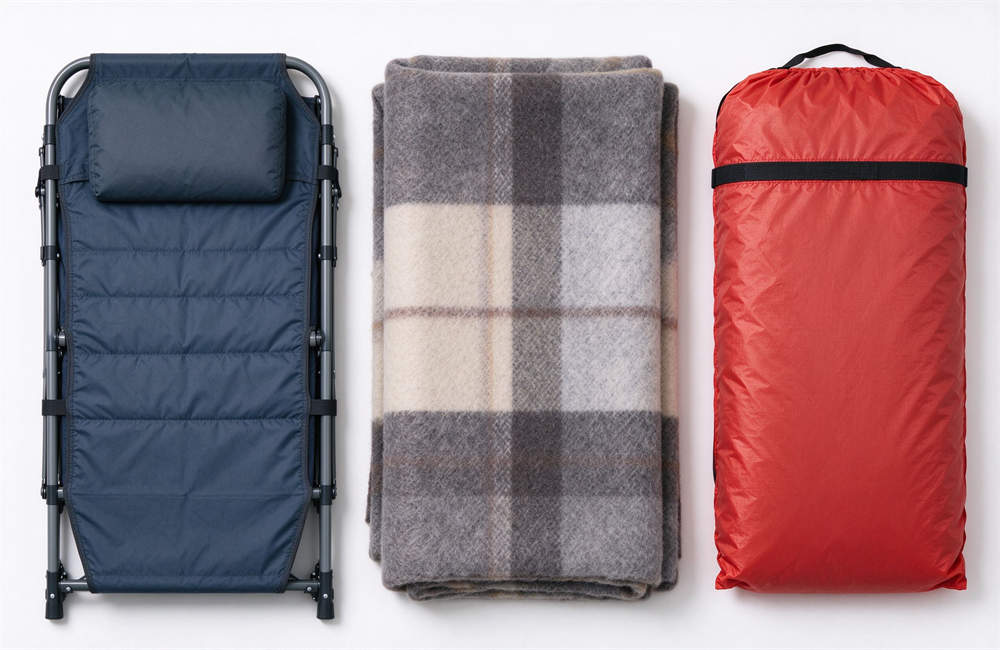
Shelter gear: cot, blanket, sleeping bag.
Generators are the single biggest cause of winter CO deaths. People buy a generator after a storm, run it in the garage because they're worried about theft, and wake up (or don't) to find CO has seeped into the house. A clear generator placement guide distributed with every generator saves lives.
Every relief program that distributes generators should also distribute generator safety supplies:
"20-foot rule" warning signs. Big, weatherproof signs that say "GENERATOR MUST BE AT LEAST 20 FEET FROM DOORS, WINDOWS, AND VENTS." Post them on the generator itself, and hand them out with every generator distribution.
Generator extension cords. A generator that's 20 feet from the house needs a heavy-duty extension cord to reach the panel. Distribute 25-foot and 50-foot 12-gauge cords with generators so people don't try to run the generator closer because they don't have a cord long enough.
CO detectors near generator storage areas. Even when the generator is outside, an extra detector in the garage or basement gives a backup alarm if someone brings it closer than they should.
The Ready.gov generator safety page has one simple message: never run a generator inside a garage, basement, crawl space, or screened porch — even if the garage door is open. Carbon monoxide can build up even with ventilation, and it seeps into the living space through wall sockets and floorboards.
Every generator distribution should hand out this quick reference. The only safe placement is an open driveway at least 20 feet from the house — CO disperses in open air. Under a patio awning is unsafe because the awning traps CO near windows. Inside a garage with the door open is unsafe because CO seeps into the living space through walls. On a screened porch is unsafe because the screened porch is enclosed and CO builds up. A basement or crawl space is deadly within minutes. Next to a tent or shelter is unsafe because CO flows downhill and into enclosed spaces.
The 20-foot rule is the minimum. If the wind blows toward the house, move it further. When in doubt, further is safer.
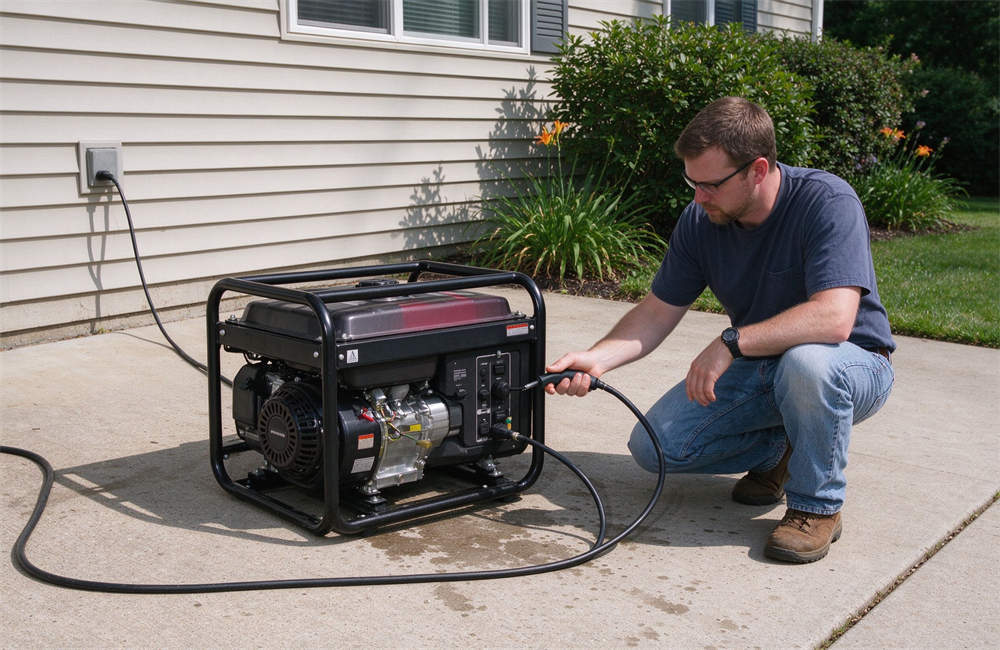
Generator running outside, away from the house.
The cheapest CO prevention tool isn't a detector — it's a conversation. Relief workers going door to door should carry simple, one-page education materials in multiple languages that explain:
- What CO is and why it's dangerous
- Common sources (heaters, generators, stoves, furnaces)
- Symptoms of CO exposure (headache, nausea, dizziness)
- What to do if the alarm goes off (get out, call 911, ventilate)
- How to use a generator safely (20 feet from the house, outside only)
Door hangers work particularly well. You leave a hanger on the doorknob even when nobody's home — it gets seen. We can print custom door hangers and flyers with your organization's logo and contact info, in English, Spanish, and other common local languages.
The goal isn't to write a textbook. It's a one-page, plain-language handout that a 10th-grader can read and act on. Every additional paragraph reduces the chance anyone reads it at all.
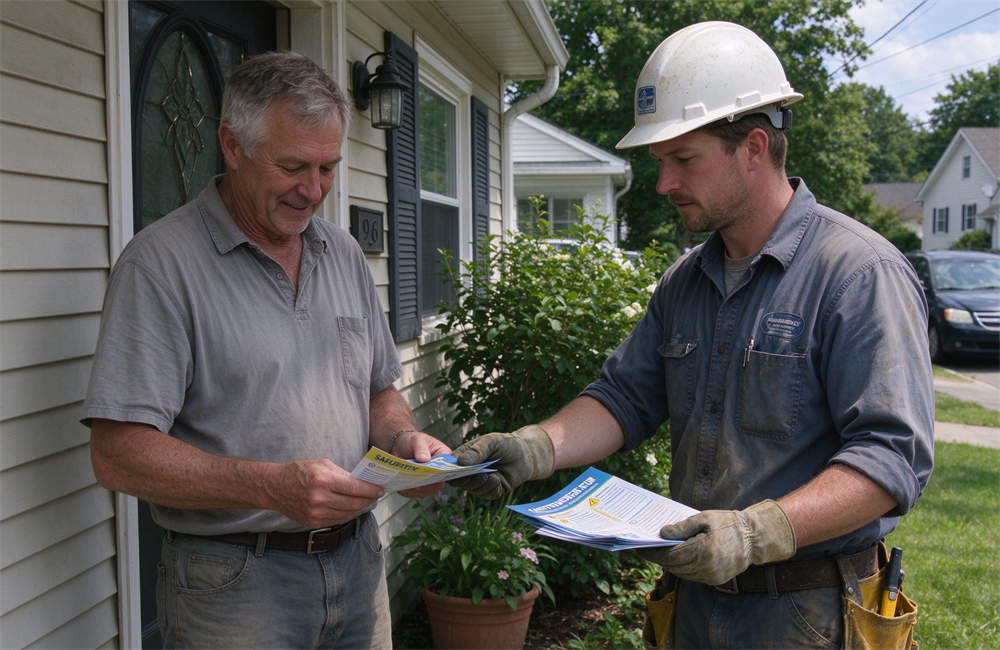
Worker doing door-to-door CO safety education.
Relief workers aren't first responders, but you're often the first person to notice a CO problem. Here's the simple protocol every volunteer should memorize:
1. If the CO alarm is going off, leave immediately. Don't investigate. Don't open windows first. Get everyone out of the house and call 911. Fire departments have CO meters and ventilation gear — that's their job, not yours.
2. If you smell something, or someone has headache/nausea symptoms, open windows. Don't enter a closed space alone. Open doors and windows from outside, then wait for the fire department.
3. Shut off the fuel source if you can safely reach it. If it's a gas stove on in the kitchen, and you can shut the valve from the doorway without entering the space, do that. Otherwise, wait for the fire department.
4. Don't go back inside until the fire department says it's safe. CO can linger. Don't be the person who goes back in to grab a phone and passes out.
The #1 reason CO deaths happen is that people think they have the flu. The symptoms are almost identical — headache, nausea, dizziness, fatigue. But there are critical differences responders should teach households to look for.
If symptoms improve when the person goes outside, that's CO — they feel better within minutes of fresh air. Flu symptoms stay the same outside. If multiple people in the same home are sick at once, that's CO — everyone in the home feels it together. Flu usually hits one person first, then others later. CO poisoning usually doesn't cause a sore throat or cough, while flu commonly does. CO poisoning doesn't cause fever, while flu does. And CO symptoms often get worse at night or in the bedroom — the worst sleeping area.
The rule of thumb: if two or more people in the same home have headache/nausea, and they feel better when they go outside, assume CO until proven otherwise. Don't wait for the alarm to go off. Get everyone out and call the fire department.
We supply pocket reference cards with this protocol printed on them, in the same multi-lingual format as the education flyers. Every volunteer on a door-to-door team should have one clipped to their lanyard.

Person feeling dizzy, family assisting outside.
Apartment buildings and mobile home parks are the highest-ROI places for CO prevention programs. In a single-family home, a CO leak affects one family. In a 24-unit building, a shared vent or a leaky furnace can affect everyone on the floor.
For housing authorities and property managers, we supply bulk CO detectors for building-wide installation programs, with the interconnected option that alarms every unit when one detector goes off. We also supply the signage and education materials that go into every unit at move-in.
Mobile home parks are especially high-risk. Mobile homes have tighter envelopes, smaller ductwork, and more unvented space heaters per household than stick-built housing. A park-wide detector program is one of the highest-impact interventions a county health department can fund.

Multi-story apartment building exterior.
After a disaster, displaced families end up in tents, cars, and temporary structures — and these create their own CO hazards that relief programs need to plan for:
Tents with combustion heaters. Families who lost their homes often try to stay warm by running a propane or kerosene heater inside a tent. Even with the tent flap open, CO builds up to dangerous levels overnight. The fix isn't a rule — it's a wool blanket and a sleeping bag that removes the need for the heater entirely.
Sleeping in a running car. People who can't find a shelter end up sleeping in their cars with the engine running for heat. Even in a parking lot, CO can seep in if the tailpipe is blocked by snow. We supply hand-crank emergency radios that keep people informed without needing the car battery to run.
Generator near a tent. When the power is out and people are camping near a generator, they move it closer at night because they're cold. The "20-foot rule" applies to tents too. We supply LED headlamps and battery-powered lanterns so people don't need to run a generator for light.
For temporary shelter CO safety programs, the combination of winter emergency warmth kits — wool blankets, sleeping bags, hand-crank radios, and LED headlamps — reduces the need for combustion heat and light, which is the most reliable CO prevention in a disaster zone.
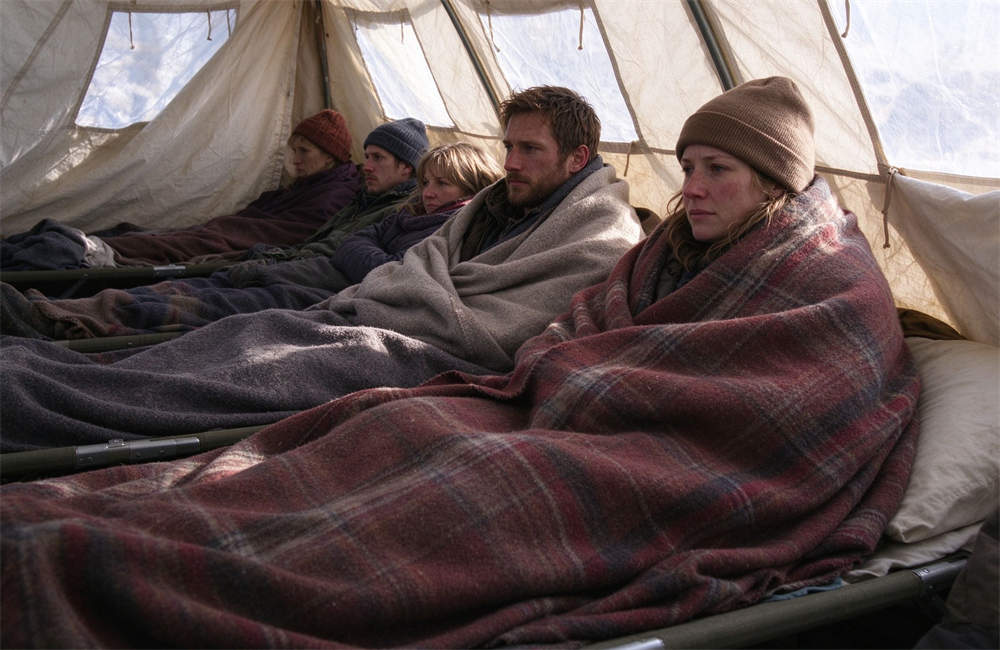
People staying warm together in relief shelter.
A CO awareness program is one of the most cost-effective life-saving interventions in emergency management. Here's what a typical program costs:
|
Item |
Cost per Unit |
Quantity for 1,000 Households |
|
CO detector (10-yr sealed battery, digital) |
$20–$30 |
1,500 (1.5 per home) |
|
Education flyer (printed) |
$0.10 |
2,000 |
|
Door hanger |
$0.20 |
2,000 |
|
Generator safety sign |
$1.00 |
200 (for generator distribution events) |
|
Wool blanket (winter warmth alternative) |
$8–$12 |
500 (for cold-weather referrals) |
Compare that to the cost of a single CO poisoning hospital stay — which CDC puts at more than $30,000 — and the CO detector installation program pays for itself after preventing one ER visit. It's one of the highest-return investments in public safety.
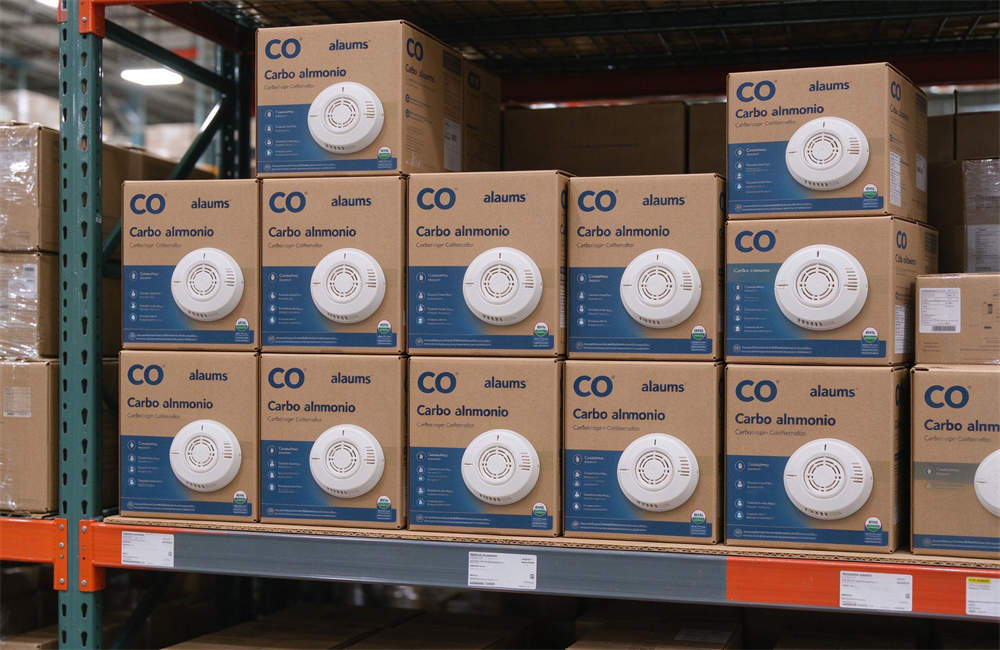
Bulk CO alarms in cases, ready for distribution.
As a manufacturer supplying CO prevention programs worldwide, here's what you can expect when you work with us:
Certified detectors, full documentation. We supply UL / EN50291 certified detectors, with the full test report included with every order. Our detectors come with a 10-year sealed battery and digital display — the standard for relief distribution programs where you can't follow up on every household.
Program-level pricing for large orders. If you're outfitting 1,000 units, we offer carton and pallet quantities at program-level pricing, with volume discounts for multi-year contracts.
Custom outreach materials. Your organization's logo, your contact number, your local language mix — we print flyers, door hangers, and pocket cards to your spec. We've printed outreach materials in English, Spanish, French, and several other languages for teams across North America and Europe.
Safe warmth alternatives in one order. We also supply wool blankets, emergency sleeping bags, hand-crank radios, and LED headlamps — so you can reduce the need for dangerous combustion heaters in the same program that installs detectors.
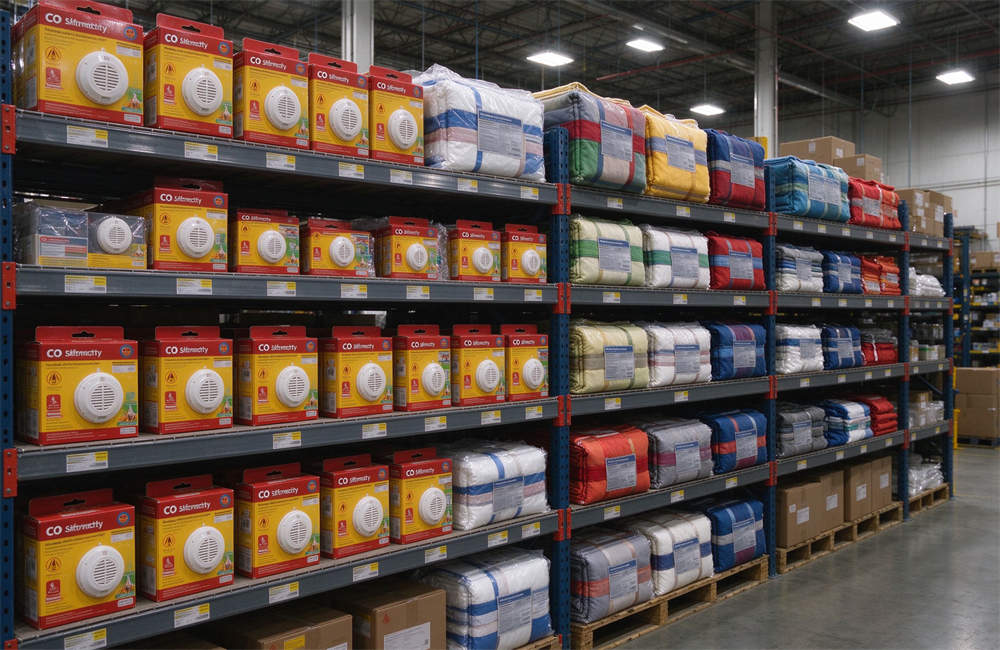
Warehouse: CO alarms and emergency supplies on shelves.
Tip 1: Plan detector quantities properly. Best practice is one detector outside each sleeping area, plus one on every level. For a typical two-story home, that's 2-3 detectors, not one. We can help you calculate exact quantities based on your housing stock.
Tip 2: Pair every detector with education. People who've never heard a CO alarm might think it's a smoke alarm. Pair every detector with a 2-minute conversation about what to do when it beeps. We provide bilingual outreach cards with every detector order to make this easy.
Tip 3: Schedule annual follow-ups. Detectors last 10 years, but annual check-ins keep the program working — and give you a chance to replenish blankets and warmth gear at the same visit.
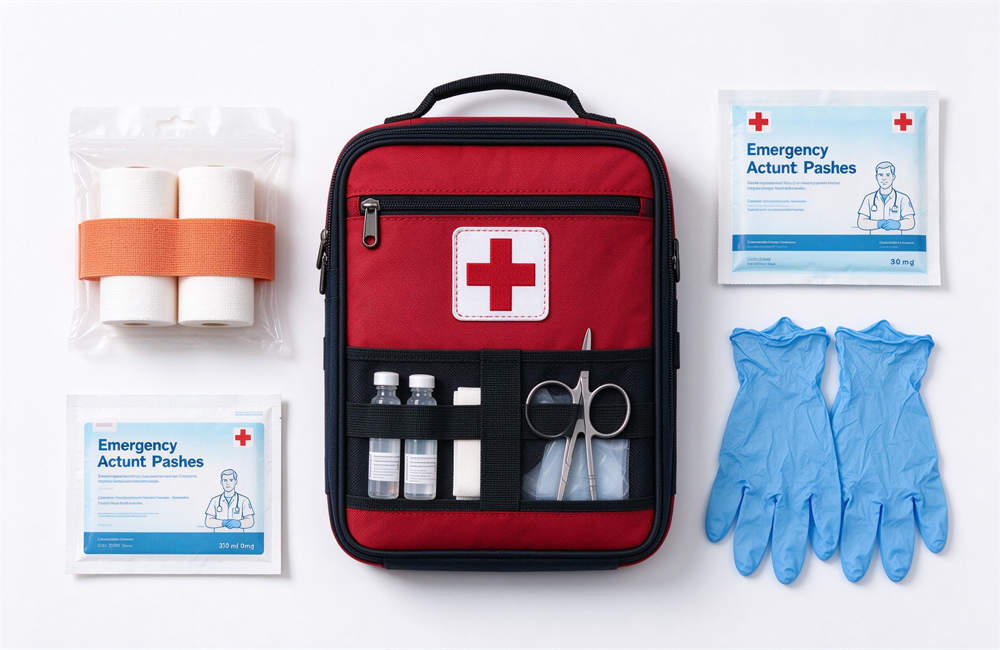
Emergency first aid kit and medical supplies.
One outside each sleeping area, plus one on every level of the home. For a typical 2-story single-family home, that's 2-3 detectors. In a studio apartment, one detector outside the bed is the minimum.
Smoke detectors sense particles from fire. CO detectors sense carbon monoxide gas, which is invisible and odorless. Some combination units do both, but for high-risk homes we recommend dedicated CO detectors — they're more sensitive to CO than combo units.
Battery-powered CO detector units install in 30 seconds — twist onto the wall bracket, pull the battery tab, done. No electrician needed. Hardwired detectors require an electrician, but for relief programs, battery-powered is faster, cheaper, and works in rental housing where you can't rewire.
Assume carbon monoxide exposure until proven otherwise. Get them outside, call 911, and let the fire department bring meters. Symptoms that go away when you leave the house are a classic CO sign — even if the alarm didn't go off.
Even sealed 10-year detectors should be replaced every 10 years. The sensor degrades. Write the installation date on the detector with a Sharpie so you know when to replace it.

Relief volunteer team at community center.
Stocking up on CO poisoning emergency supplies for your program?
We work with health departments, fire districts, and housing authorities worldwide.
 |

|
Bulk CO detectors and emergency supplies from a China-based manufacturer. CE / UL / EN50291 certified. Shipping worldwide.
Pautan Mesra :
hak cipta © Custom Disaster - Relief Bedding: Tents, Sleeping Bags, Blankets Hak cipta terpelihara
pasukan profesional untuk perkhidmatan !